AI estimate as of August 22, 2025 · verify with a professional before acting
AI-Generated · Verify before acting
Everything on this page is generated by AI for informational purposes only. AI can make mistakes — the AI may misidentify items or misattribute them (artist, maker, brand, designer, origin, era). This is not an official valuation and should not be used for insurance, sale, tax, estate, legal, or lending purposes — or any decision requiring a certified appraisal. It is not an authoritative claim about any person, brand, or rights holder — do not share or rely on it as a factual statement about a third party. Always consult qualified professionals before making financial decisions.
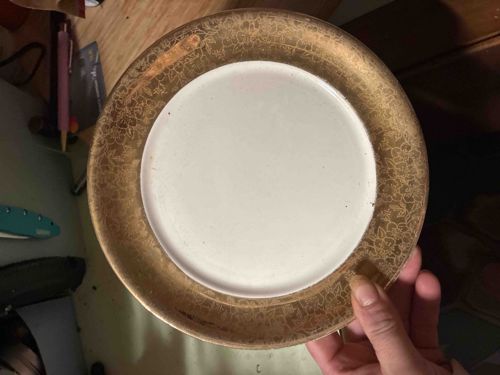
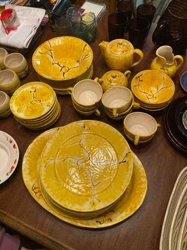
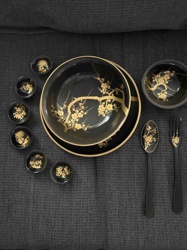
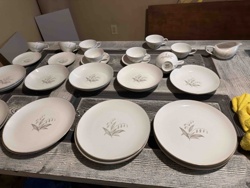
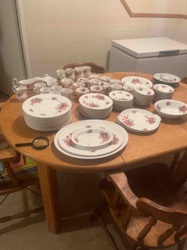
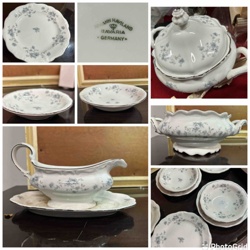
The item is a round dinner plate, likely made of ceramic or porcelain, featuring a central white field and a wide, ornate gold-colored rim. The rim is extensively decorated with a fine, intricate, and somewhat abstract floral or foliate pattern, which appears to be printed or etched onto the surface, giving it a tactile texture or a crackled, crazed appearance in some areas. The gold color of the rim exhibits some variations in tone, suggesting a metallic finish that may have started to show patina or wear, giving it an aged look. There are small dark specks visible on the white central portion, possibly indicating dirt or minor surface imperfections. The overall craftsmanship appears to be of good quality, with the decorative pattern evenly applied. The style suggests it could be from the mid-20th century, possibly the 1950s or 1960s, a period known for opulent and gold-accented dinnerware designs. No specific maker's marks or signatures are visible in the provided images, which would typically be on the underside of the plate. The plate's condition appears fair, with the main concern being some potential wear on the gold finish and the visible dirt on the white surface. The size is consistent with a standard dinner or luncheon plate. The design emphasizes decorative elegance, characteristic of formal or semi-formal dining sets.
AI Appraisal Report
Based on my visual examination of the provided image, I assess this Gold-Rimmed Floral Dinner Plate. The condition appears fair; the gold rim shows variations in tone, indicating potential wear or patina, and there are small dark specks on the white field, likely surface dirt. The craftsmanship suggests good quality, with the intricate floral or foliate pattern evenly applied. However, without a physical inspection, I cannot ascertain if the crackled appearance in some gold areas is intentional design (crazing) or damage.
From a market perspective, this plate's style, reminiscent of mid-20th century (1950s-1960s) opulent designs, suggests it belongs to an era when such gilded dinnerware was highly fashionable. Comparables in this style from known manufacturers like Lenox, Noritake, or Pickard, if in excellent condition and part of a larger set, can fetch higher prices. However, as a single, unmarked plate, its value is significantly reduced. While decorative, single orphaned plates, even with elegant designs, face limited demand unless they are exceptional rarities or from highly sought-after defunct potteries.
The most significant factors impacting value are the lack of visible maker's marks, which prevents definitive attribution, and its status as a single item rather than part of a complete set. The visible surface imperfections and potential wear on the gold also detract from its value.
It is crucial to note the limitations of appraising from an image alone. Authenticity verification is partial; a physical in-person examination would allow me to physically inspect the underside for maker’s marks, assess the true condition of the gold finish and ceramic, and determine if any 'crazing' is production-related or age-related. Provenance documentation (original purchase receipts, family history) would further enhance authentication and value. Scientific testing for material composition is not typically performed for dinnerware of this type but could definitively identify ceramic type if needed.