Banded Chert or Slate Rock Fragment
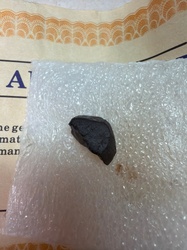
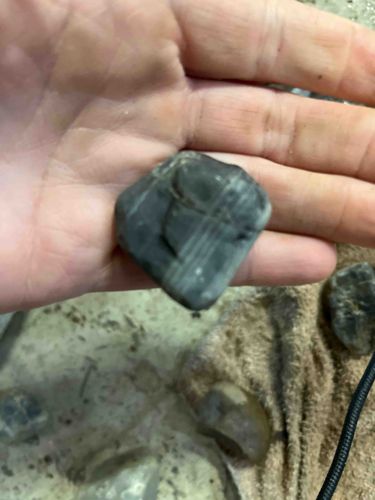
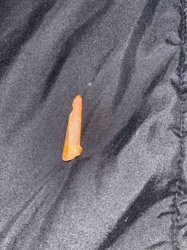
This item is a small, hand-held mineral specimen, likely a fragment of banded chert or perhaps a water-worn piece of metamorphic slate. It measures approximately 2.5 to 3 centimeters in diameter across its widest points. The rock exhibits a dark charcoal-to-black base color with distinct, parallel light gray or off-white strata or banding running across one primary face. These bands suggest a sedimentary origin with subsequent mineralization or pressure-related metamorphic changes. The shape is roughly rhomboidal or sub-angular, with edges that appear somewhat smoothed by natural erosion or alluvial action, though some sharper fracture points remain visible. The surface texture appears matte rather than glossy, showing a natural dull luster typical of fine-grained siliceous rocks. There are no signs of artificial working, carving, or tool marks, indicating this is a natural geologic occurance rather than a man-made artifact or 'lithic' tool. The condition is raw and natural, with minor pockmarks and surface variations consistent with field-collected mineral samples. No maker's marks or signatures are present as the item is a specimen of nature. Estimated age is geologic, potentially dating back millions of years depending on the stratigraphic layer of origin.
AI-Generated Appraisal Disclaimer
Estimated Value
$1.00 - $3.00
Basic Information
Category
Rocks, Fossils & Minerals
Appraised On
April 7, 2026
Estimated Value
$1.00 - $3.00
Item Description
This item is a small, hand-held mineral specimen, likely a fragment of banded chert or perhaps a water-worn piece of metamorphic slate. It measures approximately 2.5 to 3 centimeters in diameter across its widest points. The rock exhibits a dark charcoal-to-black base color with distinct, parallel light gray or off-white strata or banding running across one primary face. These bands suggest a sedimentary origin with subsequent mineralization or pressure-related metamorphic changes. The shape is roughly rhomboidal or sub-angular, with edges that appear somewhat smoothed by natural erosion or alluvial action, though some sharper fracture points remain visible. The surface texture appears matte rather than glossy, showing a natural dull luster typical of fine-grained siliceous rocks. There are no signs of artificial working, carving, or tool marks, indicating this is a natural geologic occurance rather than a man-made artifact or 'lithic' tool. The condition is raw and natural, with minor pockmarks and surface variations consistent with field-collected mineral samples. No maker's marks or signatures are present as the item is a specimen of nature. Estimated age is geologic, potentially dating back millions of years depending on the stratigraphic layer of origin.
Get Your Items Appraised
Instant estimates of your treasures with AI-powered instant appraisals