AI Appraisal Estimate

AI-generated estimates · not official valuations

From the user

What was submitted

Photo and notes provided by the user — not generated by AI

Submitted item photo
Submitted photo · May 30, 2026

User's notes

No additional notes provided.

AI analysis below

AI appraisal

AI analysis & estimate

AI-Generated · Verify before acting

Everything below is generated by AI for informational purposes only. AI can make mistakes — the AI may misidentify items or misattribute them (artist, maker, brand, designer, origin, era). This is not an official valuation and should not be used for insurance, sale, tax, estate, legal, or lending purposes — or any decision requiring a certified appraisal. It is not an authoritative claim about any person, brand, or rights holder — do not share or rely on it as a factual statement about a third party. Always consult qualified professionals before making financial decisions.

Read the full disclaimer

AI Identification

·Not independently authenticated·Verify before acting

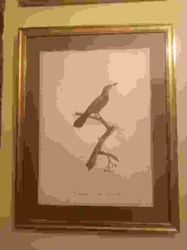
Lifting the Nets: The Herring Fishery Photogravure

Fine Art / Antique Prints

AI Estimated Value

·Not an official valuation·Verify before acting

$150 - $250

As of May 30, 2026

AI Item Analysis

·AI can make mistakes·Verify before acting
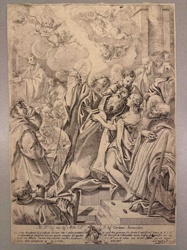
This is a monochrome photogravure or lithographic print titled 'Lifting the Nets: The Herring Fishery,' after a work by the artist Charles Napier Hemy (active late 19th to early 20th century). The print depicts three fishermen in a small boat battling rough, cresting waves to haul in their catch, with seagulls circling overhead near a bobbing buoy. The composition is highly dynamic, capturing the intensity and hardship of maritime labor. The print measures approximately 10x14 inches within its visible margins. It is rendered in a grayscale palette with deep charcoals and soft grays, characteristic of late Victorian or Edwardian era mass-produced maritime art. The title is clearly printed in a serif font at the bottom center, with smaller attribution text visible on the lower left and right corners. Structurally, the paper appears to be a medium-weight stock, now showing signs of light age-related toning. There are minor foxing spots and slight waving of the paper under the glass. The piece is housed in a modern white mat, though reflections in the glass suggest it is being viewed in a domestic interior. The quality of the stippling and tonal transitions indicates a professional reproductive process from the early 1900s, aimed at the burgeoning middle-class art market of that period.
AI Appraisal Report

·AI can make mistakes·Verify before acting
This appraisal covers a photogravure titled 'Lifting the Nets: The Herring Fishery,' after the original painting by Charles Napier Hemy. Upon visual examination, the print demonstrates the classic tonal depth and fine grain associated with early 20th-century reproductive photogravure processes. The composition is a poignant example of Victorian maritime realism, which enjoyed significant commercial popularity between 1890 and 1910. The condition is fair to good for its age; I observed visible foxing and light environmental toning which suggest the paper has been exposed to acidic mounting materials or fluctuating humidity. The slight waving of the paper indicates it is not currently laid down, which is positive for long-term preservation, though the current matting appears modern and non-archival. The market for reproductive prints of this era is stable but modest, as these were mass-produced for the middle-class market rather than being limited artist proofs. Comparables for Hemy reproductions of this size and condition typically realize prices in the low hundreds at regional auctions. Value is primarily driven by the maritime subject matter and the artist's reputation, though the condition issues (foxing) slightly suppress the ceiling price. This evaluation is based on digital images and is subject to change. A definitive appraisal would require an in-person inspection to verify the paper's watermark, check for 'laid-down' status behind the mat, and distinguish between a true photogravure and a later high-quality lithographic copy. Scientific testing of the ink's chemical composition and provenance documentation would be necessary to confirm the exact year of production and original publisher.

Get your items appraised

Instant estimates of your treasures with AI-powered appraisals

Browse More Appraisals