AI Appraisal Estimate

AI-generated estimates · not official valuations

From the user

What was submitted

Photo and notes provided by the user — not generated by AI

Submitted item photo
Submitted photo · June 19, 2026

User's notes

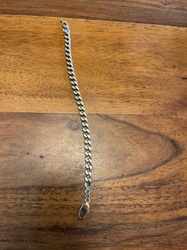
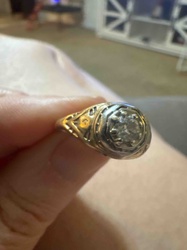
Ethnic tribal silver anklet bracelet traditional

AI analysis below

AI appraisal

AI analysis & estimate

AI-Generated · Verify before acting

Everything below is generated by AI for informational purposes only. AI can make mistakes — the AI may misidentify items or misattribute them (artist, maker, brand, designer, origin, era). This is not an official valuation and should not be used for insurance, sale, tax, estate, legal, or lending purposes — or any decision requiring a certified appraisal. It is not an authoritative claim about any person, brand, or rights holder — do not share or rely on it as a factual statement about a third party. Always consult qualified professionals before making financial decisions.

Note

This analysis also relies on unverified notes provided by the user, which may be incomplete or inaccurate and could affect the result.

Read the full disclaimer

AI Identification

·Not independently authenticated·Verify before acting

Traditional Indian Tribal Silver Payal (Anklet Pair)

Antique and Vintage Jewelry

AI Estimated Value

·Not an official valuation·Verify before acting

$450 - $650

As of June 19, 2026

AI Item Analysis

·AI can make mistakes·Verify before acting
This is a pair of handcrafted ethnic tribal anklets, traditionally known as 'Payal' or 'Pajeb', originating from the Indian subcontinent. The items are constructed from high-grade silver alloy, displaying the characteristic darkened heavy patina associated with aged tribal jewelry. Each anklet features a flexible, wide band base composed of intricate interlaced metallic links and floral-accented floral motifs. Suspended from the lower edge is a dense rhythmic fringe of 'ghungroo' bells, which are small spherical silver droplets designed to emit a rhythmic jingling sound during movement. The construction highlights traditional silversmithing techniques, including chasing and repoussé on the terminal clasp plates. One anklet is shown with a secure hook-and-chain closure mechanism, while the other displays a rectangular hinge-style terminal. The condition is consistent with mid-20th-century vintage pieces, showing moderate surface oxidation, minor compression to some individual bells, and evidence of wear on the connecting loops. No visible maker's marks are discernible, which is typical for village-crafted tribal finery. These pieces represent a high level of artisanal craftsmanship, designed for durability and daily ceremonial wear.
AI Appraisal Report

·AI can make mistakes·Verify before acting
I have carefully examined the high-resolution images of these traditional Indian silver 'Payal' anklets. These pieces demonstrate high-quality tribal silversmithing, featuring dense interlaced links and a rhythmic fringe of ghungroo bells. The heavy patina and surface oxidation are consistent with mid-20th-century vintage village-crafted jewelry, likely from the Rajasthan or Gujarat regions. The construction shows genuine wear on the connecting loops and minor compression on the bells, which reinforces their history as functional ceremonial pieces rather than modern mass-produced replicas. The current market for authentic South Asian tribal silver remains steady, with collector demand driven by the weight of the silver alloy and the degree of artisanal detail. Similar examples of this gauge and complexity typically realize between $400 and $700 at specialized ethnic art auctions. The primary value drivers here are the high density of the bells and the breadth of the interlaced band. However, without a physical inspection, certain limitations exist. I cannot definitively verify the silver purity through images; while they appear to be high-grade (approx. 80-90% silver), a portable X-ray fluorescence (XRF) test or an acid scratch test would be necessary to confirm the exact precious metal content. Additionally, an in-person examination is required to ensure no structural failures exist within the intricate mesh work. These factors, alongside any available provenance or family history, would be required to reach a finalized, insurance-grade valuation.

Get your items appraised

Instant estimates of your treasures with AI-powered appraisals

Browse More Appraisals