AI Appraisal Estimate

AI-generated estimates · not official valuations

From the user

What was submitted

Photo and notes provided by the user — not generated by AI

Submitted item photo
Submitted photo · May 27, 2026

User's notes

No additional notes provided.

AI analysis below

AI appraisal

AI analysis & estimate

AI-Generated · Verify before acting

Everything below is generated by AI for informational purposes only. AI can make mistakes — the AI may misidentify items or misattribute them (artist, maker, brand, designer, origin, era). This is not an official valuation and should not be used for insurance, sale, tax, estate, legal, or lending purposes — or any decision requiring a certified appraisal. It is not an authoritative claim about any person, brand, or rights holder — do not share or rely on it as a factual statement about a third party. Always consult qualified professionals before making financial decisions.

Read the full disclaimer

AI Identification

·Not independently authenticated·Verify before acting

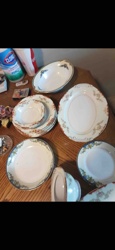
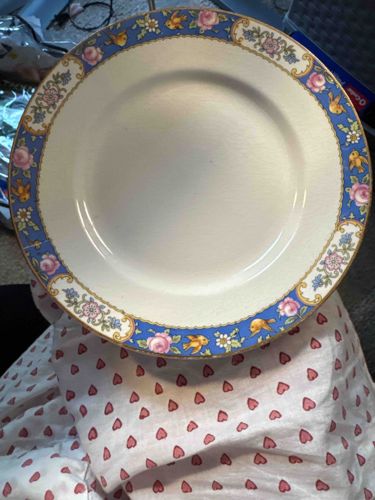
Vintage Flow-Blue Floral and Bird Border Dinner Plate

Antique/Vintage Tableware & Ceramics

AI Estimated Value

·Not an official valuation·Verify before acting

$15.00 - $25.00

As of May 27, 2026

AI Item Analysis

·AI can make mistakes·Verify before acting
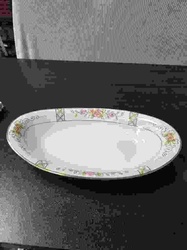
This is a vintage glazed ceramic dinner plate, likely made of ironstone or earthenware, featuring a distinct ivory-colored center and a wide, decorated rim. The border is designed in a traditional aesthetic featuring a primary cornflower blue band overlaid with multicolored transfer-ware motifs. These motifs include pink roses, small white daisies, and yellow birds in flight, interspersed with segmented cartouches containing more delicate polychrome floral sprays. The inner and outer edges of the rim appear to be accented with a thin gold or brownish-gilt pinstripe. Regarding condition, the plate shows significant signs of age-related wear, most notably extensive 'crazing' or fine hairline cracking throughout the central glaze. There are also visible dark pittings and some discoloration on the cream surface, which suggests moisture or oils have seeped through the crazed glaze over time. The edge of the rim shows minor losses to the gilded finish. Based on the style of the transfer and the type of wear, this piece likely dates to the early-to-mid 20th century. The craftsmanship is indicative of mass-produced decorative tableware from English or American potteries of that era, designed to mimic high-end hand-painted porcelain.
AI Appraisal Report

·AI can make mistakes·Verify before acting
Based on my visual analysis of this dinner plate, I have identified it as a mid-20th-century piece of polychrome transfer-ware, likely produced in either the English (Staffordshire) or American pottery traditions. While the aesthetic draws inspiration from 'Flow Blue' and earlier Victorian 'Bird and Basket' motifs, the crispness of the transfer and the specific palette suggest a later mass-market production date, approximately 1930–1950. The condition of the piece significantly impacts its marketability. My examination reveals advanced 'crazing' across the central well, accompanied by dark organic staining where oils or moisture have penetrated the glaze. This porousness, combined with the visible wear on the gilded rim, places the item in 'Fair' to 'Good' vintage condition rather than 'Collector Grade.' Current market demand for mid-century transfer-ware is stable but focused on pristine examples or complete sets; individual plates with heavy glaze degradation typically serve as decorative 'shabby chic' accents rather than high-value investments. Comparables for mass-produced floral/bird motifs in this condition consistently settle in the $15–$25 range at auction or through secondary dealers. Please note that this appraisal is based solely on digital imagery. For a definitive authentication, I would require an in-person inspection of the maker's mark on the reverse, which would confirm the specific pottery (e.g., Johnson Brothers, Homer Laughlin, or Wood & Sons). Scientific testing or provenance documentation would be necessary only if the piece were suspected of being an 18th-century prototype, though the visual evidence strongly supports a later, commercial origin.

Get your items appraised

Instant estimates of your treasures with AI-powered appraisals

Browse More Appraisals