AI Appraisal Estimate

AI-generated estimates · not official valuations

From the user

What was submitted

Photo and notes provided by the user — not generated by AI

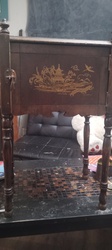
Submitted item photo
Submitted photo · June 14, 2026

User's notes

Extremely old table thing

AI analysis below

AI appraisal

AI analysis & estimate

AI-Generated · Verify before acting

Everything below is generated by AI for informational purposes only. AI can make mistakes — the AI may misidentify items or misattribute them (artist, maker, brand, designer, origin, era). This is not an official valuation and should not be used for insurance, sale, tax, estate, legal, or lending purposes — or any decision requiring a certified appraisal. It is not an authoritative claim about any person, brand, or rights holder — do not share or rely on it as a factual statement about a third party. Always consult qualified professionals before making financial decisions.

Note

This analysis also relies on unverified notes provided by the user, which may be incomplete or inaccurate and could affect the result.

Read the full disclaimer

AI Identification

·Not independently authenticated·Verify before acting

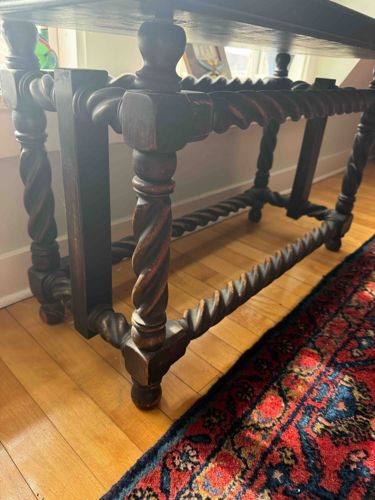
Jacobean Style Barley Twist Library Table

Antique Furniture

AI Estimated Value

·Not an official valuation·Verify before acting

$450 - $750

As of June 14, 2026

AI Item Analysis

·AI can make mistakes·Verify before acting
This is a rectangular library or occasional table executed in the Jacobean Revival style, likely dating from the late 19th to early 20th century. The piece is constructed from a dark-stained hardwood, possibly oak or walnut, featuring a deep espresso patina. The most prominent design element is the extensive use of barley twist (solomonic) turnings on the four main legs and the H-shaped stretcher system. The construction utilizes mortise and tenon joinery, visible at the block junctions where the turned elements meet the square structural posts. The table features a thick, solid wood top with a simple squared edge. Notable craftsmanship details include the hand-carved appearance of the spirals and the bulbous bun feet that terminate each leg. Condition-wise, the table exhibits expected age-related wear, including minor scuffing on the stretcher bars where feet might have rested, and a natural crazing of the finish. There are signs of a rich, uneven patina that suggests several decades of use. The heavy, robust proportions and intricate vertical and horizontal turnings represent high-quality production typical of the Victorian and Edwardian interest in 17th-century English furniture aesthetics.
AI Appraisal Report

·AI can make mistakes·Verify before acting
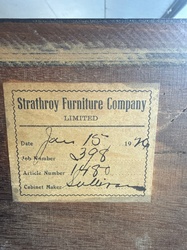
Based on my visual examination of the provided images, this is a Jacobean Revival library table, likely of American or English manufacture dating to the late 19th or very early 20th century (c. 1890–1920). The piece is characterized by its signature barley twist (solomonic) legs and H-stretcher, a staple of historical revival styles popular during the late Victorian and Edwardian eras. The dark, espresso-toned finish suggests stained oak, a common material for such sturdy utility furniture. The condition appears consistent with its age, showing a genuine, accumulated patina and wear patterns on the stretcher rails typically caused by shoes, which actually speaks to its authenticity as a period piece rather than a modern reproduction. The heavy, block-and-turned joinery indicates solid, robust construction. In the current market, heavy localized Victorian revival furniture (often dubbed 'Brown Furniture') has seen prominent fluctuations. While the demand for dark wood antiques has softened compared to mid-century modern trends, barley twist pieces maintain a dedicated niche following due to their distinct sculptural aesthetic. Comparables in similar condition—solid structural integrity but with cosmetic surface wear—regularly hammer at local auctions between $300 and $600, with retail gallery prices reaching upwards of $800 depending on the richness of the grain. It is important to note that without an in-person inspection, I cannot verify the secondary woods (drawer interiors, if any, or underside bracings) to confirm the specific region of manufacture. A physical examination would be required to check for manufacturer's stamps, potential veneer lifting, or historical repairs that might be hidden by the dark stain, all of which could adjust the final valuation.

Get your items appraised

Instant estimates of your treasures with AI-powered appraisals

Browse More Appraisals