AI identification & appraisal estimate

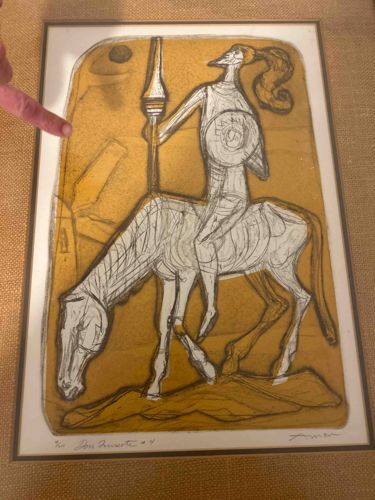
Don Quixote #4 by Irving Amen

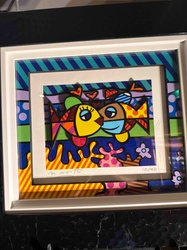
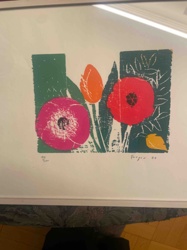
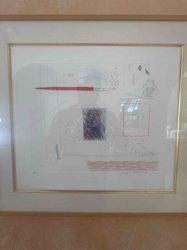
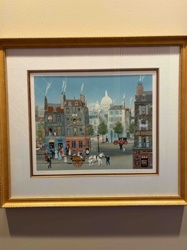
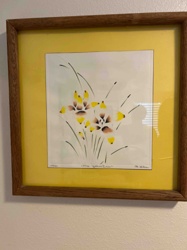
Submitted photo of Don Quixote #4 by Irving Amen
Photo submitted by the user — not generated by AI

User's notes

Artist is Irving amen

These notes were written by the person who submitted this item. Appraiser.AI has not verified them, and the AI's identification and estimate may rely on them.

AI Estimated Value

Not an official valuation

$450 - $650

AI estimate as of March 22, 2026 · verify with a professional before acting

AI-Generated · Verify before acting

Everything on this page is generated by AI for informational purposes only. AI can make mistakes — the AI may misidentify items or misattribute them (artist, maker, brand, designer, origin, era). This is not an official valuation and should not be used for insurance, sale, tax, estate, legal, or lending purposes — or any decision requiring a certified appraisal. It is not an authoritative claim about any person, brand, or rights holder — do not share or rely on it as a factual statement about a third party. Always consult qualified professionals before making financial decisions.

This analysis also relies on unverified notes provided by the user, which may be incomplete or inaccurate and could affect the result.

Read the full disclaimer

AI Item Analysis

This is a mid-century modern limited edition etching and aquatint by the American artist Irving Amen (1918–2011). The work depicts a stylized, avant-garde rendition of the literary figure Don Quixote mounted on his horse, Rocinante. The composition utilizes a sophisticated blend of earthy ochre and gold tones in the background, contrasting with the fine black line-work and white highlighting of the figures. Characteristic of Amen’s expressionist style, the knight is rendered with elongated proportions, carrying a lance and shield. The piece is hand-signed by the artist in the lower right margin and titled 'Don Quixote #4' in the lower center. To the left, it is designated as an artist’s proof, marked 'A/P'. The print is housed in a period-appropriate frame with a textured burlap or grasscloth mat, which was popular during the 1960s and 70s. The artwork appears to be in good vintage condition, though there is a visible darkened spot or inclusion in the paper in the upper left section of the image, which should be inspected to determine if it is a foxing mark or part of the original papermaking process. The ink saturation remains strong, and the paper shows minimal yellowing, suggesting it has been kept out of direct sunlight. Irving Amen’s work is held in prestigious collections including the MoMA and the Smithsonian, making this a desirable piece for collectors of 20th-century printmaking.
AI Appraisal Report

Based on my examination of the digital images provided, I have assessed 'Don Quixote #4' by Irving Amen. The work is an artist’s proof (A/P), which typically carries a slight premium over standard numbered editions due to its proximity to the artist's personal collection and the printing process. The aesthetic reflects Amen’s signature mid-century expressionist style, which remains popular among collectors of modernist graphics. The color palette is vibrant and the line work remains crisp, suggesting the piece has been well-preserved away from UV exposure. I noted a dark inclusion in the upper left; if this is foxing (fungal growth), it may require professional remediation, which has been factored into the valuation. If it is a natural inclusion in the handmade paper, the value leans toward the higher end of the range. The market for Amen's prints is stable, with frequent auction appearances. Comparable works of similar scale and subject matter typically hammer between $300 and $800 depending on the specific edition and frame quality. The inclusion of a period-correct burlap mat adds decorative value but necessitates an inspection of the backing to ensure acid-free materials were used, as older acidic mountings can cause 'mat burn.' Final authentication cannot be definitively established through digital imagery alone. A physical inspection is required to verify the plate mark depression, paper watermark, and ink texture. To finalize this appraisal for insurance or sale purposes, I would require provenance documentation or a physical review to ensure the signature is not a facsimile and to check for hidden adhesive damage under the matting.

Keep exploring

More fine art - limited edition prints appraisals

Get your items appraised

Instant AI-powered appraisal estimates from a photo

Browse More Appraisals