AI Appraisal Estimate

AI-generated estimates · not official valuations

From the user

What was submitted

Photo and notes provided by the user — not generated by AI

Submitted item photo
Submitted photo · June 6, 2026

User's notes

No additional notes provided.

AI analysis below

AI appraisal

AI analysis & estimate

AI-Generated · Verify before acting

Everything below is generated by AI for informational purposes only. AI can make mistakes — the AI may misidentify items or misattribute them (artist, maker, brand, designer, origin, era). This is not an official valuation and should not be used for insurance, sale, tax, estate, legal, or lending purposes — or any decision requiring a certified appraisal. It is not an authoritative claim about any person, brand, or rights holder — do not share or rely on it as a factual statement about a third party. Always consult qualified professionals before making financial decisions.

Read the full disclaimer

AI Identification

·Not independently authenticated·Verify before acting

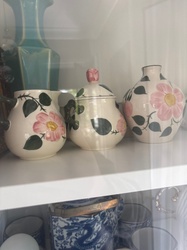
Vintage Porcelain Saucer with Gilt and Floral Motifs

Dinnerware/Tableware

AI Estimated Value

·Not an official valuation·Verify before acting

$40-60

As of June 6, 2026

AI Item Analysis

·AI can make mistakes·Verify before acting
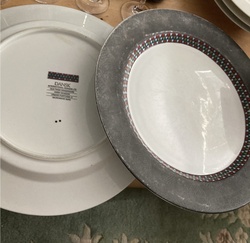
This item is a decorative porcelain saucer, likely part of a teacup and saucer set, given the circular indentation in the center designed to hold a cup. It exhibits a scalloped or rococo-inspired edge with four prominent points where the rim flares out. The primary color is a creamy white, serving as a base for the elaborate decorations. The rim is adorned with hand-painted or transfer-printed floral motifs in muted pinks and greens, depicting what appear to be delicate roses or similar blossoms with accompanying foliage. These floral designs are interspersed with raised, stylized scrollwork, possibly in an unglazed or matte white finish, adding a tactile element and Baroque or Rococo flair. The most notable feature is the extensive use of gold gilt accenting the scalloped edges of the rim and subtly highlighting some of the raised scrollwork. There are visible signs of wear on the gold gilt, indicating use and age, with some areas appearing rubbed off or faded. The overall condition suggests a vintage piece with expected patina of age, but no apparent chips, cracks, or repairs are discernible from the provided image. The craftsmanship, particularly the detailed floral painting and raised porcelain work, suggests a piece of good quality, possibly dating from the late 19th to early 20th century, consistent with the Victorian or Edwardian eras where such elaborate porcelain decorations were popular. There are no visible maker's marks or signatures in the image.
AI Appraisal Report

·AI can make mistakes·Verify before acting
Based on my visual examination of the provided image, this vintage porcelain saucer, likely part of a teacup set, is in remarkably good condition for its age. I observe no apparent chips, cracks, or repairs. The creamy white body provides a lovely canvas for the hand-painted or possibly transfer-printed floral motifs in muted pinks and greens, depicting what appear to be roses and foliage. The raised, stylized scrollwork adds a desirable tactile and historical element. The gold gilt, while showing expected wear consistent with age and use, retains much of its original luster, indicating a well-cared-for piece. While authenticity is generally supported by the decorative style, which aligns with late 19th to early 20th-century aesthetics (Victorian/Edwardian eras), I must caution that definitive authentication solely from images is limited. Similar pieces from various European and American potteries were common during this period. Market conditions for single saucers, even well-preserved ones, are moderate unless they originate from a highly sought-after manufacturer or are part of a very rare pattern. Comparables for unsigned, decorative porcelain saucers with similar wear typically range from $30-$70. The lack of visible maker's marks significantly impacts value, preventing attribution to a specific, potentially higher-value manufacturer. Demand for single saucers is generally lower than for complete sets. Rarity is difficult to assess without maker's marks; it appears to be a mass-produced decorative item from its period rather than a unique artisan piece. Factors limiting value include the absence of a matching cup and the lack of identifying marks. For full authentication and to ascertain a premium value, a physical in-person examination would be crucial to inspect for micro-crazing, hidden repairs, and underglaze marks. Provenance documentation or scientific analysis of the porcelain body and glazes could also provide valuable insights into its origin and confirm its age.

Get your items appraised

Instant estimates of your treasures with AI-powered appraisals

Browse More Appraisals