AI estimate as of October 2, 2025 · verify with a professional before acting
AI-Generated · Verify before acting
Everything on this page is generated by AI for informational purposes only. AI can make mistakes — the AI may misidentify items or misattribute them (artist, maker, brand, designer, origin, era). This is not an official valuation and should not be used for insurance, sale, tax, estate, legal, or lending purposes — or any decision requiring a certified appraisal. It is not an authoritative claim about any person, brand, or rights holder — do not share or rely on it as a factual statement about a third party. Always consult qualified professionals before making financial decisions.
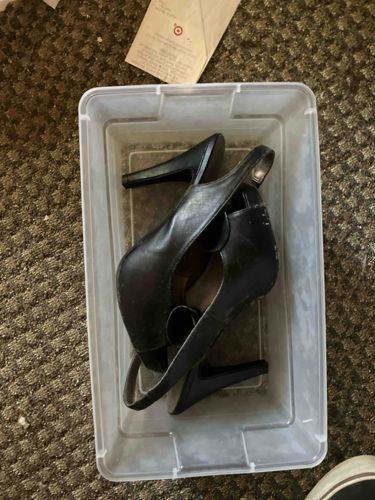
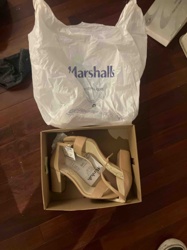
A pair of black slingback heels, likely made of leather or a synthetic material designed to mimic leather, are presented within a clear plastic storage container. The shoes feature a classic closed-toe design with an open back secured by a strap that goes around the heel. The heels appear to be medium-height and block-style, or possibly a slightly tapered block, offering a stable base. The overall color is a solid black with a slight sheen, suggesting either a polished finish or the natural lustre of the material. Visible condition issues include some creasing on the toe box area and general wear consistent with use, particularly around the edges and possibly on the heels themselves, although detailed views are limited. There are no clear manufacturer marks or unique distinguishing elements visible from this perspective. The style suggests a versatile, possibly professional or semi-formal shoe, likely from the late 20th or early 21st century. The craftsmanship appears to be standard for mass-produced footwear, with no immediate indications of bespoke or high-end artisan quality. The surrounding container and carpet suggest a casual storage environment.
AI Appraisal Report
I have examined the image provided for this pair of black slingback heels. My assessment is based solely on the visual information available. The shoes appear to be standard mass-produced women's footwear, likely constructed from leather or a convincing synthetic material designed to mimic leather, given the slight sheen. The style is classic and versatile, suitable for professional or semi-formal wear, with a closed-toe and block-style medium-height heel. This design suggests a production period from the late 20th to early 21st century.
Condition-wise, I note visible creasing on the toe box, which is indicative of previous wear. General wear and tear, particularly around the edges and potentially on the heels, is also suggested, though detailed views are limited. No strong brand identifiers or unique design elements are visible, preventing authentication of any specific manufacturer. While the craftsmanship appears competent for standard footwear, there are no immediate indicators of high-end artisan quality or bespoke production.
Considering the market for pre-owned, unbranded, mass-produced footwear in used condition, demand tends to be for practical, everyday wear rather than collector's items. Rarity is not a factor here; countless similar styles exist. Factors significantly impacting value are the lack of brand recognition, the clear signs of wear, and the ubiquitous nature of such a style. Without a brand, these shoes would largely be valued for their functional utility rather than collectible or fashion merit.
For full authentication, or to determine material composition definitively, an in-person examination would be critical. This would allow for a tactile assessment of material quality (e.g., distinguishing real leather from synthetic), a more precise evaluation of wear on soles and heels, and inspection for any hidden manufacturer marks. Provenance documentation would be necessary to establish a specific brand or history if it existed, which is not evident from the image.