Antique Gilt-Tooled Leather Binocular Case
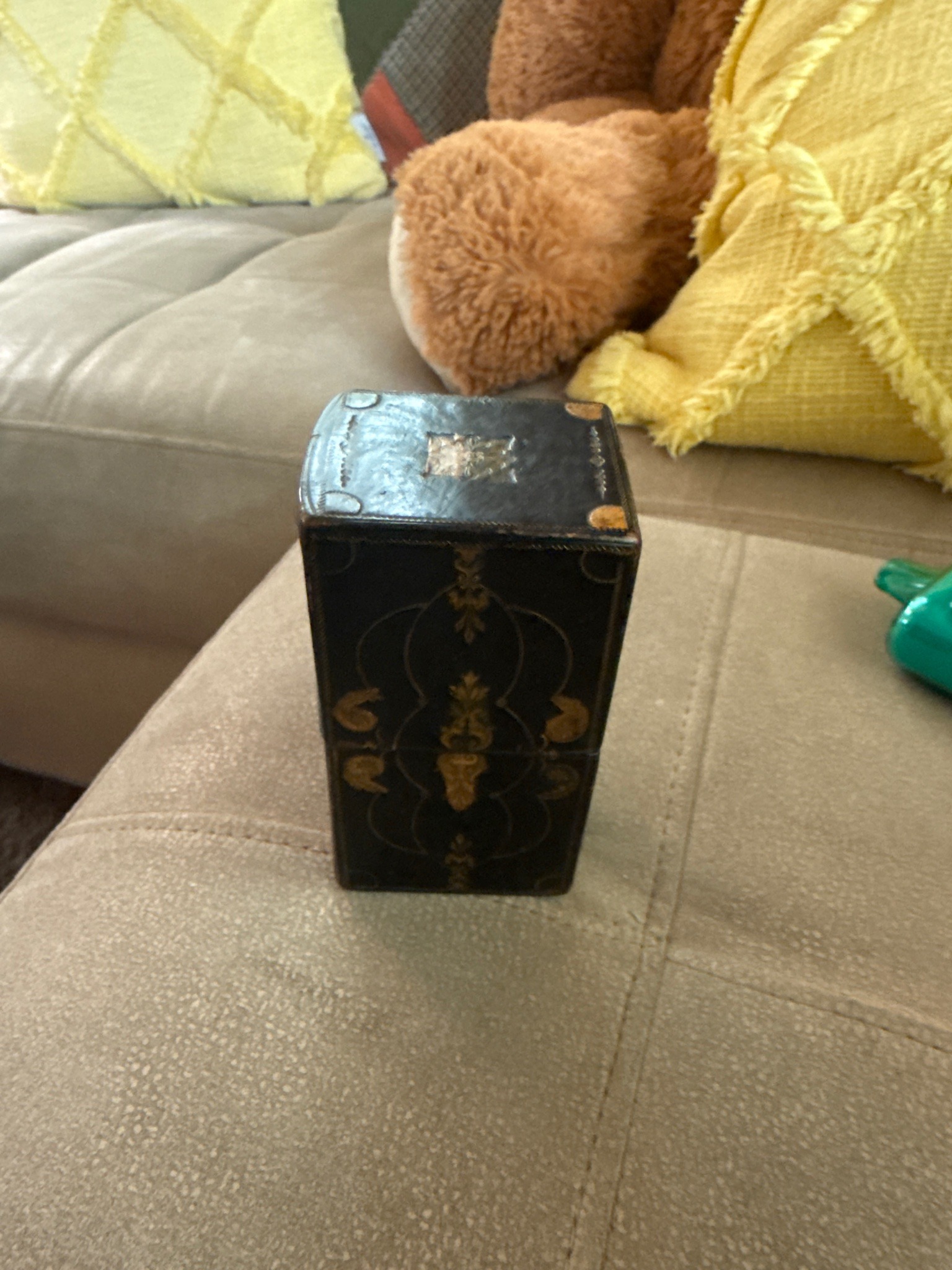
This is an antique, upright rectangular storage case, likely originally designed to house binoculars or a similar optical instrument. The item is constructed of a sturdy base material, possibly wood or heavy card, wrapped in high-quality black leather. It features elaborate neoclassical gilt-tooling on the front panel, displaying symmetrical scrolling vines, fleur-de-lis motifs, and floral accents. The top lid is hinged and shows significant wear, featuring metallic corner protectors and a central rectangular recessed area that may have once held a nameplate or crest. The leather exhibits a distinct aged patina with visible scuffing, edge wear, and loss of gilding, particularly at the corners and along the opening seam. The construction suggests a late 19th to early 20th-century European origin, possibly British or French, characterized by fine gold-leaf embossing and hand-finished detailing. While no specific maker's mark is visible in the photograph, the quality of the tooling indicates a high-end luxury goods manufacturer. The item serves as a fine example of decorative leatherwork from the Victorian or Edwardian eras.
AI-Generated Appraisal Disclaimer
Estimated Value
$150-$250
Basic Information
Category
Antique Decorative Arts & Antiques
Appraised On
May 8, 2026
Estimated Value
$150-$250
Item Description
This is an antique, upright rectangular storage case, likely originally designed to house binoculars or a similar optical instrument. The item is constructed of a sturdy base material, possibly wood or heavy card, wrapped in high-quality black leather. It features elaborate neoclassical gilt-tooling on the front panel, displaying symmetrical scrolling vines, fleur-de-lis motifs, and floral accents. The top lid is hinged and shows significant wear, featuring metallic corner protectors and a central rectangular recessed area that may have once held a nameplate or crest. The leather exhibits a distinct aged patina with visible scuffing, edge wear, and loss of gilding, particularly at the corners and along the opening seam. The construction suggests a late 19th to early 20th-century European origin, possibly British or French, characterized by fine gold-leaf embossing and hand-finished detailing. While no specific maker's mark is visible in the photograph, the quality of the tooling indicates a high-end luxury goods manufacturer. The item serves as a fine example of decorative leatherwork from the Victorian or Edwardian eras.
Related Tags
Get Your Items Appraised
Instant estimates of your treasures with AI-powered instant appraisals