AI Appraisal Estimate

AI-generated estimates · not official valuations

From the user

What was submitted

Photo and notes provided by the user — not generated by AI

Submitted item photo
Submitted photo · May 30, 2026

User's notes

No additional notes provided.

AI analysis below

AI appraisal

AI analysis & estimate

AI-Generated · Verify before acting

Everything below is generated by AI for informational purposes only. AI can make mistakes — the AI may misidentify items or misattribute them (artist, maker, brand, designer, origin, era). This is not an official valuation and should not be used for insurance, sale, tax, estate, legal, or lending purposes — or any decision requiring a certified appraisal. It is not an authoritative claim about any person, brand, or rights holder — do not share or rely on it as a factual statement about a third party. Always consult qualified professionals before making financial decisions.

Read the full disclaimer

AI Identification

·Not independently authenticated·Verify before acting

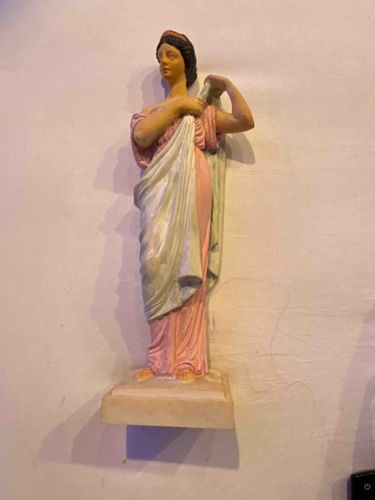
Polychrome Classical Lady Figurine

Decorative Arts & Sculptures

AI Estimated Value

·Not an official valuation·Verify before acting

$45-75

As of May 30, 2026

AI Item Analysis

·AI can make mistakes·Verify before acting
This is a vintage polychrome figurine depicting a female figure in classical Graeco-Roman attire, likely composed of cast plaster or bonded alabaster. The figure stands in a contrapposto pose atop a stepped rectangular plinth. She is dressed in a pink chiton over which a white himation or draped robe is layered, featuring sculpted folds that suggest movement. Her right hand rests near her chest, while her left arm is raised, holding a fold of drapery behind her shoulder. The hair is styled in a dark, classical updo bound by a reddish-pink circlet or headband. The skin tones are painted in a matte ochre-tan shade. Notable features include the detailed rendering of the textile pleats and the stylized facial features typical of decorative arts from the mid-20th century. The condition appears fair to good for its age, with visible paint loss and surface abrasions, particularly on the base and along the edges of the drapery where the white substrate is exposed. There is a general accumulation of dust and surface grime consistent with shelf display. While no maker's marks are visible in the primary view, the style is reminiscent of souvenir or decorative studio pieces from the 1950s-1970s. The craftsmanship is commercial-grade, focusing on neoclassical aesthetic appeal for interior decor.
AI Appraisal Report

·AI can make mistakes·Verify before acting
Upon visual examination of this mid-20th-century polychrome figurine, I have identified it as a commercial-grade decorative piece, likely cast from chalkware (plaster) or bonded resin. The aesthetic is a neoclassical pastiche, echoing Graeco-Roman forms favored in Hollywood Regency and mid-century interior styling. The contrapposto pose and draped chiton are rendered with moderate detail, though the paint application is simplified, characteristic of mass-produced studio souvenirs from the 1950s-1970s. The condition is fair; significant paint loss and 'fleeting' are visible on the base and drapery edges, revealing the white substrate beneath. These abrasions, combined with surface grime, suggest a lack of climate-controlled storage and diminish the value. The market for such items is currently soft, as collectors often seek mid-century modern minimalism or higher-end signed bronzes over unsigned plaster replicas. Comparables on the secondary market typically fetch low prices at estate sales or online auctions. Rarity is low, as these were produced in large quantities for the giftware market. Limitations: This appraisal is based solely on digital images. Without a physical inspection, I cannot confirm the exact composition (e.g., distinguishing between alabaster dust and simple plaster) or detect internal structural repairs. A definitive valuation would require checking the underside for maker's marks or mold numbers and verifying the density of the material to ensure there is no hidden damage or restoration. No scientific testing was performed; provenance remains unknown.

Get your items appraised

Instant estimates of your treasures with AI-powered appraisals

Browse More Appraisals