AI Appraisal Estimate

AI-generated estimates · not official valuations

From the user

What was submitted

Photo and notes provided by the user — not generated by AI

Submitted item photo
Submitted photo · June 28, 2026

User's notes

No additional notes provided.

AI analysis below

AI appraisal

AI analysis & estimate

AI-Generated · Verify before acting

Everything below is generated by AI for informational purposes only. AI can make mistakes — the AI may misidentify items or misattribute them (artist, maker, brand, designer, origin, era). This is not an official valuation and should not be used for insurance, sale, tax, estate, legal, or lending purposes — or any decision requiring a certified appraisal. It is not an authoritative claim about any person, brand, or rights holder — do not share or rely on it as a factual statement about a third party. Always consult qualified professionals before making financial decisions.

Read the full disclaimer

AI Identification

·Not independently authenticated·Verify before acting

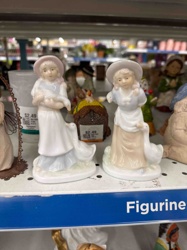
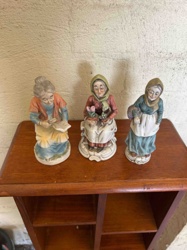
Pair of Bisque Porcelain Peasant Figurines

Collectibles - Porcelain Figurines

AI Estimated Value

·Not an official valuation·Verify before acting

$45-75

As of June 28, 2026

AI Item Analysis

·AI can make mistakes·Verify before acting
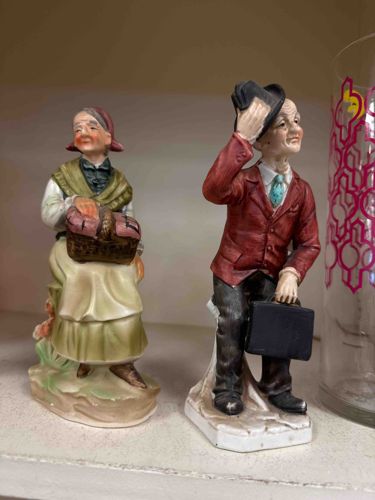
This pair of decorative figurines is crafted from bisque porcelain, a type of unglazed ceramic known for its matte, skin-like texture and fine detail. The set features two distinct characters: a village woman and a businessman. The woman is seated, wearing an olive-green shawl over a white blouse and a tan tiered skirt, holding a hand-woven picnic basket. The man is depicted in mid-motion, tipping his black hat; he wears a textured red jacket, a white collared shirt with a teal tie, dark trousers, and carries a black briefcase. Both figures stand on integrated rock-like bases with soft green and tan washes. The artistic style is reminiscent of mid-20th-century European porcelain, specifically pieces manufactured in Germany or Italy (such as Capodimonte or Hummel-style influences) between 1940 and 1970. The paint application is matte, with noticeable dry-brushing on the man's red jacket to highlight the textured fabric. The craftsmanship shows expressive facial features with individual wrinkles and blush. Condition-wise, the figurines appear mostly intact, though there is visible chipping on the man's right shoe and minor paint wear on the edges of the woman's base. There are no visible maker's marks from this angle, but such pieces typically bear a stamp on the underside of the base. The overall quality suggests a mass-produced but high-quality decorative collectible from the mid-century era.
AI Appraisal Report

·AI can make mistakes·Verify before acting
I have conducted a visual examination of the pair of mid-century bisque porcelain figurines, depicting a seated village woman and a standing businessman. The pieces exhibit characteristics common to mid-20th-century European giftware, likely of West German or Italian origin (circa 1950s-1970s). The matte finish and detailed dry-brushing on the man's jacket suggest a level of quality consistent with higher-end mass-produced collectibles from this era, a market segment often influenced by the 'Capodimonte' or 'Hummel' aesthetic. Condition is a primary factor in this valuation. While the expressive facial features and paint application remain vibrant, I have observed a significant chip on the gentleman's right shoe and minor losses on the lady's base. In the collectors' market, even minor chips on bisque porcelain—which is difficult to restore seamlessly—can reduce value by 30-50%. The current market for generic mid-century continental porcelain has softened as buyer interest has shifted toward modernist or specific branded pieces. This appraisal is based solely on digital images. Without a physical inspection, I cannot verify the presence of a maker's mark (such as a crown over an 'N' or a backstamp) which could potentially elevate the value if linked to a prestigious house like A. Borsato. Full authentication would require a tactile inspection for structural repairs, UV light testing to detect hidden fractures, and documentation of provenance. Given the lack of a visible mark and the identified damage, the value represents a fair market price for decorative vintage porcelain rather than a rare investment-grade collectible.

Get your items appraised

Instant estimates of your treasures with AI-powered appraisals

Browse More Appraisals