AI estimate as of June 22, 2025 · verify with a professional before acting
AI-Generated · Verify before acting
Everything on this page is generated by AI for informational purposes only. AI can make mistakes — the AI may misidentify items or misattribute them (artist, maker, brand, designer, origin, era). This is not an official valuation and should not be used for insurance, sale, tax, estate, legal, or lending purposes — or any decision requiring a certified appraisal. It is not an authoritative claim about any person, brand, or rights holder — do not share or rely on it as a factual statement about a third party. Always consult qualified professionals before making financial decisions.
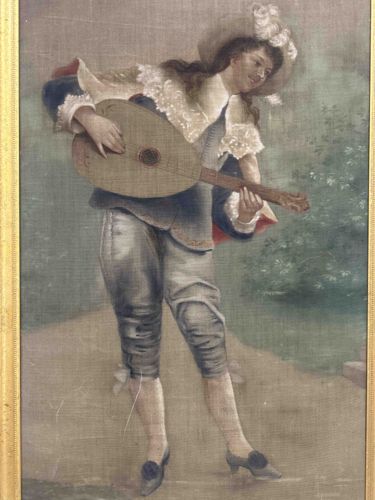
This item is an oil painting on canvas, depicting a full-length portrait of a male figure playing a stringed instrument, likely a lute or mandolin, in an outdoor setting. The figure is shown in a dynamic pose, walking forward, with his head turned slightly upwards and a gentle smile, suggesting a serenade or performance. He is dressed in what appears to be 18th-century European attire, characterized by blue and red accents, a white ruffled jabot, white ruffled cuffs, light grey breeches with bows at the knees, and dark shoes with buckles. The hat is wide-brimmed and adorned with white plumes or ruffles. The background features a path or dirt road on the left foreground and lush green foliage on the right, indicating a garden or park setting. Physical characteristics include visible canvas texture, suggesting it's not a print, and a rectangular shape in a gold-colored, possibly gilded, wooden frame. The frame has some visible wear along its edges. The painting itself shows signs of age, including a visible craquelure pattern across the surface, especially noticeable on the figure's legs and the upper left background, indicating drying and aging of the paint layers. There are also some linear scratches or abrasions visible, particularly running vertically through the lower left leg of the figure. The overall color palette is somewhat muted, with a soft, natural light illuminating the scene. The brushstrokes appear visible but blended, characteristic of representational painting. There are no apparent maker's marks or signatures visible in the provided image. The style and costume suggest an estimated age from the late 18th to mid-19th century, possibly influenced by Rococo or Romantic aesthetics.
AI Appraisal Report
Based on my visual examination of the image of this oil painting, 'Portrait of a Musician in 18th-Century Attire,' I assess its condition as fair. The visible craquelure, especially on the figure's legs and upper left background, is consistent with aging and drying of paint layers, suggesting authentic age rather than a modern reproduction. The linear scratches on the lower left leg are minor condition issues. The frame shows wear but complements the artwork's age. Authenticity, based solely on imagery, appears probable as an 18th or 19th-century work, given the physical characteristics like canvas texture and craquelure. However, this is a limitation; without physical inspection, I cannot confirm brushwork, paint layering, or detect potential restorations.Market conditions for unsigned 18th/19th-century portraits are generally stable but not exceptionally high unless attributed to a known artist. Comparables would include decorative period paintings of similar subject matter and condition. The lack of a visible signature or maker's mark significantly impacts value, placing it in the decorative arts category rather than fine art without further attribution. Demand exists for such pieces for period-style interiors. This item is not exceedingly rare, as many unsigned portraits exist from this era. Factors significantly impacting value include its decorative appeal, age, and subject matter. The primary limitation in authenticity verification from images alone is the inability to perform tactile examination. For full authentication and to potentially increase its value, an in-person examination, provenance documentation research, and scientific testing (e.g., pigment analysis, infrared reflectography) would be crucial to determine the artist, precise date, and confirm its originality.