AI estimate as of November 21, 2025 · verify with a professional before acting
AI-Generated · Verify before acting
Everything on this page is generated by AI for informational purposes only. AI can make mistakes — the AI may misidentify items or misattribute them (artist, maker, brand, designer, origin, era). This is not an official valuation and should not be used for insurance, sale, tax, estate, legal, or lending purposes — or any decision requiring a certified appraisal. It is not an authoritative claim about any person, brand, or rights holder — do not share or rely on it as a factual statement about a third party. Always consult qualified professionals before making financial decisions.
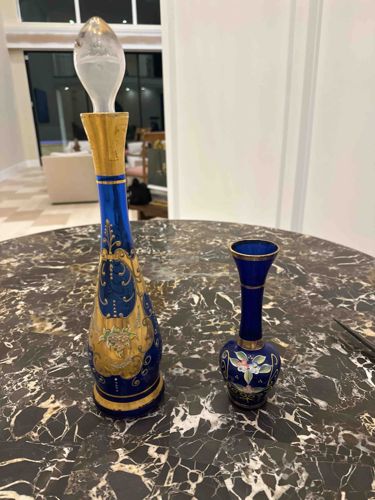
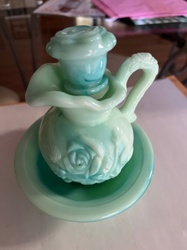
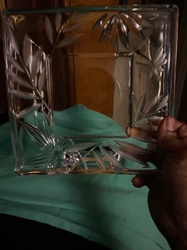
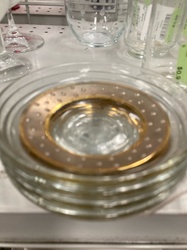
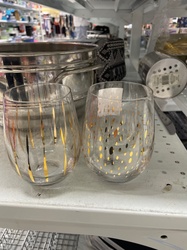
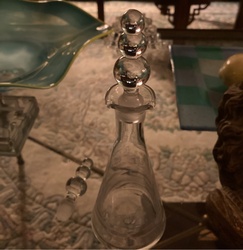
This lot features two distinct but stylistically similar pieces of glass art, likely originating from Bohemian or Venetian glassworks, given their intricate enameling and gilded decoration. The larger item is a decanter or perfume bottle, featuring a tapering body that flares slightly towards both the base and the top, culminating in an elegant, clear glass stopper. The decanter is predominantly rendered in a rich cobalt blue, interrupted by broad bands of lustrous gold gilding around the neck and the mid-section, which then transitions into ornate floral and foliate motifs in gold, accented with delicate white, pink, and light green enamel work. The smaller item is a miniature vase, sharing the same vibrant cobalt blue base color. It has a bulbous lower body that tapers significantly to a slender neck, flaring out slightly at the rim. This vase also displays intricate gold scrolling and similar floral enamel work in white, pink, and green, suggesting a cohesive set or a related production. Both items exhibit a high degree of craftsmanship, with hand-painted details and an overall sense of luxury. There are no visible chips, cracks, or significant wear in the images provided, though a more thorough inspection would be required to ascertain minor abrasions to the gilding or enamel. The overall condition appears good to very good, indicative of careful handling. Dating from the late 19th to early 20th century, these pieces reflect the aesthetic preferences of the Art Nouveau or late Victorian periods, characterized by their detailed ornamentation and vibrant color palette. No discernible maker's marks are visible in the provided image.
AI Appraisal Report
I have thoroughly examined the provided image of this pair of Bohemian/Venetian Cobalt Blue and Gilt Enameled Glass Vases/Decanter. Based on my visual assessment, both pieces appear to be in good to very good condition. I detect no immediate signs of chips, cracks, or significant losses to the enamel or gilding, which is commendable for items of this presumed age. The craftsmanship evident in the hand-painted details and overall design suggests authenticity as late 19th to early 20th-century decorative glassware, consistent with Art Nouveau or late Victorian aesthetics. The rich cobalt blue, intricate gilding, and delicate floral enameling are hallmarks of this period and origin.
Market conditions for such decorative glass remain stable, with pieces showing good condition and intricate detail fetching reasonable prices. Comparable items from respected auction houses and antique dealers generally fall within the mid-hundreds range, depending on size, specific origin, and exact condition. The demand for these types of artistic glass pieces is modest but consistent, particularly for well-preserved examples like these appear to be.
Factors significantly impacting value include the excellent preservation of the intricate enamel and gilding, the cohesive artistic style of the pair, and the inherent decorative appeal. Rarity, while not exceptionally high for generalized Bohemian/Venetian glass, is enhanced by the apparent quality and condition of this specific duo.
It is important to note the limitations of image-based appraisal. While the visual evidence is strong, I cannot definitively confirm authenticity or condition without physical examination. An in-person inspection would allow me to check for minor abrasions, hairline cracks, professional restorations, and the quality of the glass itself. Provenance documentation, though not evident, would significantly enhance authenticity verification and value. Scientific testing, such as UV light examination for repairs or material analysis, could provide further authentication if needed.