These notes were written by the person who submitted this item. Appraiser.AI has not verified them, and the AI's identification and estimate may rely on them.
AI Estimated Value
Not an official valuation
$100 - $200
AI estimate as of November 28, 2025 · verify with a professional before acting
AI-Generated · Verify before acting
Everything on this page is generated by AI for informational purposes only. AI can make mistakes — the AI may misidentify items or misattribute them (artist, maker, brand, designer, origin, era). This is not an official valuation and should not be used for insurance, sale, tax, estate, legal, or lending purposes — or any decision requiring a certified appraisal. It is not an authoritative claim about any person, brand, or rights holder — do not share or rely on it as a factual statement about a third party. Always consult qualified professionals before making financial decisions.
This analysis also relies on unverified notes provided by the user, which may be incomplete or inaccurate and could affect the result.
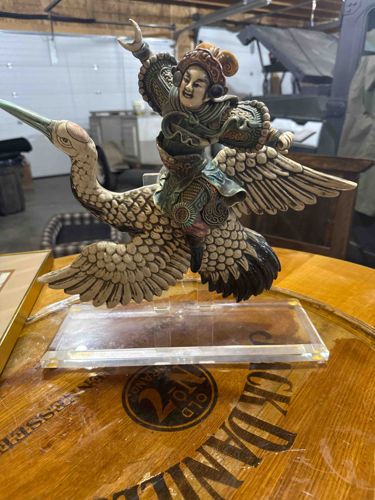
This intricately carved figurine depicts a jubilant East Asian mythological figure, possibly a deity or immortal, riding atop a stylized crane in flight. The figure is shown with an expressive, smiling face, wearing elaborate armor or ceremonial robes in shades of green, brown, and gold, with significant detailing on the patterns and borders. A distinct headpiece with earflaps and a topknot is also visible. One arm is raised in a dynamic pose, suggesting movement or a joyous greeting. The crane itself is highly detailed, with individual feathers painstakingly rendered across its body and wings, primarily in shades of off-white, cream, and darker brown, providing a striking contrast to the rider. The beak of the crane is long and slender, colored in a light green or teal hue. The craftsmanship indicates a possible resin, composite, or carved bone/ivory material, though resin seems more likely given the coloration. The piece is mounted on a clear, rectangular acrylic or plastic base, which serves to elevate and stabilize the sculpture. The overall condition appears excellent, with no visible chips, cracks, or significant wear, suggesting it has been well-preserved. There are no discernible maker's marks or signatures visible in the provided image. The style points towards a decorative art piece, possibly from the late 20th or early 21st century, emulating traditional East Asian artistic themes.
AI Appraisal Report
Upon visual examination of this East Asian mythological figure riding a crane, I find the piece to be in excellent condition with no apparent chips, cracks, or fading. The craftsmanship displays intricate detailing, particularly in the rider's armor and the crane's feathers. However, the materials and style suggest a modern decorative origin, likely from the late 20th or early 21st century. The vibrant, glossy coloration and uniform texture are characteristic of a molded resin or composite material, rather than traditional carved materials like ivory, bone, or wood. The absence of any maker's marks, signatures, or workshop stamps further supports its identity as a decorative, mass-produced item rather than a unique antique or studio art piece. The acrylic base is also typical of contemporary display objects.
The market for such decorative figurines is driven by aesthetic appeal rather than historical significance or rarity. Comparable resin sculptures with similar complexity and size are widely available and typically trade in the $100 to $200 range. The subject matter—an immortal or deity riding a crane—is a popular and auspicious theme in East Asian art, which ensures steady but not intense demand. The primary factor limiting the value is its likely modern, non-antique origin and manufactured nature.
It is important to note that this appraisal is based solely on visual analysis of images. A definitive determination of the material would require in-person examination, including testing for material density and surface characteristics. Full authentication as a period antique, though highly unlikely, would necessitate provenance documentation or stylistic analysis by a specialist in a specific regional art form.