AI identification & appraisal estimate

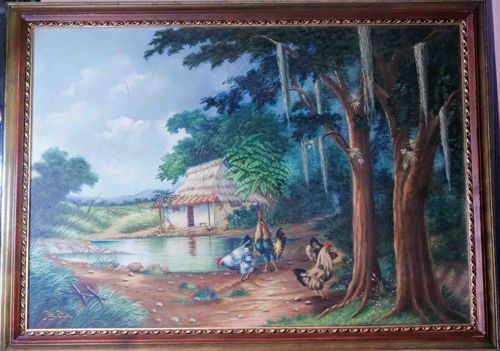
Rural Tropical Landscape with Roosters and Thatched Hut

Submitted photo of Rural Tropical Landscape with Roosters and Thatched Hut
Photo submitted by the user — not generated by AI

User's notes

Unknown Artist, Untitled original artwork

These notes were written by the person who submitted this item. Appraiser.AI has not verified them, and the AI's identification and estimate may rely on them.

AI Estimated Value

Not an official valuation

$150 - $350

AI estimate as of March 22, 2026 · verify with a professional before acting

AI-Generated · Verify before acting

Everything on this page is generated by AI for informational purposes only. AI can make mistakes — the AI may misidentify items or misattribute them (artist, maker, brand, designer, origin, era). This is not an official valuation and should not be used for insurance, sale, tax, estate, legal, or lending purposes — or any decision requiring a certified appraisal. It is not an authoritative claim about any person, brand, or rights holder — do not share or rely on it as a factual statement about a third party. Always consult qualified professionals before making financial decisions.

This analysis also relies on unverified notes provided by the user, which may be incomplete or inaccurate and could affect the result.

Read the full disclaimer

AI Item Analysis

This is an original oil (or possibly acrylic) painting on canvas depicting a tranquil, rural tropical scene. The composition features a cluster of roosters in the foreground, rendered with vibrant plumage in white, black, and iridescent blues. To the left, a small pond reflects the bright, cloud-filled sky. In the mid-ground stands a traditional rural dwelling with a thatched roof and whitewashed walls, nestled among dense tropical vegetation and banana trees. The right side of the frame is dominated by large, textured trees draped with Spanish moss, adding a sense of verticality and age to the scene. The color palette is dominated by lush greens, earthy browns, and soft blues, creating a peaceful atmosphere. A signature is visible in the lower-left corner, though it remains illegible from the image provided. The artwork is housed in a decorative, multi-layered wooden frame featuring a dark mahogany-tone finish with a gilded inner rope-twist border and a larger gold-finished outer molding. The painting appears to be in good condition, showing consistent light across the surface without obvious cracking or moisture damage, though the frame shows some minor tarnishing of the gold gilding typical of mid-to-late 20th-century decorative art. The style is representative of 20th-century Latin American or Caribbean regionalist painting, focusing on idealized pastoral life and local flora/fauna.


AI Appraisal Report

This appraisal concerns an original landscape painting on canvas, likely oil or acrylic, depicting a rural, tropical scene characterized by thatched architecture, lush vegetation, and domestic fowl. Based on my visual examination, the work is a competent example of mid-to-late 20th-century regionalist art, likely of Latin American or Caribbean origin. The brushwork is confident, particularly in the rendering of the roosters' plumage and the textural elements of the Spanish moss, though the overall execution suggests a prolific artist producing for a decorative market rather than a high-end academic painter. The condition appears stable with no visible craquelure or pigment loss, and the multi-layered frame adds significant presence, although the gilding shows age-appropriate oxidation. The primary limitation in this valuation is the illegible signature. Without a confirmed attribution to a listed artist, the piece must be valued primarily on its decorative merit. The market for generic tropical landscapes is saturated, often categorized as 'souvenir' or 'decorator' art. Comparable works of similar size and quality—often found labeled as 'Haitian School' or simply 'Tropical Landscape'—typically achieve auction results in the low hundreds. While the frame adds value, it does not elevate the piece into the investment-grade category. To refine this valuation, a physical inspection is necessary to decipher the signature, perhaps using UV light to enhance contrast, and to inspect the canvas verso for gallery stamps or provenance labels. Verifying the medium (oil vs. acrylic) would also assist in dating. Currently, the value lies in its aesthetic appeal as a charming, well-preserved piece of decorative wall art.

Keep exploring

More fine art - painting appraisals

Get your items appraised

Instant AI-powered appraisal estimates from a photo

Browse More Appraisals