AI Appraisal Estimate

AI-generated estimates · not official valuations

From the user

What was submitted

Photo and notes provided by the user — not generated by AI

Submitted item photo
Submitted photo · June 10, 2026

User's notes

No additional notes provided.

AI analysis below

AI appraisal

AI analysis & estimate

AI-Generated · Verify before acting

Everything below is generated by AI for informational purposes only. AI can make mistakes — the AI may misidentify items or misattribute them (artist, maker, brand, designer, origin, era). This is not an official valuation and should not be used for insurance, sale, tax, estate, legal, or lending purposes — or any decision requiring a certified appraisal. It is not an authoritative claim about any person, brand, or rights holder — do not share or rely on it as a factual statement about a third party. Always consult qualified professionals before making financial decisions.

Read the full disclaimer

AI Identification

·Not independently authenticated·Verify before acting

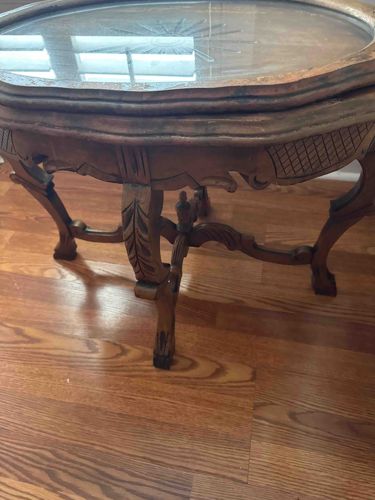
Carved Wood and Glass Top Coffee Table

Furniture

AI Estimated Value

·Not an official valuation·Verify before acting

$350-550

As of June 10, 2026

AI Item Analysis

·AI can make mistakes·Verify before acting
This is a coffee table featuring a clear glass top and a heavily carved wooden base. The overall shape of the table appears to be oval or boat-shaped. The wooden frame supporting the glass top exhibits a scalloped or undulating edge, suggesting a decorative profile. The base is constructed from what appears to be a light-colored wood, possibly oak or a similar hardwood, with a natural or light stain that highlights the wood grain. The legs are cabriole-style, characterized by their S-curve or double curve shape, and are elaborately carved with floral and foliate motifs, including prominent leaf-like designs on the upper part of the legs. Some sections of the apron connecting the legs feature geometric patterns, specifically a diamond or cross-hatch carving, adding textural contrast. The wood shows signs of wear consistent with age and use, including scratches, scuffs, and areas where the finish may be worn or chipped, particularly on the edges and feet of the legs. The glass top appears to be clear and relatively thick, though its exact thickness cannot be determined from the image. It is possible there are minor scratches or imperfections on the glass surface, but these are not clearly visible. The craftsmanship suggests a piece from the mid-20th century, possibly influenced by French Rococo revival or Italian provincial styles, though a more precise age would require closer inspection. The hardware securing the glass top is not visible, suggesting it rests directly on the wooden frame or is secured with clear spacers. The joints appear sturdy, indicating good construction despite surface wear.
AI Appraisal Report

·AI can make mistakes·Verify before acting
Upon visual examination of the provided images, I have appraised this carved wood and glass top coffee table. The piece exhibits a mid-20th century design, likely influenced by French Rococo revival or Italian provincial styles, characterized by its cabriole legs and elaborate floral and foliate carvings. The base appears to be constructed of a light-colored hardwood, possibly oak, with a natural finish. The condition is fair to good for its age, showing signs of honest wear such as scuffs, scratches, and minor finish loss on the legs and edges, which is consistent with regular use. The glass top appears intact without major visible chips or cracks. The craftsmanship, particularly the detailed carvings on the legs and apron, is a significant positive attribute. However, the style, while decorative, represents a category of furniture that currently sees moderate demand in the secondary market. Current market conditions favor more modernist or minimalist designs, which tempers the value of revivalist pieces like this. Comparable mid-century Rococo revival coffee tables of similar quality and condition typically sell in the $350 to $550 range at auction and in retail settings. The value is primarily driven by its decorative appeal as a functional piece of furniture rather than by specific rarity or designer attribution. Full authentication is limited by the use of images alone. An in-person inspection would be required to identify any maker's marks, confirm the type and quality of the wood, and assess the structural integrity of the joints. Without provenance or a maker's mark, it is appraised as a well-made decorative piece from the period.

Get your items appraised

Instant estimates of your treasures with AI-powered appraisals

Browse More Appraisals