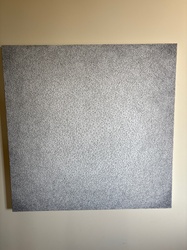
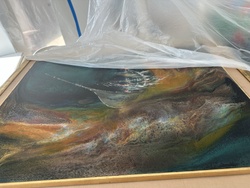
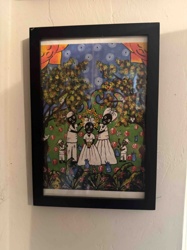
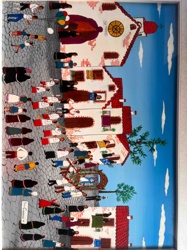
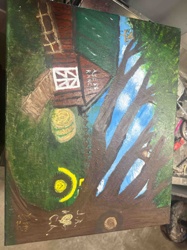
My mum had um wrapped up in a suitcase from wen I don’t know but I know the suitcase hadn’t been emptied from moving in there bungalow in 1992 and I’ve had um ten years since they past , I’ve 3 of um this one on canvas and other 2 on board
These notes were written by the person who submitted this item. Appraiser.AI has not verified them, and the AI's identification and estimate may rely on them.
AI Estimated Value
Not an official valuation
$50 - $150
AI estimate as of December 7, 2025 · verify with a professional before acting
AI-Generated · Verify before acting
Everything on this page is generated by AI for informational purposes only. AI can make mistakes — the AI may misidentify items or misattribute them (artist, maker, brand, designer, origin, era). This is not an official valuation and should not be used for insurance, sale, tax, estate, legal, or lending purposes — or any decision requiring a certified appraisal. It is not an authoritative claim about any person, brand, or rights holder — do not share or rely on it as a factual statement about a third party. Always consult qualified professionals before making financial decisions.
This analysis also relies on unverified notes provided by the user, which may be incomplete or inaccurate and could affect the result.
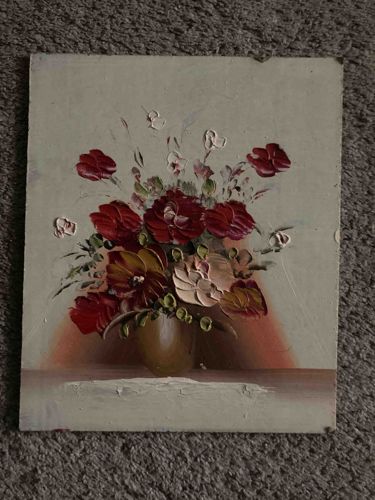
This item is an unframed oil painting featuring a floral still life, executed with a distinct impasto technique. The painting depicts an arrangement of flowers, primarily in shades of deep red, muted pink, and some lighter cream or white accents, set within what appears to be a brown-toned vase or pot. The background is a soft, light greyish-beige, with a subtle darker, peachy-pink aura behind the floral arrangement, suggesting a light source. The impasto technique is very prominent, with thick applications of paint, particularly noticeable in the flower petals, giving them a three-dimensional, textural quality. The individual brushstrokes are clearly visible, contributing to the rustic and expressive feel of the piece. The canvas itself, or rather the substrate, appears to be a board, as indicated by the user; however, the user also mentioned having one 'on canvas' and two 'on board', implying this one might be the canvas version given its slightly roughened edges, though typical stretched canvases usually have visible stretcher bars behind them. The visible edges show some minor wear and slight fraying, consistent with an unframed piece that has been handled over time. There are no immediate signs of significant damage such as tears, major paint loss, or repairs, though a detailed examination would require closer inspection. Given the thick application of paint and the subject matter, it likely dates from the mid-20th century to the late 20th century, a period when such decorative impasto floral paintings were popular. The style is somewhat naive or folk-art inspired, yet demonstrates competent use of color and texture to create an appealing visual. The piece lacks any discernible artist's signature, stamp, or other manufacturer's marks from the visible side.
AI Appraisal Report
I've examined the provided image of your impasto floral still life oil painting. The condition appears good overall for an unframed piece, with no immediate signs of major damage like tears or significant paint loss, though the edges show wear consistent with being unframed and handled. The impasto technique is a defining characteristic, creating a tactile, three-dimensional surface that was popular in the mid to late 20th century, which aligns with your provenance information suggesting it was packed away before 1992. The style is decorative, and while competent, it lacks the distinct artistic signature of a well-known master. The absence of an artist's signature significantly limits its value from an authenticity standpoint. Similar decorative, unsigned impasto floral paintings from this period are relatively common in the market. Demand is generally moderate, driven by those seeking decorative pieces rather than investment art. Without a signature or clear provenance to a specific artist, rarity is not a factor here. Factors impacting value are primarily its decorative appeal and condition. An in-person examination would be crucial to confirm the substrate (canvas vs. board), assess any subtle paint losses or surface grime, and search for any hidden marks or signatures that might not be visible in the photograph, which could potentially alter the appraisal. However, based on the current visual evidence, this painting falls into the decorative art category.