AI estimate as of August 22, 2025 · verify with a professional before acting
AI-Generated · Verify before acting
Everything on this page is generated by AI for informational purposes only. AI can make mistakes — the AI may misidentify items or misattribute them (artist, maker, brand, designer, origin, era). This is not an official valuation and should not be used for insurance, sale, tax, estate, legal, or lending purposes — or any decision requiring a certified appraisal. It is not an authoritative claim about any person, brand, or rights holder — do not share or rely on it as a factual statement about a third party. Always consult qualified professionals before making financial decisions.
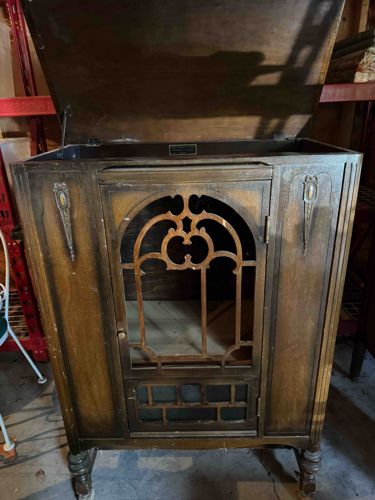
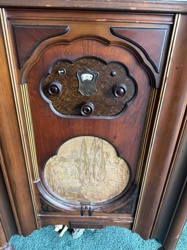
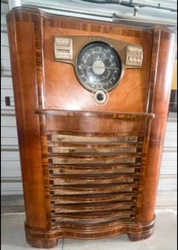
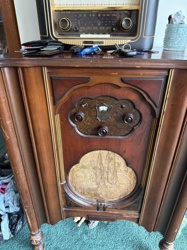
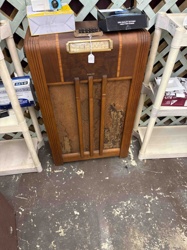
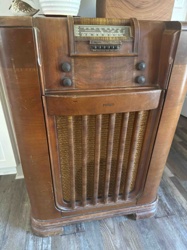
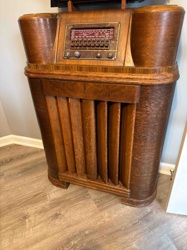
This is an antique wooden radio console, likely dating from the early to mid-20th century, possibly the 1920s or 1930s, given its style. The console appears to be constructed from a dark-stained wood, possibly oak or walnut, showing a rich, deep brown color with visible wood grain. The cabinet has a rectangular form, standing on four turned legs which add to its vintage appeal. The craftsmanship suggests a sturdy build, indicative of the period's emphasis on durable furniture. A hinged lid on the top opens to reveal the internal components, which would historically house the record player or radio mechanism, although these are not fully visible. The front facade features a central speaker grille covered by an intricately carved wooden fretwork panel, showcasing an arched, ornate design that is characteristic of Art Deco or Gothic Revival influences. Below this, there's a smaller rectangular section, possibly another grille or a control panel area. To the right of the central panel, there is a hinged door, presumably for accessing controls or additional components. Both side panels feature elongated, decorative metal or carved wood appliques with an oval motif at the top, adding an elegant touch. The finish exhibits significant signs of wear, including scratches, scuffs, and areas where the dark stain has faded or chipped, particularly on the edges and corners, indicating its age and consistent use. There's also a noticeable layer of dust, suggesting it has been stored for some time. Despite the visible wear, the overall structure appears intact, and the ornate detailing remains a prominent feature, highlighting the quality of craftsmanship. The reverse side of the top lid has a rectangular indentation or plate, which might have once held a manufacturer's label or model information, but it is not legible from the image. The general condition suggests it retains its original patina.
AI Appraisal Report
Upon visual examination of this antique wooden radio console, I assess its condition as fair to good, consistent with its likely age from the early to mid-20th century (1920s-1930s). The visible wood grain and construction suggest original materials, likely oak or walnut. Authenticity, based on style and apparent wear, appears high for the period. However, without a physical inspection, I cannot confirm if all internal components are original or if any repairs/restorations have been made. The significant surface wear, including scratches, scuffs, and fading, are a natural result of age and use, contributing to its authentic patina rather than detracting significantly from its appeal for collectors of vintage items.
Market conditions for such consoles vary. While there's a niche demand for antique electronics and furniture, operational radios from this era often command higher prices. This console's value rests more on its furniture aspect and decorative appeal. Comparables for non-functional or untested radio consoles of this size and style generally range from $200-$600, influenced by the craftsmanship and design. The ornate fretwork and turned legs enhance its aesthetic value. Demand is moderate, primarily from collectors, antique dealers, or individuals seeking unique decorative pieces. Rarity is not exceptionally high, as many such consoles were produced.
Factors significantly impacting its value include its non-operational status (if true), the extent of internal component presence, and the surface condition. If the internal electronics are complete and could be restored, the value would increase. Conversely, if internals are missing or heavily damaged, it functions purely as an aesthetic piece. The dust suggests storage, and a proper cleaning could improve its visual appeal.
Limitations in authenticity verification from images alone are significant. I cannot verify the type of wood definitively, nor can I inspect the internal mechanisms, wiring, or the integrity of joints. A physical examination is crucial to assess structural soundness, identify any hidden damage, confirm the type of wood, and determine the completeness and condition of the internal radio/record player components. Provenance documentation (original sales receipts, family history) would also immensely aid in confirming its age and origin. Scientific testing, such as wood dating, could provide further authentication if required.