AI Appraisal Estimate

AI-generated estimates · not official valuations

From the user

What was submitted

Photo and notes provided by the user — not generated by AI

Submitted item photo
Submitted photo · May 27, 2026

User's notes

No additional notes provided.

AI analysis below

AI appraisal

AI analysis & estimate

AI-Generated · Verify before acting

Everything below is generated by AI for informational purposes only. AI can make mistakes — the AI may misidentify items or misattribute them (artist, maker, brand, designer, origin, era). This is not an official valuation and should not be used for insurance, sale, tax, estate, legal, or lending purposes — or any decision requiring a certified appraisal. It is not an authoritative claim about any person, brand, or rights holder — do not share or rely on it as a factual statement about a third party. Always consult qualified professionals before making financial decisions.

Read the full disclaimer

AI Identification

·Not independently authenticated·Verify before acting

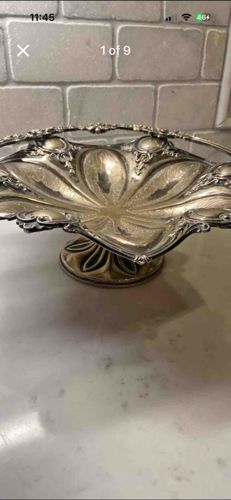
Victorian Era Silver-Plated Pedestal Basket with Swing Handle

Antique Silver & Silver-Plate Metalware

AI Estimated Value

·Not an official valuation·Verify before acting

$45 - $85

As of May 27, 2026

AI Item Analysis

·AI can make mistakes·Verify before acting
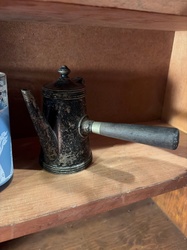
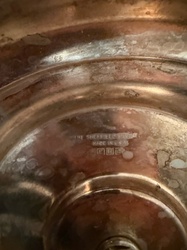
This is a highly decorative, silver-plated metal centerpiece basket, likely dating from the late 19th to early 20th century. The piece features an ornate, lobed scalloped rim with deep fluting that creates a sunburst or floral petal pattern radiating from the center. It is elevated on a weighted, flared pedestal base that mimics the fluted design of the bowl. A significant feature is the movable swing handle, which appears to be attached with decorative hinges and features an embossed floral or scroll motif at its apex. The interior of the bowl displays intricate engine-turned or chased detailing within each lobe, enhancing its reflective qualities. Physically, the item shows signs of significant age-related tarnish and patina, particularly in the recessed areas of the ornamentation, which is typical for silver-plate of this era. There are visible areas where the silver plating may be thinning (bleeding), revealing the base metal underneath. The craftsmanship reflects the Victorian or Edwardian aesthetic, characterized by high-relief molding and a preference for complex, curvilinear forms. No specific maker's marks are visible in the provided image, but such pieces were commonly produced by firms like Reed & Barton, Meriden B. Company, or Sheffield manufacturers. The overall condition is fair to good, requiring professional polishing to restore its original luster, though the structural integrity appears sound.

AI Appraisal Report

·AI can make mistakes·Verify before acting
Based on my visual examination of this Victorian-era silver-plated pedestal basket, I find it to be a representative example of late 19th-century mass-market holloware. The design, featuring a fluted, lobed rim and a hinged swing handle, is characteristic of the aesthetic movement popular between 1880 and 1910. The condition is currently fair; while the structural integrity appears sound, there is significant oxidation and 'bleeding' where the silver plate has worn away to reveal the base metal (likely copper or Britannia metal). This wear significantly affects the value, as re-plating often exceeds the item's market worth. The current market for Victorian silver-plate is highly saturated, with supply far exceeding demand. Modern collectors often view these pieces as difficult to maintain, leading to a decline in prices compared to twenty years ago. Comparable pieces in similar condition frequently sell at estate auctions or through online marketplaces in the $40 to $90 range. Higher valuations are reserved only for signed pieces by prestigious makers like Elkington or Christofle, or those in mint condition. Because this appraisal is based on digital images, I cannot definitively verify the manufacturer or the base metal composition. A physical inspection would be required to locate maker's marks, which are typically found on the underside of the base. To confirm authenticity and refine this valuation, I would need to check for hallmarks that might indicate solid sterling silver (though the visible wear suggests plating) and assess the handle hinges for repairs. If the piece were found to be solid sterling, the value would increase substantially based on silver weight alone.

Get your items appraised

Instant estimates of your treasures with AI-powered appraisals

Browse More Appraisals