AI Appraisal Estimate

AI-generated estimates · not official valuations

From the user

What was submitted

Photo and notes provided by the user — not generated by AI

Submitted item photo
Submitted photo · June 23, 2026

User's notes

No additional notes provided.

AI analysis below

AI appraisal

AI analysis & estimate

AI-Generated · Verify before acting

Everything below is generated by AI for informational purposes only. AI can make mistakes — the AI may misidentify items or misattribute them (artist, maker, brand, designer, origin, era). This is not an official valuation and should not be used for insurance, sale, tax, estate, legal, or lending purposes — or any decision requiring a certified appraisal. It is not an authoritative claim about any person, brand, or rights holder — do not share or rely on it as a factual statement about a third party. Always consult qualified professionals before making financial decisions.

Read the full disclaimer

AI Identification

·Not independently authenticated·Verify before acting

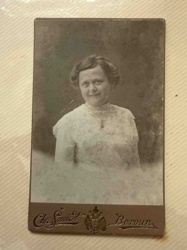
Late Victorian Cabinet Card Studio Portrait

Vintage Photography & Ephemera

AI Estimated Value

·Not an official valuation·Verify before acting

$15.00 - $25.00

As of June 23, 2026

AI Item Analysis

·AI can make mistakes·Verify before acting
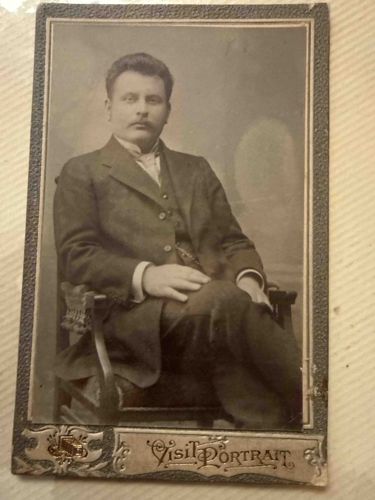
This is an original late 19th-century Cabinet Card or Visit Portrait featuring a three-quarter length seated pose of a gentleman. The item consists of a monochrome photographic print, likely an albumen or silver gelatin process, mounted onto a heavy dark grey or charcoal-toned cardstock with a textured border. The subject is a middle-aged man with dark hair and a mustache, dressed in formal Victorian attire including a three-piece frock suit with visible waistcoat buttons and a watch chain (fob) visible near the waist. He is seated in a carved wooden chair with a decorative fringe or tassel detail on the armrest, common in photography studios of the era. The bottom of the mount features an ornate embossed silver or white lead banner with the words 'Visit Portrait' in stylized typography, flanked by decorative scrolls and a possible studio insignium or logo on the bottom left. The photograph exhibits characteristic sepia-toned aging and minor surface silvering or oxidation typical of 1880-1900 era photos. Condition indicates some edge wear, corner bumping, and minor spotting/surface foxing on the right side of the image area. No specific photographer's name is visible on the front, but the high-quality mount suggest a professional studio production from the late 1890s.
AI Appraisal Report

·AI can make mistakes·Verify before acting
I have virtually examined this Late Victorian Cabinet Card, likely dating between 1895 and 1900. The item represents a standard 'Visit Portrait' of the era, utilizing an albumen or early matte collodion process. The dark, textured cardstock and embossed silver-tone banner reflect the transitional aesthetic moving toward the Edwardian period. The subject’s attire and the studio props—specifically the tasseled chair—are quintessential examples of middle-class studio portraiture from this window. The condition is 'fair to good' for its age. Visible edge wear, corner bumping, and surface foxing slightly diminish the aesthetic appeal. The presence of 'silvering out' in the darker areas is a natural chemical occurrence for silver-based emulsions and confirms the era's photographic technology. In the current ephemera market, value is driven by the fame of the subject, the prestige of the photographer, or an unusual 'cross-over' theme (such as military uniforms, occult interests, or post-mortem photography). As this is an unidentified gentleman in standard attire by an anonymous studio, rarity is low. Similar specimens are readily available at antique malls and online auctions. Limitations: This appraisal is based strictly on high-resolution imagery. Without a physical inspection, I cannot verify the molecular structure of the paper or detect hidden repairs or modern reproductions. A full authentication would require examining the verso for photographer stamps, checking the weight and thickness of the cardstock, and using a loupe to inspect the grain pattern of the print to ensure it is not a high-quality modern scan/reprint. Provenance regarding the sitter’s identity would significantly increase historical value.

Get your items appraised

Instant estimates of your treasures with AI-powered appraisals

Browse More Appraisals