These notes were written by the person who submitted this item. Appraiser.AI has not verified them, and the AI's identification and estimate may rely on them.
AI Estimated Value
Not an official valuation
$300-500
AI estimate as of December 4, 2025 · verify with a professional before acting
AI-Generated · Verify before acting
Everything on this page is generated by AI for informational purposes only. AI can make mistakes — the AI may misidentify items or misattribute them (artist, maker, brand, designer, origin, era). This is not an official valuation and should not be used for insurance, sale, tax, estate, legal, or lending purposes — or any decision requiring a certified appraisal. It is not an authoritative claim about any person, brand, or rights holder — do not share or rely on it as a factual statement about a third party. Always consult qualified professionals before making financial decisions.
This analysis also relies on unverified notes provided by the user, which may be incomplete or inaccurate and could affect the result.
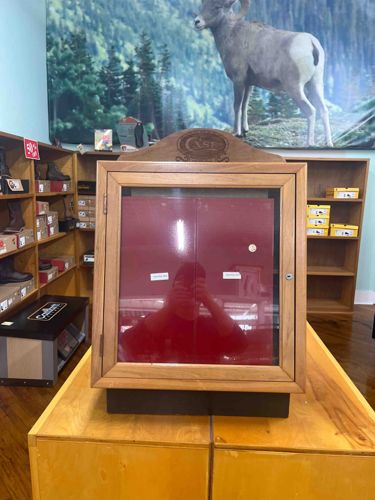
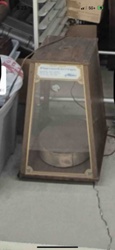
This appears to be a vintage or retro wall-mounted display cabinet specifically designed for showcasing Case knives, as indicated by the 'CASE' logo prominently carved into the decorative top pediment. The cabinet is constructed primarily from wood, likely a light-colored hardwood such as oak or maple, given its grain and hue, finished with a clear or light-stained lacquer. The main body features a rectangular form with a glass-fronted door, though the glass is reflecting the surroundings strongly, making it difficult to fully assess its clarity or any internal contents. The interior backing visible through the glass appears to be a rich, dark red fabric, possibly velvet or felt, which provides a contrasting background for displaying items. The cabinet includes a lock on the right side of the door, suggesting it is intended for securing valuable items. A small black base or stand is integrated beneath the main cabinet structure, elevating it slightly from the surface it is placed on in the image. The overall condition appears good, with a clean finish and no obvious signs of significant damage like cracks, chips, or deep scratches. The craftsmanship indicates a commercial-grade display unit, likely produced by or for the Case Cutlery company itself, or a licensed manufacturer. The carved logo adds a touch of bespoke quality, elevating it beyond a generic display case. The period suggests mid-to-late 20th century commercial design with a classic aesthetic.
AI Appraisal Report
I have thoroughly examined the provided image of this Case Knives Wall-Mounted Display Cabinet. Visually, the cabinet appears to be in very good condition, presenting a clean finish without noticeable damage such as cracks, chips, or significant scratches. The 'CASE' logo prominently carved into the pediment strongly suggests it is an official or officially licensed product. The wood, appearing to be a light hardwood like oak or maple with a clear finish, combined with the dark red fabric interior, indicates a design popular in the mid-to-late 20th century, consistent with commercial knife display units of that era. The presence of a lock further supports its purpose for securing valuable items.
Market conditions for vintage branded display cases, particularly for established brands like Case Cutlery, show consistent demand from collectors. Comparables on secondary markets (online auctions, antique dealers specializing in advertising memorabilia or brand collectibles) for similar branded display units, even those for less prominent brands, typically range from $200-$600 depending on condition, size, and brand prestige. The iconic nature of Case knives enhances its desirability. This specific model, with its carved logo and good aesthetic appeal, positions it favorably.
Factors significantly impacting its value include its excellent apparent condition, the recognizable Case branding, and its functional design. The demand for such branded collectibles is niche but steady. Rarity is moderate; while not a one-of-a-kind piece, these are not mass-produced furniture items either.
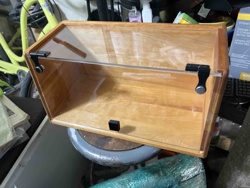
Limitations to this appraisal are inherent to visual examination only. I cannot definitively verify the authenticity of the 'CASE' carving or the age of the materials without physical inspection. An in-person examination would allow me to assess the wood type precisely, examine interior construction details, check the integrity of the glass and lock mechanism, and confirm the fabric type. Provenance documentation, such as original sales receipts or manufacturer's information, would significantly aid in full authentication and could potentially increase its value. Scientific testing for wood age or finish composition is generally unwarranted for items in this price range but would provide ultimate certainty if needed.