AI Appraisal Estimate

AI-generated estimates · not official valuations

From the user

What was submitted

Photo and notes provided by the user — not generated by AI

Submitted item photo
Submitted photo · May 28, 2026

User's notes

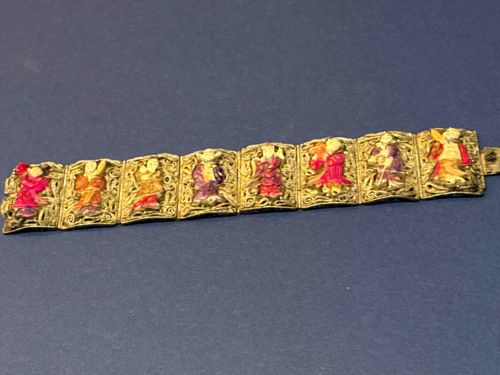
7 inch Japanese bracelet

AI analysis below

AI appraisal

AI analysis & estimate

AI-Generated · Verify before acting

Everything below is generated by AI for informational purposes only. AI can make mistakes — the AI may misidentify items or misattribute them (artist, maker, brand, designer, origin, era). This is not an official valuation and should not be used for insurance, sale, tax, estate, legal, or lending purposes — or any decision requiring a certified appraisal. It is not an authoritative claim about any person, brand, or rights holder — do not share or rely on it as a factual statement about a third party. Always consult qualified professionals before making financial decisions.

Note

This analysis also relies on unverified notes provided by the user, which may be incomplete or inaccurate and could affect the result.

Read the full disclaimer

AI Identification

·Not independently authenticated·Verify before acting

Vintage Japanese Hand-Painted Panel Bracelet

Jewelry

AI Estimated Value

·Not an official valuation·Verify before acting

$60-$90

As of May 28, 2026

AI Item Analysis

·AI can make mistakes·Verify before acting
This is a vintage Japanese bracelet, approximately 7 inches in length, composed of multiple rectangular link segments. Each segment features a distinct, hand-painted figure dressed in traditional Japanese attire, likely geishas or court figures, rendered in vibrant enamels or lacquers. The color palette includes shades of red, pink, orange, yellow, and purple, indicating a polychromatic design. The figures are set within a silver-toned metal frame, possibly silver or a silver-plated alloy, which exhibits intricate filigree or openwork detailing around the borders of each panel. This filigree work adds a delicate and decorative element to the bracelet's overall appearance. The construction indicates individual links joined together, typical of panel bracelets. Given the 'Japanese bracelet' context, it likely dates from the early to mid-20th century, a period when such ornate, hand-decorated pieces were popular. The observable condition suggests some wear consistent with age and use, such as slight tarnishing on the metalwork and potential minor abrasions or loss of luster on the enamel, though no significant damage or repairs are immediately visible. The craftsmanship appears to be of good quality, with attention to detail in both the painting and the metalwork, suggesting a handcrafted piece rather than mass-produced. There are no clear maker's marks or signatures discernible from the provided images, which would be located on the clasp or reverse of the links if present.
AI Appraisal Report

·AI can make mistakes·Verify before acting
Based on my visual examination of this vintage Japanese panel bracelet, I assess it to be a charming example of mid-20th century Japanese decorative arts, likely produced for the export market. The craftsmanship, featuring hand-painted panels depicting traditional figures within silver-toned filigree frames, is of good quality. Each panel appears individually rendered, speaking to a handcrafted origin rather than mass production. The condition is consistent with its age, showing minor wear and some tarnishing on the metalwork, but no major cracks, chips, or repairs are visible in the images provided. The primary factor influencing value is its decorative appeal and the quality of the miniature paintings. The market for such bracelets is steady, driven by collectors of vintage costume jewelry and Japonisme. Comparable hand-painted Japanese panel bracelets typically sell in the range provided. Its value is somewhat limited by the base metal, which appears to be a silver-plated alloy rather than sterling silver, and the absence of a maker's mark. Rarity is moderate; while not exceedingly rare, well-preserved examples with detailed artwork are desirable. Full authentication would require in-person examination to test the metal content (e.g., acid or XRF testing) and a closer inspection of the painting and enamel under magnification to confirm the period and technique. Without physical analysis, I cannot definitively confirm the specific metal composition or rule out the possibility of it being a later reproduction, though the style is consistent with a mid-century origin.

Get your items appraised

Instant estimates of your treasures with AI-powered appraisals

Browse More Appraisals