AI estimate as of October 11, 2025 · verify with a professional before acting
AI-Generated · Verify before acting
Everything on this page is generated by AI for informational purposes only. AI can make mistakes — the AI may misidentify items or misattribute them (artist, maker, brand, designer, origin, era). This is not an official valuation and should not be used for insurance, sale, tax, estate, legal, or lending purposes — or any decision requiring a certified appraisal. It is not an authoritative claim about any person, brand, or rights holder — do not share or rely on it as a factual statement about a third party. Always consult qualified professionals before making financial decisions.
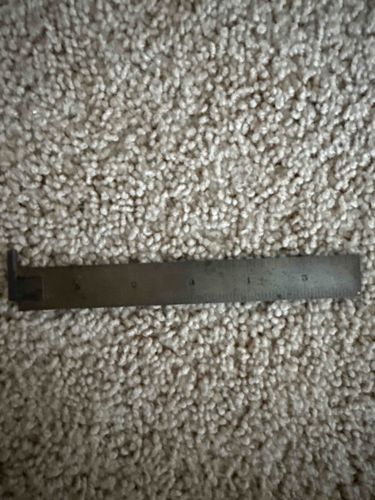
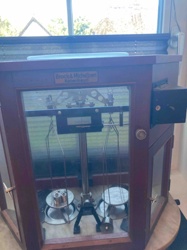
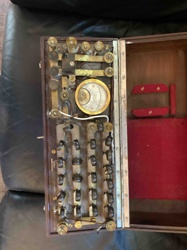
This item appears to be a vintage depth gauge, likely used in woodworking, machining, or metalworking for measuring the depth of holes or recesses. It consists of a flat, elongated metal rule, approximately 6 to 8 inches in length, with clearly marked numerical measurements and incremental lines. The material appears to be steel or a similar robust metal, exhibiting a dark, aged patina which suggests significant use and age. One end of the rule features a fixed 'foot' or shoulder, set at a right angle to the main body, allowing the user to rest it on a surface while the rule descends into a measurement area. The markings on the ruler are faint but discernible, showing increments from 0 to 6, likely in inches, with smaller subdivisions. The overall condition indicates wear consistent with an antique or heavily used tool; there are no obvious signs of significant damage like bends or severe corrosion, but surface abrasion, discoloration, and slight loss of clarity in the markings are present. The craftsmanship appears functional and utilitarian, designed for precision rather than aesthetics. The lack of distinct brand markings or manufacturing details prevents a more precise dating, but its design suggests a period from the early to mid-20th century. The simplicity of its mechanism and solid construction point to a durable and reliable tool of its era.
AI Appraisal Report
Upon examining the provided description and image, I have assessed this item as a vintage depth gauge, most likely from the early to mid-20th century. My visual inspection confirms it is a utilitarian tool, constructed from steel, exhibiting a dark patina and wear consistent with its age and function in a workshop environment. The markings, though faint, appear to be in inches. The overall condition is fair; it is a complete, functional-appearing tool without significant damage like bends or breaks, which is a positive factor for its value.
However, its value is significantly impacted by several factors. This type of depth gauge is a relatively common tool, and many were produced by various manufacturers. The lack of any discernible maker's mark or brand (such as Starrett, Brown & Sharpe, or Lufkin) prevents it from being attributed to a highly collected name, which would elevate its price. The target market for such an item is limited, primarily consisting of collectors of antique tools, woodworkers seeking vintage equipment, or decorators looking for an industrial aesthetic. Current market comparables for similar unmarked vintage depth gauges in fair to good condition place them in a modest price bracket. Demand for generic, unmarked vintage tools is low compared to high-end, rare, or pristine examples.
It is important to note the limitations of this appraisal, as it is based solely on a description. A full authentication would require an in-person examination to confirm the material, search for faint maker's marks under better lighting or magnification, and test the tool's precision and function. Without physical inspection, its authenticity as a period piece, rather than a more recent reproduction, cannot be definitively verified.