Indonesian Batik Copper Printing Block (Cap)
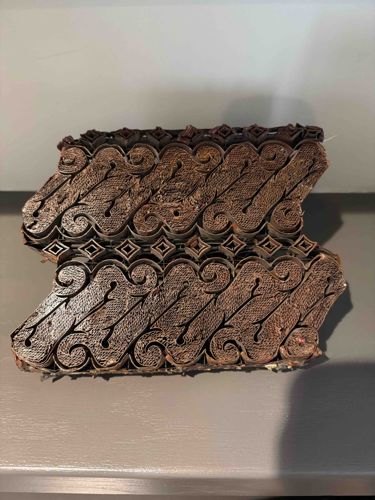
This is a hand-assembled copper printing block, known in Indonesia as a 'Cap' (pronounced 'tjap'), traditionally used for applying hot wax to fabric in the Batik Tulis process. The block features an intricate Parang-style motif, characterized by diagonal scrolling patterns and central diamond-shaped borders. It is constructed from thin, meticulously bent copper strips that are soldered onto a heavy metal frame, creating a stamp with high relief. The copper surface exhibits a deep brown or blackened patina, typical of prolonged exposure to heat and wax. Tiny needle-like pins within the swirls help hold the wax. The craftsmanship is of high quality, showing great symmetry in the complex repetitious design. Regarding condition, there is visible wear, specifically some minor bending of the copper strips at the edges and heavy wax residue buildup within the crevices. These stamps were common from the late 19th century through the mid-20th century; this particular piece appears to be a vintage example from the mid-20th century. Its weight and the density of the metalwork indicate it was designed for industrial textile production.
AI-Generated Appraisal Disclaimer
Estimated Value
$150 - $250
Basic Information
Category
Textile Manufacturing tools / Asian Folk Art
Appraised On
March 2, 2026
Estimated Value
$150 - $250
Item Description
This is a hand-assembled copper printing block, known in Indonesia as a 'Cap' (pronounced 'tjap'), traditionally used for applying hot wax to fabric in the Batik Tulis process. The block features an intricate Parang-style motif, characterized by diagonal scrolling patterns and central diamond-shaped borders. It is constructed from thin, meticulously bent copper strips that are soldered onto a heavy metal frame, creating a stamp with high relief. The copper surface exhibits a deep brown or blackened patina, typical of prolonged exposure to heat and wax. Tiny needle-like pins within the swirls help hold the wax. The craftsmanship is of high quality, showing great symmetry in the complex repetitious design. Regarding condition, there is visible wear, specifically some minor bending of the copper strips at the edges and heavy wax residue buildup within the crevices. These stamps were common from the late 19th century through the mid-20th century; this particular piece appears to be a vintage example from the mid-20th century. Its weight and the density of the metalwork indicate it was designed for industrial textile production.
Get Your Items Appraised
Instant estimates of your treasures with AI-powered instant appraisals