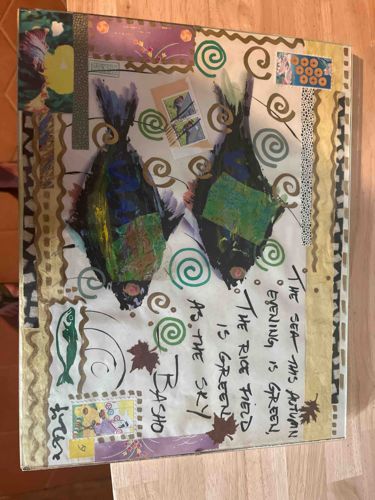
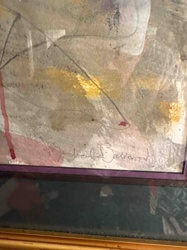
Autumn Sea, Gyotaku collage. Celia Stapleton circa 1998
These notes were written by the person who submitted this item. Appraiser.AI has not verified them, and the AI's identification and estimate may rely on them.
AI Estimated Value
Not an official valuation
$400 - $600
AI estimate as of July 8, 2025 · verify with a professional before acting
AI-Generated · Verify before acting
Everything on this page is generated by AI for informational purposes only. AI can make mistakes — the AI may misidentify items or misattribute them (artist, maker, brand, designer, origin, era). This is not an official valuation and should not be used for insurance, sale, tax, estate, legal, or lending purposes — or any decision requiring a certified appraisal. It is not an authoritative claim about any person, brand, or rights holder — do not share or rely on it as a factual statement about a third party. Always consult qualified professionals before making financial decisions.
This analysis also relies on unverified notes provided by the user, which may be incomplete or inaccurate and could affect the result.
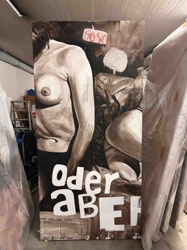
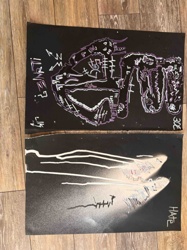
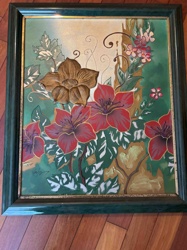
This item is a mixed media collage artwork titled "Autumn Sea, Gyotaku collage" by Celia Stapleton, created around 1998. The central elements of the piece are two gyotaku (fish rubbings) prints of what appear to be dark-colored fish, possibly pompano or a similar species, rendered in shades of black, blue, and green, with some lighter yellow or white accents on their bodies. Overlaid on the fish are textured squares of green material, contributing to the 'collage' aspect. The background is a cream or light tan paper, adorned with abstract swirling patterns in green and brown or gold, reminiscent of water or organic forms. Various smaller elements are collaged onto the background, including real or reproduced postage stamps from different countries, some depicting birds or other creatures. There are also sections of patterned decorative papers integrated into the composition, featuring floral motifs, geometric designs, and wavy borders in colors like purple, gold, and red. Handwritten text in black ink is prominently featured on the right side, quoting a haiku attributed to Bashō: "The Sea – This autumn / The evening is green, / The rice field / Is green, / As the sky." A small, stylized green fish drawing is visible on the lower left. The entire piece seems to be mounted on a solid board or canvas and is likely protected by a clear coating, giving it a somewhat glossy appearance. The edges show slight wear consistent with its age, but overall, the piece appears to be in good condition with vibrant colors and intact components. The craftsmanship is indicative of a thoughtful and layered approach to artmaking, blending traditional Japanese printmaking techniques with contemporary collage elements.
AI Appraisal Report
Based on my examination of the provided images, this mixed media piece, 'Autumn Sea, Gyotaku Collage' by Celia Stapleton, appears to be in very good condition for its circa 1998 age. The colors remain vibrant, and the collage elements, including the gyotaku fish prints, stamps, and papers, seem secure and intact with only minor edge wear noted. The composition is complex and skillfully executed, blending traditional Japanese art forms with contemporary collage, which is compelling.
The market for Celia Stapleton's work, while respected in certain circles, is relatively niche. Comparables for her mixed media gyotaku pieces are not abundant, but similar works by regional artists incorporating this technique often sell in the low-to-mid hundreds. The inclusion of a Bashō haiku and the intricate layering add to its artistic merit and appeal.
A key factor influencing value is the artist's regional market recognition rather than broad international demand. While visually authentic as a work by the artist, full authentication is limited by the remote nature of this appraisal. For definitive verification, an in-person examination would be required to assess the paper, ink, and collage materials firsthand. Furthermore, any provenance documentation, such as a bill of sale or exhibition history, would significantly strengthen the valuation.