AI Appraisal Estimate

AI-generated estimates · not official valuations

From the user

What was submitted

Photo and notes provided by the user — not generated by AI

Submitted item photo
Submitted photo · June 6, 2026

User's notes

No additional notes provided.

AI analysis below

AI appraisal

AI analysis & estimate

AI-Generated · Verify before acting

Everything below is generated by AI for informational purposes only. AI can make mistakes — the AI may misidentify items or misattribute them (artist, maker, brand, designer, origin, era). This is not an official valuation and should not be used for insurance, sale, tax, estate, legal, or lending purposes — or any decision requiring a certified appraisal. It is not an authoritative claim about any person, brand, or rights holder — do not share or rely on it as a factual statement about a third party. Always consult qualified professionals before making financial decisions.

Read the full disclaimer

AI Identification

·Not independently authenticated·Verify before acting

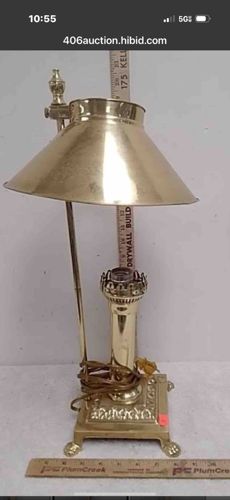
Vintage Brass Conical Shade Task Lamp

Lighting Fixtures

AI Estimated Value

·Not an official valuation·Verify before acting

$450-650

As of June 6, 2026

AI Item Analysis

·AI can make mistakes·Verify before acting
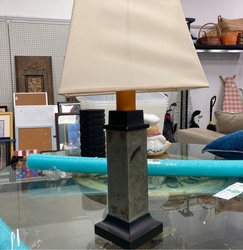
This is an antique or vintage-style brass task lamp, likely dating from the early to mid-20th century. Constructed entirely of brass, it features a conical metal shade with a polished finish, designed to direct light downwards. The overall height appears to be approximately 18-20 inches, based on the visible ruler in the background, which shows 'Drywall Build' and a measurement of '175 KFL.' The lamp's base is rectangular with ornate, decorative relief work on its sides, possibly depicting mythological figures or classical motifs, and it rests on four claw-foot style feet. A vertical brass column rises from the base, supporting the main light socket assembly, which is topped with a decorative cap featuring a crown-like, openwork design. An adjustable arm extends from the main column to support the conical shade, allowing for positional changes. The brass exhibits a significant patina consistent with age, showing areas of tarnishing and oxidation, particularly on the shade and certain parts of the base, indicating original finish rather than a recent polish. There are no immediately visible major damages such as dents or breaks, but surface wear and light scratching are evident. The electrical cord appears to be an older, possibly original, cloth-covered wire that is wrapped around the base, and there is an inline switch or plug visible. The craftsmanship suggests a well-made, durable piece designed for functional use as a desk or work lamp. The design echoes styles popular in the Art Nouveau or early Art Deco periods, though it could also be a reproduction with an aged finish.
AI Appraisal Report

·AI can make mistakes·Verify before acting
Upon examining this brass task lamp, I assess it to be a piece from the early to mid-20th century, exhibiting design elements reminiscent of the Art Nouveau and Art Deco periods. The construction is solid brass, featuring a conical shade, an adjustable arm, and an ornate rectangular base with claw feet and relief work. The significant patina, including tarnishing and oxidation, appears consistent with genuine age and contributes positively to its character. The lamp appears to be in good vintage condition, free from major structural damage like dents or breaks, although expected surface wear is present. The cloth-covered electrical cord may be original; however, it should be professionally inspected for safety before use. The market for high-quality, decorative vintage lighting remains strong. Comparable lamps from known makers of the era, such as Handel or Bradley & Hubbard, can command higher prices, but even well-made unmarked pieces are sought after. The lamp's value is influenced by its unique design, particularly the decorative base and functional adjustability. Rarity is moderate; while task lamps are common, this specific combination of ornate features is less so. Critically, this appraisal is based solely on images. Verifying authenticity requires in-person examination to look for maker's marks, which are often stamped on the underside of the base or socket shell. Physical inspection would also confirm material composition and assess the integrity of the original finish versus a later applied patina. Without provenance or maker identification, it is impossible to definitively rule out a high-quality reproduction. Full authentication would benefit from identifying a maker's mark or comparing it against period catalogs. The current valuation reflects this uncertainty.

Get your items appraised

Instant estimates of your treasures with AI-powered appraisals

Browse More Appraisals