AI Appraisal Estimate

AI-generated estimates · not official valuations

From the user

What was submitted

Photo and notes provided by the user — not generated by AI

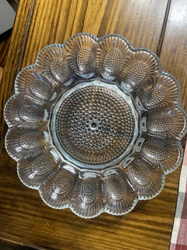
Submitted item photo
Submitted photo · May 16, 2026

User's notes

No additional notes provided.

AI analysis below

AI appraisal

AI analysis & estimate

AI-Generated · Verify before acting

Everything below is generated by AI for informational purposes only. AI can make mistakes — the AI may misidentify items or misattribute them (artist, maker, brand, designer, origin, era). This is not an official valuation and should not be used for insurance, sale, tax, estate, legal, or lending purposes — or any decision requiring a certified appraisal. It is not an authoritative claim about any person, brand, or rights holder — do not share or rely on it as a factual statement about a third party. Always consult qualified professionals before making financial decisions.

Read the full disclaimer

AI Identification

·Not independently authenticated·Verify before acting

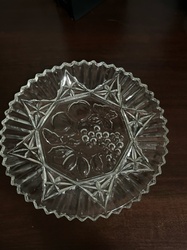
American Brilliant Period Cut Glass Centerpiece Bowl

Antique Glassware

AI Estimated Value

·Not an official valuation·Verify before acting

$450 - $650

As of May 16, 2026

AI Item Analysis

·AI can make mistakes·Verify before acting
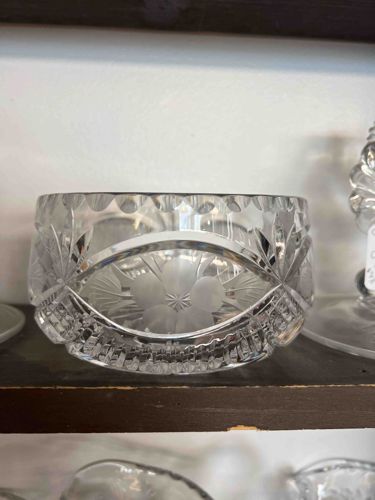
This is a fine lead crystal centerpiece bowl featuring high-quality wheel-cut and etched designs, characteristic of the American Brilliant Period (circa 1880-1915). The object exhibits a cylindrical form with a flattened base and a scalloped rim consisting of thumbprint or notch cuts. Its primary decorative motif is an 'intaglio' or copper-wheel engraved floral pattern, specifically depicting a multi-petaled flower with a frosted or matted finish, centered within a pointed oval clear panel. Surrounding this central flora are sharp, geometric 'hobstar' or starburst cuts that create a prismatic effect when hit by light. The lower section of the bowl features a vertically notched or zippered band, providing textural contrast. The glass is exceptionally clear, suggesting a high lead content typical of premium makers like Libbey, Hawkes, or Hoare, though no acid mark is immediately visible in the photo. The construction is heavy and thick-walled, emphasizing its luxury status. Regarding condition, the piece appears well-preserved with sharp edges on the cuts; however, close inspection is needed to check for 'fleabites' or minor chips along the rim and base consistent with age. There is no evidence of clouding or sickness in the glass, and the polish remains bright. This item represents superior craftsmanship and the complex hand-cutting techniques of late 19th-century luxury glassware.
AI Appraisal Report

·AI can make mistakes·Verify before acting
I have conducted a visual examination of this American Brilliant Period (ABP) centerpiece bowl. The piece exhibits the high refractive index and clarity indicative of superior lead crystal from the peak production years (1880-1915). The combination of deep geometric hobstar cutting with delicate intaglio copper-wheel floral engraving suggests a high-tier manufacturer such as Hawkes or Libbey. The 'zipper' cuts and scalloped thumbprint rim are executed with a precision that speaks to authentic period craftsmanship rather than later reproductions. Condition appears excellent, with the glass maintaining its original luster. I observe no 'sickness' (permanent clouding), though I must note that without a physical inspection, I cannot rule out 'fleabites' or micro-chips on the sharpest facets of the hobstars or the rim. The market for ABP glass currently favors larger, multi-technique pieces like this one, though prices have stabilized compared to the highs of the late 20th century. This valuation is based on current auction results for unsigned premium Brilliant Period blanks. The primary factor limiting a higher valuation is the lack of a visible acid-etched signature. To provide a definitive authentication, I would require an in-person physical examination to check for wear patterns on the base consistent with age, a black-light (UV) test to verify the presence of manganese (which produces a lime-green glow in period glass), and a weight-to-volume measurement to confirm lead content. Documentation of provenance or a verified pattern match from a period catalog would significantly enhance its marketability and could increase the valuation by 20-30%.

Get your items appraised

Instant estimates of your treasures with AI-powered appraisals

Browse More Appraisals