Georgian Rose-Cut Diamond Foliate Ring
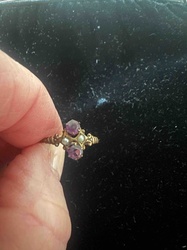
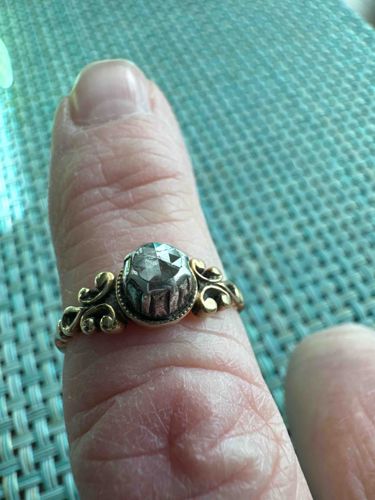
This antique ring is a classic example of Georgian jewelry, likely dating from the late 18th to early 19th century (circa 1780-1820). The piece features a high-domed, rose-cut diamond center stone, characterized by its flat base and triangular facets that rise to a point. The stone is set into a silver 'collet' setting, which was a standard practice during this era to enhance the brilliance of diamonds, while the rest of the band is crafted from yellow gold (likely high-karat, approximately 15k to 18k). The shoulders exhibit exquisite scrollwork or foliate motifs, showing traditional hand-chasing and filigree techniques. A notable feature of this period is the closed-back setting, which would have originally contained metal foil beneath the stone to intensify its light reflection; however, there is visible darkening or 'tarnishing' behind the stone, suggesting potential moisture ingress common in antique jewelry. The band shows a rich, warm patina and minor surface abrasions consistent with nearly two centuries of wear. The craftsmanship emphasizes the delicate symmetry and hand-forged aesthetic of the Georgian period, making it a rare survivor of the era.
AI-Generated Appraisal Disclaimer
Estimated Value
$4,500 - $6,200
Basic Information
Category
Antique Jewelry / Georgian Style Rings
Appraised On
April 3, 2026
Estimated Value
$4,500 - $6,200
Additional Details Provided By Owner
User Provided Information
Georgian gold ring with stone
Item Description
This antique ring is a classic example of Georgian jewelry, likely dating from the late 18th to early 19th century (circa 1780-1820). The piece features a high-domed, rose-cut diamond center stone, characterized by its flat base and triangular facets that rise to a point. The stone is set into a silver 'collet' setting, which was a standard practice during this era to enhance the brilliance of diamonds, while the rest of the band is crafted from yellow gold (likely high-karat, approximately 15k to 18k). The shoulders exhibit exquisite scrollwork or foliate motifs, showing traditional hand-chasing and filigree techniques. A notable feature of this period is the closed-back setting, which would have originally contained metal foil beneath the stone to intensify its light reflection; however, there is visible darkening or 'tarnishing' behind the stone, suggesting potential moisture ingress common in antique jewelry. The band shows a rich, warm patina and minor surface abrasions consistent with nearly two centuries of wear. The craftsmanship emphasizes the delicate symmetry and hand-forged aesthetic of the Georgian period, making it a rare survivor of the era.

Get Your Items Appraised
Instant estimates of your treasures with AI-powered instant appraisals