AI Appraisal Estimate

AI-generated estimates · not official valuations

From the user

What was submitted

Photo and notes provided by the user — not generated by AI

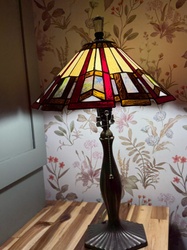
Submitted item photo
Submitted photo · June 20, 2026

User's notes

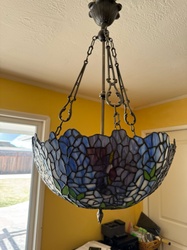
Large 3 globe hanging Tiffany glass kitchen lamp

AI analysis below

AI appraisal

AI analysis & estimate

AI-Generated · Verify before acting

Everything below is generated by AI for informational purposes only. AI can make mistakes — the AI may misidentify items or misattribute them (artist, maker, brand, designer, origin, era). This is not an official valuation and should not be used for insurance, sale, tax, estate, legal, or lending purposes — or any decision requiring a certified appraisal. It is not an authoritative claim about any person, brand, or rights holder — do not share or rely on it as a factual statement about a third party. Always consult qualified professionals before making financial decisions.

Note

This analysis also relies on unverified notes provided by the user, which may be incomplete or inaccurate and could affect the result.

Read the full disclaimer

AI Identification

·Not independently authenticated·Verify before acting

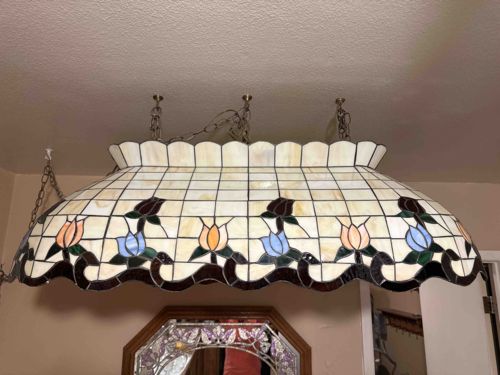
Large Multicolored Tiffany-Style Slag Glass Tulip Motif Billiard/Kitchen Island Light

Lighting & Lamps

AI Estimated Value

·Not an official valuation·Verify before acting

$450 - $650

As of June 20, 2026

AI Item Analysis

·AI can make mistakes·Verify before acting
This is a large-scale, rectangular Tiffany-style stained glass hanging pendant light, commonly utilized over kitchen islands or billiard tables. The fixture is constructed using the copper foil technique, featuring numerous hand-cut pieces of slag glass joined by lead or solder lines finished with a dark patina. The primary field consists of creamy, marbled off-white/beige slag glass panels. The decorative frieze displays a repeating floral pattern of blooming tulips in alternating shades of soft peach and periwinkle blue, supported by forest green leaves and dark mahogany-colored stems. A scalloped, undulating border in deep brown or black glass defines the lower rim, mirrored by a corresponding flared scalloped collar at the top. The light is suspended by a triple-chain mounting system with an antique brass or bronze finish. While the design mimics early 20th-century Art Nouveau aesthetics, the solder work and chain hardware suggest a late 20th-century vintage production. The glass appears to be in overall good condition without visible major cracks or missing segments, though minor surface dust and oxidation on the solder lines are consistent with household use. The large size and three-bulb internal configuration provide significant downward illumination, characteristic of high-quality decorative task lighting.
AI Appraisal Report

·AI can make mistakes·Verify before acting
Upon my virtual examination of this Tiffany-style slag glass billiard fixture, I find it to be a well-executed late 20th-century revival piece. The construction utilizes the traditional copper foil method with a significant number of hand-cut panes. The tulip motif is particularly attractive, utilizing a sophisticated palette of peach and periwinkle blue that elevates it above common mass-market 'pool table' lights. The condition appears very good; the lead lines show a consistent aged patina with minor oxidation, which is expected for a vintage piece, and the scalloped edges remain intact without visible hairline fractures. While the fixture beautifully mimics Art Nouveau aesthetics, this is not an original Tiffany Studios production, which would be valued in the tens of thousands. Instead, it is a high-quality residential fixture likely from the 1980s or 1990s. Market demand for large-scale island lighting remains steady, as these function as 'statement pieces' in home design. Comparables for similar three-light rectangular fixtures in decorative slag glass typically sell within the $400 to $700 range at specialty lighting auctions or high-end vintage marketplaces. Limitations to this appraisal include the inability to inspect the glass for internal stress cracks or verify the quality of the internal wiring. A full authentication would require physical inspection of the solder joints for 'maker's marks' and an examination of the glass texture under UV light to check for modern chemical coatings. Provenance documentation, such as the original manufacturer’s bill of sale (e.g., Dale Tiffany or Quoizel), would further solidify the valuation. For insurance purposes, I recommend a replacement value at the higher end of the provided estimate.

Get your items appraised

Instant estimates of your treasures with AI-powered appraisals

Browse More Appraisals