AI estimate as of September 3, 2025 · verify with a professional before acting
AI-Generated · Verify before acting
Everything on this page is generated by AI for informational purposes only. AI can make mistakes — the AI may misidentify items or misattribute them (artist, maker, brand, designer, origin, era). This is not an official valuation and should not be used for insurance, sale, tax, estate, legal, or lending purposes — or any decision requiring a certified appraisal. It is not an authoritative claim about any person, brand, or rights holder — do not share or rely on it as a factual statement about a third party. Always consult qualified professionals before making financial decisions.
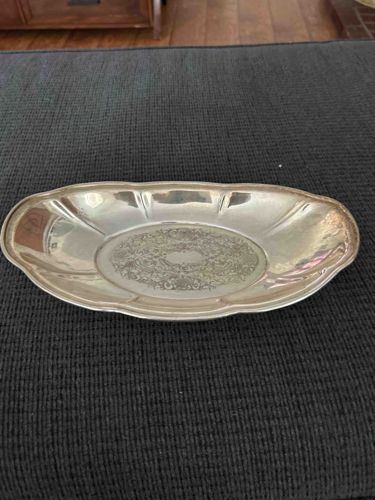
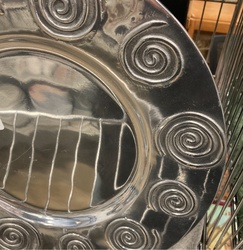
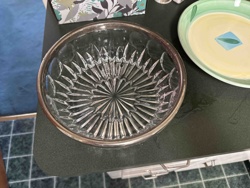
This item is an oval-shaped silver-plated serving dish or tray, approximately 8-10 inches in length, and 4-6 inches in width, given its apparent scale against the dark fabric background. It features a bright, reflective silver finish, suggesting it is either well-polished or has a relatively stable plating. The dish has a shallow depth, making it suitable for serving small candies, nuts, or as a decorative piece. The rim of the dish is subtly scalloped and rises gently, creating a sophisticated silhouette. A notable design element is the central medallion on the interior surface, which features intricate, engraved floral and foliate patterns. This detailed engraving provides a strong visual focal point and adds to its ornamental appeal. Around this central motif, the surface is smooth and highly reflective. While no specific maker's marks or hallmarks are visible in the provided image, its style, particularly the engraved decoration and scalloped edge, hints at a late 19th to early 20th-century period, possibly Victorian or Edwardian revival. The item appears to be in good visible condition with a consistent luster across its surface. There are no obvious dents, heavy scratches, or plating loss discernible, though minor surface wear consistent with age and use (e.g., slight tarnishing in crevices or light handling marks) would be expected and might not be fully captured in the image. The craftsmanship appears to be of good quality, focusing on aesthetic detail rather than heavy-duty utility. Its primary function would likely be ornamental or for light serving.
AI Appraisal Report
Based on my visual examination of the Oval Silver-Plated Engraved Serving Dish, I assess its condition as good. The reflective silver finish is consistent, and I observe no significant dents, deep scratches, or noticeable plating loss from the image. The intricate floral engraving in the central medallion is well-preserved, contributing to its aesthetic appeal. The scalloped rim also appears intact.
From a market perspective, silver-plated serving dishes, particularly those in good condition with decorative engraving from the late 19th to early 20th century, generally find a modest demand among collectors of antique tableware and decorative arts. Comparables for similar silver-plated pieces (not sterling silver) typically range from $30 to $100, depending on size, intricacy, and brand. This piece, while attractive, is not rare. Its value is primarily driven by its decorative appeal and condition, rather than intrinsic material worth or extreme rarity.
The primary factor impacting value is its material – silver plate rather than sterling silver. Without visible maker's marks, specific attribution is difficult, which also limits its top-tier market potential. An in-person examination would be crucial to confirm the absence of subtle defects like hairline scratches, minor tarnishing in crevices, or slight plating wear not visible in the photo. Full authentication, beyond what can be inferred visually, would require examining hallmarks, assessing weight, and potentially conducting a silver purity test. Provenance documentation, if available, could significantly enhance its value by confirming its history and origin.