AI Appraisal Estimate

AI-generated estimates · not official valuations

From the user

What was submitted

Photo and notes provided by the user — not generated by AI

Submitted item photo
Submitted photo · June 1, 2026

User's notes

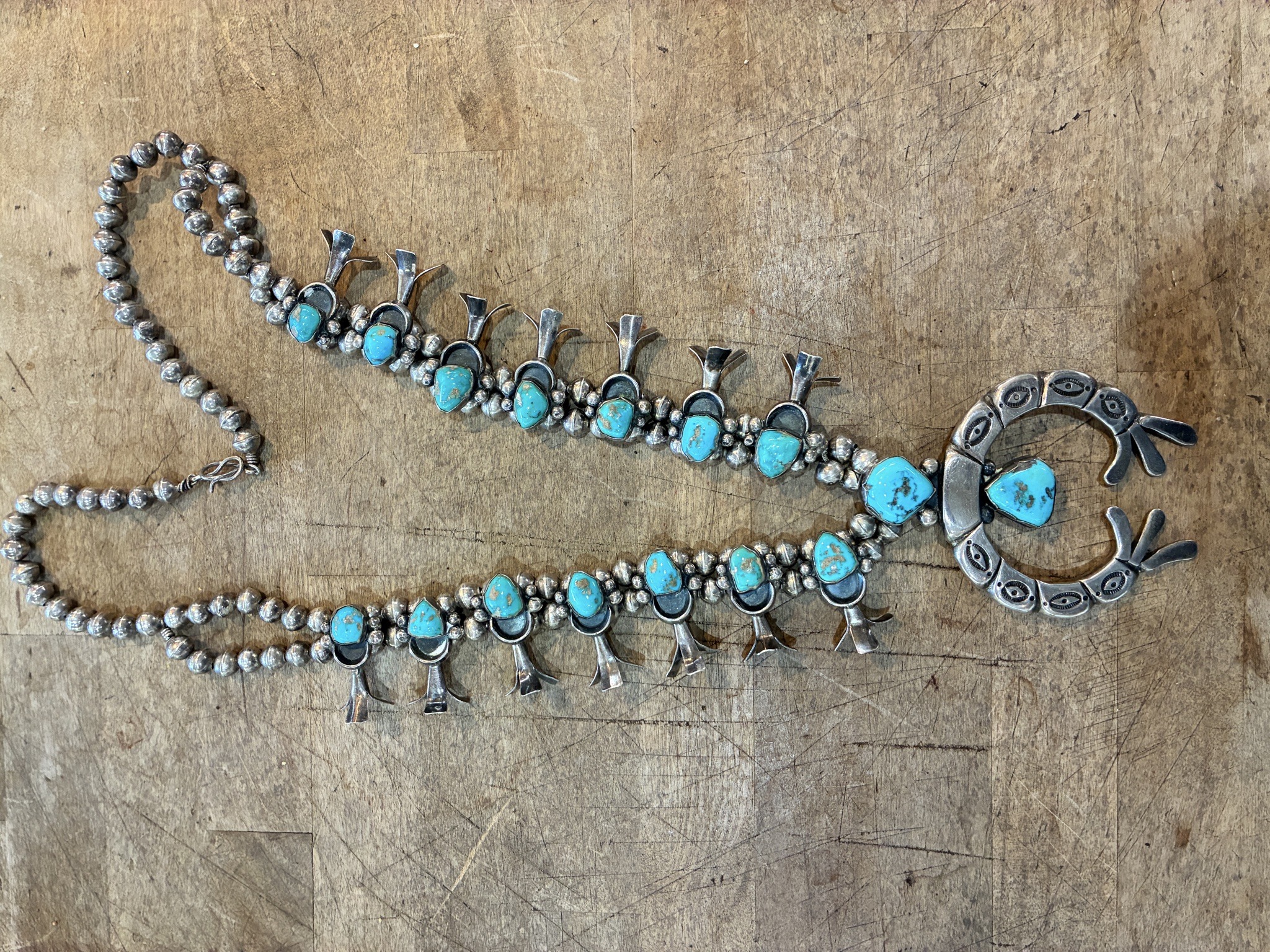
Antique turquoise silver squash blossom necklace

AI analysis below

AI appraisal

AI analysis & estimate

AI-Generated · Verify before acting

Everything below is generated by AI for informational purposes only. AI can make mistakes — the AI may misidentify items or misattribute them (artist, maker, brand, designer, origin, era). This is not an official valuation and should not be used for insurance, sale, tax, estate, legal, or lending purposes — or any decision requiring a certified appraisal. It is not an authoritative claim about any person, brand, or rights holder — do not share or rely on it as a factual statement about a third party. Always consult qualified professionals before making financial decisions.

Note

This analysis also relies on unverified notes provided by the user, which may be incomplete or inaccurate and could affect the result.

Read the full disclaimer

AI Identification

·Not independently authenticated·Verify before acting

Antique Navajo Turquoise and Sterling Silver Squash Blossom Necklace

Native American Jewelry

AI Estimated Value

·Not an official valuation·Verify before acting

$4,500 - $6,500

As of June 1, 2026

AI Item Analysis

·AI can make mistakes·Verify before acting
This is a quintessential example of Native American (Navajo/Diné) silversmithing, likely dating from the mid-20th century. The necklace features a central sandcast 'Naja' pendant adorned with stamped sunburst and crescent eye motifs, housing a single triangular turquoise stone in a simple bezel. The body of the necklace consists of a double strand of hand-wrought 'bench beads' (seamless silver spheres) punctuated by fourteen individual 'squash blossoms.' Each blossom is set with a free-form, bright blue turquoise stone, possibly from the Sleeping Beauty or Kingman mine, displaying a characterful golden-brown matrix. The stones are held in serrated bezels atop sandcast blossom stems. The silver exhibits a rich, natural dark oxidation in the recessed areas, highlighting the hand-stamped details and the textures of the sandcasting. Construction is heavy and robust, suggesting high-quality handiwork. There is visible wear consistent with age, including minor surface scratches on the silver and a soft patina on the turquoise stones. The necklace terminates in a traditional hook-and-eye closure. No visible maker's marks are present, which is common for older authentic tribal pieces of this era.
AI Appraisal Report

·AI can make mistakes·Verify before acting
I have virtually examined this Antique Navajo Squash Blossom necklace. Based on the mid-20th-century sandcast Naja, hand-wrought 'bench beads,' and serrated bezels, this piece is a high-grade example of Diné silversmithing. The presence of natural turquoise with a golden-brown matrix, likely originating from the Kingman or Sleeping Beauty mines, combined with the heavy gauge of the silver, suggests a production date between the 1940s and 1950s. The deep oxidation and lack of a maker’s mark are consistent with authentic period pieces intended for tribal use or high-end trade. The market for authentic mid-century Native American jewelry remains robust, with high demand for sets featuring sandcast elements rather than simple stamp work. Similar comparables at auction houses specializing in Western Americana have realized prices in the $5,000 range, with premium examples exceeding $7,000. The robust construction and use of double-strand beads significantly bolster the value. However, limitations exist with image-based appraisal. Without physical inspection, I cannot verify if the turquoise has been stabilized or if the beads are truly hand-wrought versus machine-formed. A physical examination is required to check for 'seam lines' on the beads and to perform a density test on the stones. To fully authenticate and potentially reach the higher end of the valuation, provenance documentation (such as original purchase receipts from historic trading posts) and a professional metallurgical test to confirm the silver purity would be necessary. The current valuation assumes the stones are natural and the silver is coin or sterling grade.

Get your items appraised

Instant estimates of your treasures with AI-powered appraisals

Browse More Appraisals