Paleolithic Chert Hand Axe / Stone Tool
Archaeological Artifacts / Prehistoric Stone Tools

Paleolithic Chert Hand Axe / Stone Tool

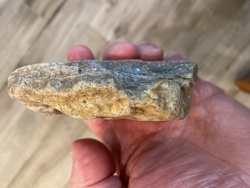
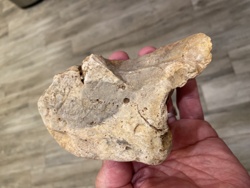
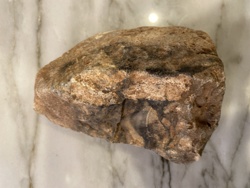
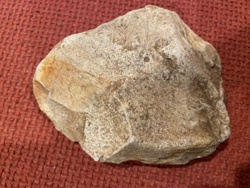
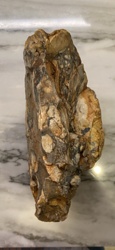
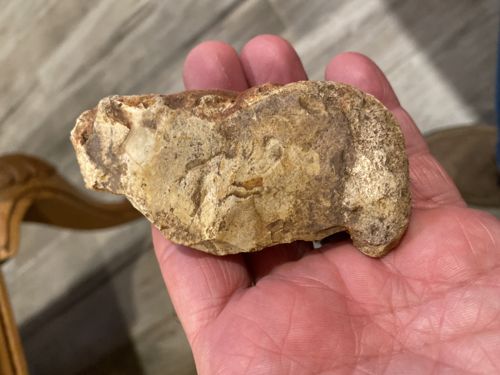
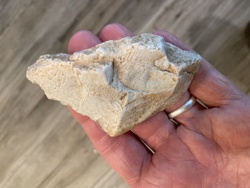
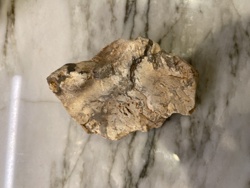
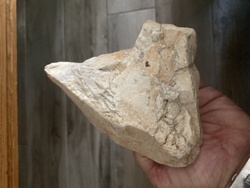
This is a prehistoric lithic artifact, specifically identified as a hand axe or multi-tool, recovered from the Guthrie, Oklahoma region. Measuring approximately 4 inches in length by 1.5 inches in width, the item is crafted from chert, a hard, sedimentary rock known for its conchoidal fracturing properties. The object exhibits a variegated color palette dominated by earthy ochres, tans, and creamy off-whites, with a fine-grained texture consistent with locally sourced silica-rich stone. Physically, the tool displays a rugged, bifacially worked profile with visible flake scars along the lateral edges, suggesting it was shaped through percussion flaking to create a functional cutting or scraping edge. The base is rounded to fit comfortably in the palm of the hand, while the distal end tapers toward a dull point. Notable features include a substantial patina and calcified mineral deposits on the surface, typical of long-term environmental exposure and burial. Its condition is weathered, showing significant edge wear and smoothing from ancient use and natural erosion, though it lacks modern fractures or recent damage. This piece represents an early stage of human technological development, showcasing basic yet effective knapping craftsmanship from more primitive hunter-gatherer cultures. Its provenance in the Oklahoma region provides archaeological significance to North American lithic studies.
Estimated Value

$45 - $85

Basic Information

Category

Archaeological Artifacts / Prehistoric Stone Tools

Appraised On

February 24, 2026

Estimated Value

$45 - $85

Additional Details Provided By Owner

User Provided Information

Paleolithic chert hand axe point knife tool found in Guthrie OK measuring 4" x 1.5"

Item Description

This is a prehistoric lithic artifact, specifically identified as a hand axe or multi-tool, recovered from the Guthrie, Oklahoma region. Measuring approximately 4 inches in length by 1.5 inches in width, the item is crafted from chert, a hard, sedimentary rock known for its conchoidal fracturing properties. The object exhibits a variegated color palette dominated by earthy ochres, tans, and creamy off-whites, with a fine-grained texture consistent with locally sourced silica-rich stone. Physically, the tool displays a rugged, bifacially worked profile with visible flake scars along the lateral edges, suggesting it was shaped through percussion flaking to create a functional cutting or scraping edge. The base is rounded to fit comfortably in the palm of the hand, while the distal end tapers toward a dull point. Notable features include a substantial patina and calcified mineral deposits on the surface, typical of long-term environmental exposure and burial. Its condition is weathered, showing significant edge wear and smoothing from ancient use and natural erosion, though it lacks modern fractures or recent damage. This piece represents an early stage of human technological development, showcasing basic yet effective knapping craftsmanship from more primitive hunter-gatherer cultures. Its provenance in the Oklahoma region provides archaeological significance to North American lithic studies.
Get Your Items Appraised

Instant estimates of your treasures with AI-powered instant appraisals

Browse More Appraisals