AI Appraisal Estimate

AI-generated estimates · not official valuations

From the user

What was submitted

Photo and notes provided by the user — not generated by AI

Submitted item photo
Submitted photo · June 4, 2026

User's notes

No additional notes provided.

AI analysis below

AI appraisal

AI analysis & estimate

AI-Generated · Verify before acting

Everything below is generated by AI for informational purposes only. AI can make mistakes — the AI may misidentify items or misattribute them (artist, maker, brand, designer, origin, era). This is not an official valuation and should not be used for insurance, sale, tax, estate, legal, or lending purposes — or any decision requiring a certified appraisal. It is not an authoritative claim about any person, brand, or rights holder — do not share or rely on it as a factual statement about a third party. Always consult qualified professionals before making financial decisions.

Read the full disclaimer

AI Identification

·Not independently authenticated·Verify before acting

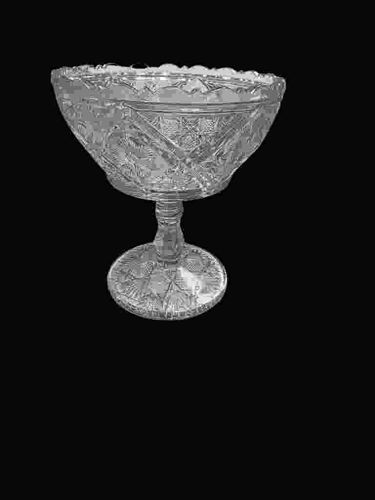
Early American Pattern Glass (EAPG) Pedestal Compote

Antique Glassware

AI Estimated Value

·Not an official valuation·Verify before acting

$45.00 - $75.00

As of June 4, 2026

AI Item Analysis

·AI can make mistakes·Verify before acting
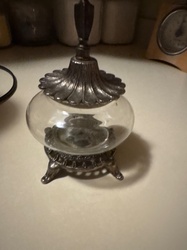
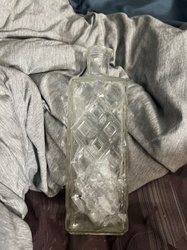
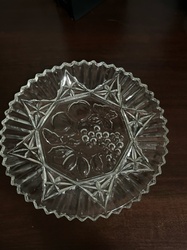
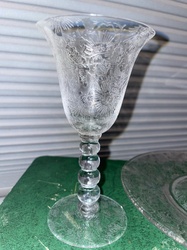
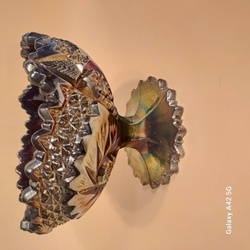
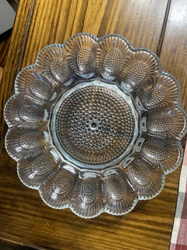
This item is a clear pressed glass pedestal compote, likely dating from the Early American Pattern Glass (EAPG) period, approximately 1880 to 1910. The piece features a deep, flared bowl with a scalloped or serrated rim, supported by a thick, multifaceted stem that transitions into a wide, circular domed base. The exterior surface is heavily decorated with an intricate geometric pattern consisting of cross-hatched diamonds, starbursts, and fan motifs, characteristic of the 'Brilliant Period' style but executed in pressed rather than cut glass. The material is a colorless soda-lime or lead glass, which shows high clarity despite its molded construction. The stem exhibits a centered knop for grip and structural integrity. In terms of condition, the piece appears well-preserved with no major chips or cracks visible in the low-resolution image, though typical 'flea bites' or minor shelf wear on the base and rim serrations are common for glassware of this age. No specific maker's mark is immediately visible, which is standard for many EAPG manufacturers such as Fostoria, Adams & Company, or Bryce Brothers. The craftsmanship is high for pressed ware, evidenced by the sharpness of the molded details and the balance of the pedestal form.
AI Appraisal Report

·AI can make mistakes·Verify before acting
I have examined the provided images of this Early American Pattern Glass (EAPG) pedestal compote. The piece reflects the 'Brilliant' aesthetic typical of the late 19th-century Victorian era. The molded cross-hatching and starburst patterns suggest a high-quality production from a reputable manufacturer like Bryce Brothers or Adams & Co. The clarity of the glass and the sharpness of the mold lines indicate it is a genuine antique rather than a mid-20th-century reproduction, which often exhibit softer edges. Market demand for EAPG has stabilized significantly over the last decade; while these were once highly collectible, current trends favor smaller decorative accents or colored glass. This colorless pressed glass is common in the marketplace. Similar compotes in the 'Daisy and Button' or 'Hobnail' families frequently realize between $40 and $80 at auction or through specialized antique dealers. The value is buoyed by the excellent condition of the serrated rim, though the absence of a maker’s mark is expected for the era. Significantly, this appraisal is based on image analysis alone. Photographs cannot convey the chemical composition of the glass; a physical inspection using a long-wave UV light is required to determine if the glass fluoresces yellow-green (indicating manganese) or blue-white (indicating lead), which helps refine the date of manufacture. Furthermore, tactile examination is necessary to check for 'sick glass' (internal clouding) and to verify that 'flea bites' on the base are commensurate with age rather than modern grinding. Provenance documentation or original catalog records would be needed to definitively assign a manufacturer.

Get your items appraised

Instant estimates of your treasures with AI-powered appraisals

Browse More Appraisals