AI Appraisal Estimate

AI-generated estimates · not official valuations

From the user

What was submitted

Photo and notes provided by the user — not generated by AI

Submitted item photo
Submitted photo · June 12, 2026

User's notes

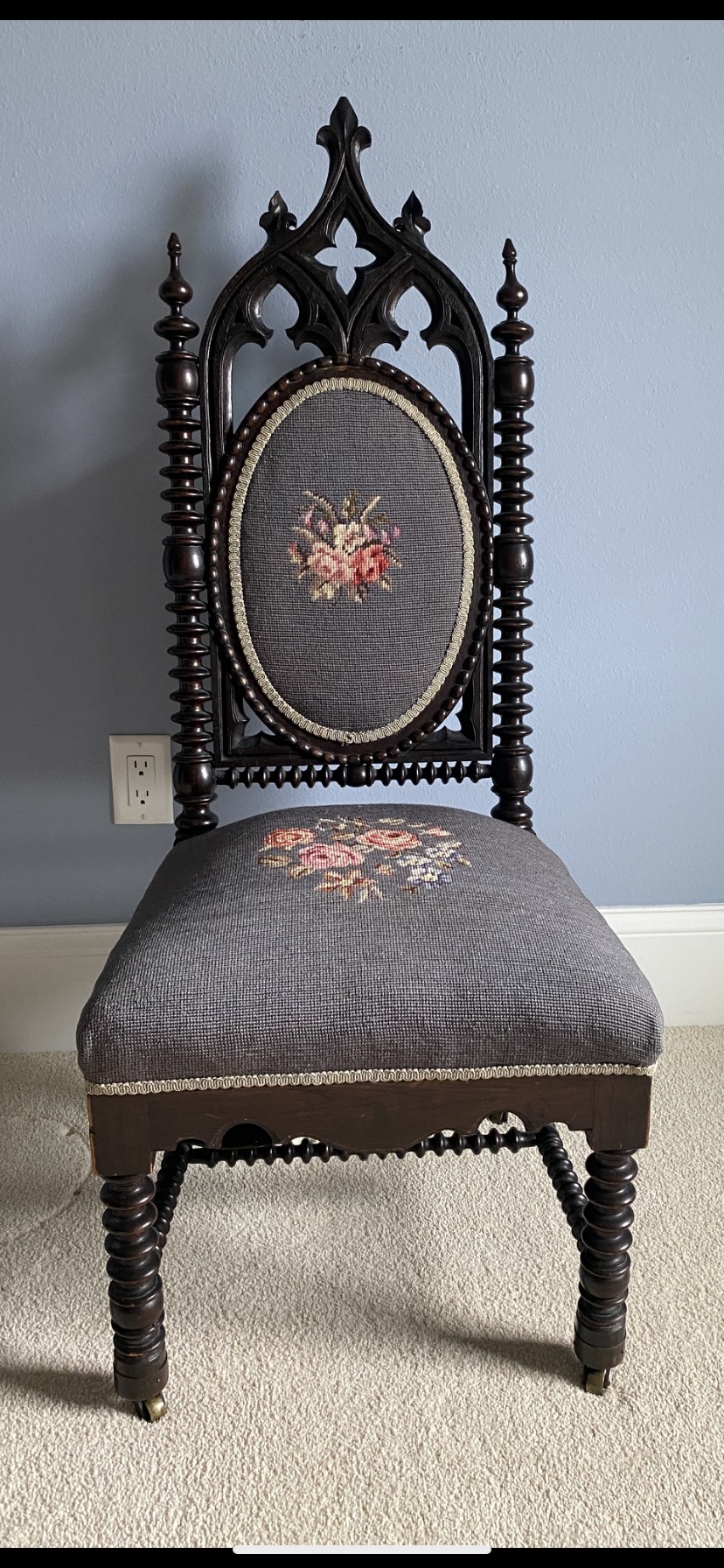
Rosewood gothic style 1800s chair with custom needle point upholstery.

AI analysis below

AI appraisal

AI analysis & estimate

AI-Generated · Verify before acting

Everything below is generated by AI for informational purposes only. AI can make mistakes — the AI may misidentify items or misattribute them (artist, maker, brand, designer, origin, era). This is not an official valuation and should not be used for insurance, sale, tax, estate, legal, or lending purposes — or any decision requiring a certified appraisal. It is not an authoritative claim about any person, brand, or rights holder — do not share or rely on it as a factual statement about a third party. Always consult qualified professionals before making financial decisions.

Note

This analysis also relies on unverified notes provided by the user, which may be incomplete or inaccurate and could affect the result.

Read the full disclaimer

AI Identification

·Not independently authenticated·Verify before acting

Gothic Revival style side chair with needlepoint upholstery

Antique Furniture

AI Estimated Value

·Not an official valuation·Verify before acting

$450 - $850

As of June 12, 2026

AI Item Analysis

·AI can make mistakes·Verify before acting
This side chair features an intricate Gothic Revival aesthetic, characterized by an architectural backrest with pierced quatrefoils, trefoil arches, and a central fleur-de-lis finial. The frame appears to be a dark-stained wood, consistent with owner-attributed rosewood, though this cannot be verified without physical testing. The chair displays spool-turned (bobbin-turned) stiles and legs, terminating in small brass casters. The inset oval back panel and the seat are covered in a grey-toned needlepoint fabric featuring floral bouquets; as noted by the owner, this is reported to be custom upholstery. The craftsmanship includes deep, crisp carvings and a gimp trim along the edges of the upholstered sections. The aesthetic is stylistically consistent with mid-to-late 19th-century Victorian furniture. Visible condition includes some light surface wear, particularly on the leading edges of the wooden frame and the front legs. Identification as a specific maker's piece or from the late 1800s is an unverified hypothesis based on stylistic signals and user-supplied notes, as no maker's labels or branded marks are visible in the image.
AI Appraisal Report

·AI can make mistakes·Verify before acting
Based on my visual analysis of the provided image, this side chair exhibits many stylistic hallmarks of the Victorian Gothic Revival period. I can observe intricate pierced quatrefoils, trefoil arches, and bobbin-turned stiles that suggest a mid-to-late 19th-century origin. Per user submission, the wood is attributed to rosewood and the needlepoint is identified as custom upholstery; however, I cannot verify the wood species or the age of the textile without a physical inspection to check grain density and fiber composition. The chair bears no visible maker's marks in the photo, so the hypothesis that it is a period piece remains unverified. The estimated value of $450 to $850 assumes the frame is indeed rosewood and of the period. This valuation is based on general market interest for high-quality Gothic Revival furniture with unique decorative carvings. While the custom needlepoint adds aesthetic appeal, its impact on value depends on its age and condition, which I cannot fully assess from a photo. If this item were later discovered to be a 20th-century 'in the style of' reproduction using lesser woods like stained walnut or mahogany, the value would likely decrease to the $150–$300 range. To confirm authenticity and refine this estimate, an in-person examination by a furniture specialist is necessary to evaluate joinery techniques, such as oxidation on the underside and the construction of the brass casters. Documentation regarding provenance or original receipts would also be required to support the attribution to the 1800s.

Get your items appraised

Instant estimates of your treasures with AI-powered appraisals

Browse More Appraisals