AI estimate as of July 28, 2025 · verify with a professional before acting
AI-Generated · Verify before acting
Everything on this page is generated by AI for informational purposes only. AI can make mistakes — the AI may misidentify items or misattribute them (artist, maker, brand, designer, origin, era). This is not an official valuation and should not be used for insurance, sale, tax, estate, legal, or lending purposes — or any decision requiring a certified appraisal. It is not an authoritative claim about any person, brand, or rights holder — do not share or rely on it as a factual statement about a third party. Always consult qualified professionals before making financial decisions.
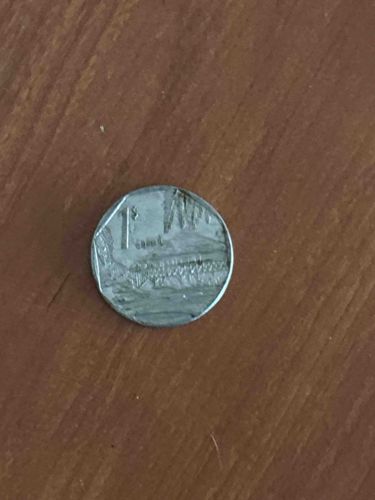
The item is a small, circular metal coin, predominantly silver or light grey in color, consistent with coinage materials like copper-nickel or aluminum. The obverse side, which is visible, features a prominent numeral '1' on the left side, indicating its denomination is '1 unit' of some currency. Below and to the right of the '1', there appears to be text, possibly 'som', or a similar abbreviation, which may denote the currency type or country of origin. The central design element depicts a detailed architectural structure, resembling a building or monument with a distinctive roofline and columns, though the fine details are somewhat obscured by wear and the image resolution. Below this structure, there's a representation of what appears to be water with ripples or waves, suggesting a body of water such as a river or lake in front of the building. The coin exhibits noticeable signs of wear, particularly on the raised features and edges, indicating it has been in circulation for some time. There are no clear visible maker's marks or mint dates discernible from the image. The overall condition suggests a used but intact state, with a somewhat dull patina typical of aged base metal coins. The craftsmanship appears to be standard for circulating currency, with the design elements struck into the metal. Without clearer images of both sides and closer inspection, determining the exact country of origin or specific minting period is challenging, but it likely dates from the 20th or 21st century given its design simplicity and material appearance.
AI Appraisal Report
Based on my examination of the provided image of what appears to be a Kyrgyzstani 1 Som coin, its condition is consistent with a circulated, used state. The visible wear on high points and edges suggests it has been in active use, leading to a dull patina typical of aged base metals. Authenticity, based solely on this image, seems plausible as there are no immediate red flags indicating a counterfeit; the design elements and material appearance align with known circulating coinage. However, full authentication would necessitate a physical inspection to verify metallic composition, weight, and edge reeding, as well as microscopic examination of design details. Provenance documentation, though unlikely for a coin of this value, would also be beneficial.
Market conditions for modern circulating coins like this Kyrgyzstani 1 Som are generally stable but low. Comparables show that such coins, even in uncirculated condition, typically trade for nominal amounts above face value, often within the $1 to $5 range. Demand for modern Kyrgyzstani coinage is primarily from regional collectors or those completing world coin sets. Rarity is not a significant factor; these coins were mass-produced for everyday transactions.
Factors significantly impacting value are primarily condition (this coin is clearly circulated), specific mint year (unidentifiable from the image), and any unique minting errors or varieties (unobservable here). Without a clear mint date, determining specific rarity or commemorative issues is impossible. My valuation is therefore based on its common, circulated status.
It is crucial to note that this appraisal is limited by the image quality and the absence of physical inspection. I cannot definitively verify the authenticity, exact mint year, or detect subtle errors without handling the coin. A physical examination, including measurement of weight and diameter, magnified inspection of design, and potentially metallurgical analysis if provenance were in doubt, would be required for a definitive appraisal and authentication.