AI estimate as of July 26, 2025 · verify with a professional before acting
AI-Generated · Verify before acting
Everything on this page is generated by AI for informational purposes only. AI can make mistakes — the AI may misidentify items or misattribute them (artist, maker, brand, designer, origin, era). This is not an official valuation and should not be used for insurance, sale, tax, estate, legal, or lending purposes — or any decision requiring a certified appraisal. It is not an authoritative claim about any person, brand, or rights holder — do not share or rely on it as a factual statement about a third party. Always consult qualified professionals before making financial decisions.
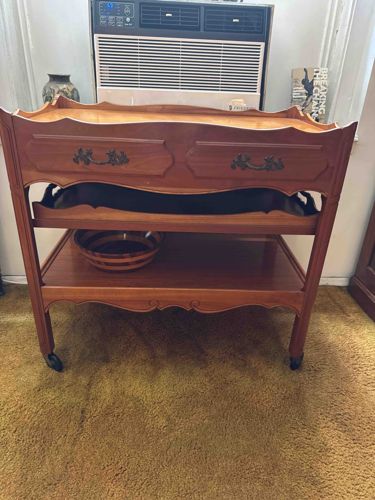
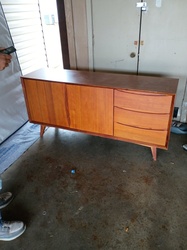
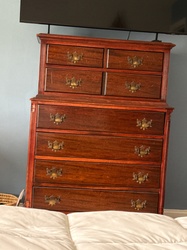
This appears to be a vintage wooden tea cart or bar cart, characterized by its warm reddish-brown finish, likely cherry or a stained hardwood. Its design suggests a French Provincial or traditional American style, popular from the mid-20th century. The cart features two tiers: a main top surface with raised, scalloped sides for containing items, and a lower shelf providing additional storage. The top tier incorporates a faux drawer front (or possibly two shallow drawers) with decorative, ornate brass or bronze-toned pulls that have a rococo-inspired floral or scroll motif. The curvilinear edges and carved details visible on the apron beneath the upper shelf, as well as the stylized side supports, reinforce the elegant, decorative aesthetic. The cart is supported by four slightly splayed legs, typical of the style, which terminate in small, black plastic or rubber casters, indicating its mobility feature. The overall construction appears solid, exhibiting good craftsmanship for its presumed era. There are no immediate signs of significant damage like cracks or major scratches, though a natural patina from age is evident, along with some minor scuffs consistent with typical use. The wood grain is visible, suggesting real wood construction rather than veneer over particle board. The item shows a clean and well-maintained appearance given its age.
AI Appraisal Report
Based on my visual examination of the provided image, this French Provincial style wooden tea/bar cart appears to be in very good condition for its age. The warm reddish-brown finish, likely cherry or a stained hardwood, shows a desirable patina consistent with use but no significant damage like deep scratches, gouges, or structural cracks. The visible wood grain suggests solid wood construction, enhancing its value over veneered pieces. The ornate, rococo-inspired hardware and carved details are intact, reinforcing its authenticity as a mid-20th-century French Provincial or traditional American piece.
Market-wise, there's a steady demand for well-maintained vintage furniture of this style, particularly adaptable pieces like tea/bar carts. While not exceedingly rare, a piece in this condition with complete original hardware and solid construction stands out. Comparables in the online vintage furniture market (e.g., Etsy, 1stDibs, chairish.com) for similar high-quality French Provincial carts typically range from $250 to $600 depending on condition, provenance, and specific design elements. The functionality as both a tea and bar cart adds to its versatility and appeal.
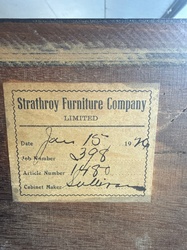
Factors impacting value positively include its good preserved condition, solid wood construction, and classic design. The small casters for mobility are also a practical feature. Limitations in authenticity verification from an image alone include the inability to check the stability of joints, true material composition (e.g., type of wood), interior drawer functionality (if they are indeed drawers), or the exact material of the hardware (brass vs. bronze-toned metal). A physical inspection would allow for tactile assessment of wood density, joint integrity, and closer examination of hardware for material verification and manufacturer marks, which could further refine the appraisal. Provenance documentation, if available, would also significantly enhance authenticity and value.