AI identification & appraisal estimate

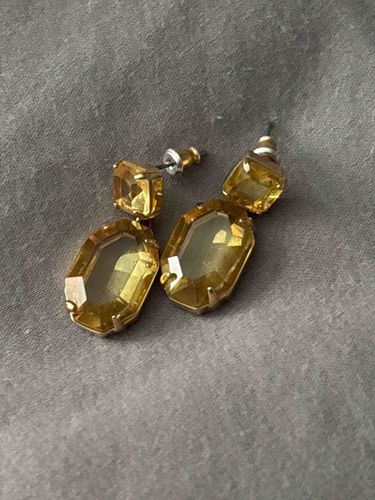
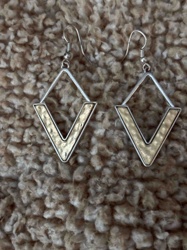
Vintage-Style Citrine-Colored Glass Drop Earrings

Submitted photo of Vintage-Style Citrine-Colored Glass Drop Earrings
Photo submitted by the user — not generated by AI

User's notes

Earrings

These notes were written by the person who submitted this item. Appraiser.AI has not verified them, and the AI's identification and estimate may rely on them.

AI Estimated Value

Not an official valuation

$45.00-$65.00

AI estimate as of February 12, 2026 · verify with a professional before acting

AI-Generated · Verify before acting

Everything on this page is generated by AI for informational purposes only. AI can make mistakes — the AI may misidentify items or misattribute them (artist, maker, brand, designer, origin, era). This is not an official valuation and should not be used for insurance, sale, tax, estate, legal, or lending purposes — or any decision requiring a certified appraisal. It is not an authoritative claim about any person, brand, or rights holder — do not share or rely on it as a factual statement about a third party. Always consult qualified professionals before making financial decisions.

This analysis also relies on unverified notes provided by the user, which may be incomplete or inaccurate and could affect the result.

Read the full disclaimer

AI Item Analysis

This pair of costume jewelry drop earrings features a two-tiered design with faceted, honey-yellow or citrine-colored stones, likely composed of high-quality glass or crystal. The upper portion consists of a square-cut faceted stone that serves as the stud, attached to a larger, elongated octagonal (emerald-cut) drop stone. Both stones are securely held in multi-prong open-back settings, allowing light to pass through and enhance the brilliance and color saturation of the material. The metal hardware exhibits a warm, gold-toned finish, appearing to be brass or gold-plated base metal. The construction utilizes articulated joints between the upper and lower stones to provide natural movement when worn. Condition-wise, the pieces show evidence of moderate wear and aged patina, particularly visible as minor tarnishing and darkening on the metal prongs and the reverse side of the settings. The earring backs are mismatched, with one standard bullet clutch and one flat disc clutch, suggesting a later replacement of the original hardware. No visible maker's marks are discernible from the primary photo, but the style is characteristic of mid-to-late 20th-century costume jewelry, mimicking the aesthetic of early Victorian or Georgian 'paste' jewelry. The craftsmanship is solid for its class, with well-aligned facets and uniform prong work, making them an excellent example of vintage-inspired evening wear accessories.
AI Appraisal Report

I have carefully examined the high-resolution images of these citrine-colored drop earrings. My assessment identifies them as mid-to-late 20th-century costume jewelry, likely produced as part of the 'revival' trends that popularized Georgian and Victorian aesthetics. The honey-yellow stones exhibit the sharp facet intersections and surface luster consistent with high-grade leaded glass (crystal) rather than natural quartz. The open-back settings are indicative of a design intended to maximize light return, though the visible tarnish and patina on the gold-toned base metal suggest the plating has thinned due to age and wear. The mismatched earring backs—a bullet clutch and a disc clutch—further confirm a history of utility and replacement. Currently, the market for unsigned vintage costume jewelry remains steady but saturated. Comparables for similar unbranded 'paste' revival pieces typically realize prices in the $35 to $75 range at online auctions and vintage boutiques. These earrings are valued for their decorative appeal and 'citrine' color saturation rather than material rarity. Factors limiting the value include the lack of a designer hallmark (such as Trifari or Kramer) and the moderate oxidation on the prongs. Please note that this appraisal is based on visual data alone. A physical inspection is required to definitively determine the base metal composition via acid testing and to rule out synthetic spinel or natural citrine through refractometer testing. Verification of the manufacturer would require finding a matching design in a documented catalog or period advertisement.

Keep exploring

More jewelry - costume appraisals

Get your items appraised

Instant AI-powered appraisal estimates from a photo

Browse More Appraisals