AI identification & appraisal estimate

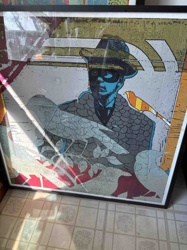
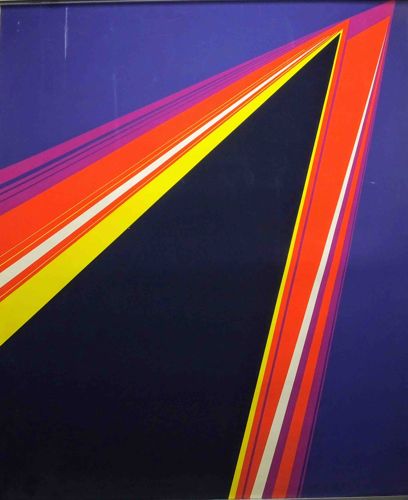
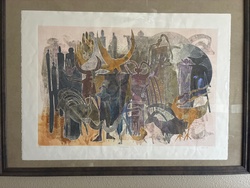
Mid-Century Hard-Edge Geometric Landscape Abstraction

Submitted photo of Mid-Century Hard-Edge Geometric Landscape Abstraction
Photo submitted by the user — not generated by AI

User's notes

Unknown artist, unspecified, artwork, size 2243 x 2752

These notes were written by the person who submitted this item. Appraiser.AI has not verified them, and the AI's identification and estimate may rely on them.

AI Estimated Value

Not an official valuation

$400 - $700

AI estimate as of March 7, 2026 · verify with a professional before acting

AI-Generated · Verify before acting

Everything on this page is generated by AI for informational purposes only. AI can make mistakes — the AI may misidentify items or misattribute them (artist, maker, brand, designer, origin, era). This is not an official valuation and should not be used for insurance, sale, tax, estate, legal, or lending purposes — or any decision requiring a certified appraisal. It is not an authoritative claim about any person, brand, or rights holder — do not share or rely on it as a factual statement about a third party. Always consult qualified professionals before making financial decisions.

This analysis also relies on unverified notes provided by the user, which may be incomplete or inaccurate and could affect the result.

Read the full disclaimer

AI Item Analysis

This artwork is a notable example of Geometric Abstraction or Hard-Edge painting, likely dating from the late 1960s to the 1970s. The composition features a dynamic, forced-perspective 'V' or path shape in deep navy blue/black that bisects a vibrant purple field. The edges of this central void are defined by precision-ruled, multi-colored lines in varying widths, utilizing a palette of bright yellow, orange, red, magenta, and white. This use of color grading creates a sense of kinetic energy and recession, reminiscent of early computer graphics or 'Synthwave' aesthetics before the digital era. Physically, the piece appears to be a screen print or serigraph on heavy paper, given the flat, saturated application of ink and the sharp delineations between color zones. It is housed in a simple metallic or thin-profile frame. The condition shows minor signs of age; there are visible white surface scuffs or minute scratches in the upper purple field and some slight undulation of the paper substrate beneath the glazing. No artist signature is visible on the front, which is common for minimalist works of this period, though one may be present on the reverse or under the matting. The craftsmanship is high, evidenced by the perfectly straight registration of the multi-colored stripes and the lack of color bleed, indicating a professional studio production. The style aligns with the 'Light and Space' movement or California hard-edge painters like Karl Benjamin or Lorser Feitelson, focusing on color theory and linear precision.
AI Appraisal Report

I have carefully examined the provided high-resolution imagery for this Geometric Abstraction serigraph. The work exemplifies the Hard-Edge aesthetic popular in the late 1960s and 1970s, characterized by its precise linear registration and vibrant, saturated ink application. Visually, the condition is fair to good; while the ink remains vivid, I noted localized surface scuffs in the upper purple field and visible undulation of the paper substrate, suggesting a need for archival re-mounting. The absence of a visible signature on the face is a common trait of minimalist editions but acts as a primary valuation ceiling. The market for mid-century geometric prints is currently strong, driven by the 'Modernist' and 'Synthwave' decorative trends. Comparables for anonymous or 'school of' hard-edge works of this scale typically realize between $300 and $800 at auction. If this were definitively attributed to a known figure like Karl Benjamin or a similar California modernist, the valuation would exceed $3,000. However, without a signature or documented provenance, the value is based on its high decorative merit and the quality of the screen-printing technique. Limitations: This appraisal is based solely on digital images. A definitive valuation is contingent upon a physical inspection to verify the paper's watermark and ink depth. To fully authenticate this piece, I recommend removing it from the frame to check the reverse for a signature, edition number, or gallery stamps. Scientific testing of the paper's acidity levels and ink chemistry would further confirm the exact year of production. Documentation regarding previous ownership (provenance) would significantly enhance the item's marketability.

Keep exploring

More fine art - prints & multiples appraisals

Get your items appraised

Instant AI-powered appraisal estimates from a photo

Browse More Appraisals