AI Appraisal Estimate

AI-generated estimates · not official valuations

From the user

What was submitted

Photo and notes provided by the user — not generated by AI

Submitted item photo
Submitted photo · June 20, 2026

User's notes

No additional notes provided.

AI analysis below

AI appraisal

AI analysis & estimate

AI-Generated · Verify before acting

Everything below is generated by AI for informational purposes only. AI can make mistakes — the AI may misidentify items or misattribute them (artist, maker, brand, designer, origin, era). This is not an official valuation and should not be used for insurance, sale, tax, estate, legal, or lending purposes — or any decision requiring a certified appraisal. It is not an authoritative claim about any person, brand, or rights holder — do not share or rely on it as a factual statement about a third party. Always consult qualified professionals before making financial decisions.

Read the full disclaimer

AI Identification

·Not independently authenticated·Verify before acting

Gold-Tone Beaded Necklace

Jewelry

AI Estimated Value

·Not an official valuation·Verify before acting

$40 - $80

As of June 20, 2026

AI Item Analysis

·AI can make mistakes·Verify before acting
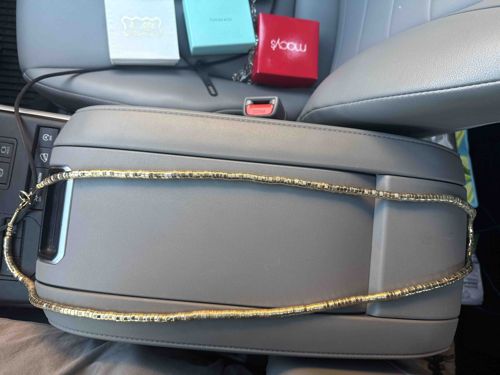
This item is a long, gold-tone beaded necklace, appearing to be crafted from numerous small, cylindrical or rounded beads strung together to form a flexible chain. The beads exhibit a uniformly bright, polished gold color, suggesting either a high-karat gold composition or a well-maintained gold plating. The surface of the beads shows a somewhat textured appearance, possibly due to deliberate faceting or minor wear marks consistent with handling and usage. The necklace is displayed loosely draped over the center console or armrest of a car, indicating a substantial length, likely suitable for wearing as a long single strand or possibly doubled. The clasp mechanism is partially visible in one of the provided images; it appears to be a basic lobster claw or spring ring clasp, which is a common and secure type. There are no immediate visible signs of extensive damage such as breaks, kinks, or significant discoloration. However, a closer inspection under magnification would be necessary to ascertain the presence of minor scratches, abrasions, or loss of plating if it is not solid gold. No discernible maker's marks, signatures, or stamps are visible from the provided images. Given its style, it likely dates from the late 20th century to the present day, appealing to a classic aesthetic. The craftsmanship appears competent, with a consistent bead shape and alignment along the strand.
AI Appraisal Report

·AI can make mistakes·Verify before acting
Based on my visual examination of the provided image, this gold-tone beaded necklace appears to be in good, well-maintained condition. The beads exhibit a consistent bright, polished gold color, and the stringing appears intact without any visible breaks or fraying. The partially visible clasp seems to be a common, functional type. Authenticity as solid gold cannot be verified from images alone; it is much more likely to be gold-plated base metal given the uniform appearance and lack of specific markings. Without hallmarks or acid testing, assuming it is costume jewelry is the most prudent approach. Market conditions for gold-tone beaded necklaces of this style are generally stable, with a broad range of similar pieces readily available from various manufacturers. Comparables would include mass-produced costume jewelry or plated items found in department stores or online retailers. Demand for such items is moderate, often driven by current fashion trends or as an affordable accessory. Rarity is low, as this is a common and replicable design. Factors significantly impacting its value include the material composition (solid gold vs. plated), which cannot be confirmed remotely. If it were solid gold, the value would skyrocket based on weight. However, as costume jewelry, its value is primarily aesthetic and material costs are minimal. Brand recognition, if any, could also influence value, but no such marks are visible. Limitations in authenticity verification are significant. A physical, in-person examination would be crucial to determine the exact metal composition (through acid testing or XRF analysis), identify any potential maker's marks or stamps, assess the quality of the plating (if applicable), and fully inspect the integrity of the stringing and clasp. Provenance documentation, such as original sales receipts, could also provide valuable information regarding its origin and material.

Get your items appraised

Instant estimates of your treasures with AI-powered appraisals

Browse More Appraisals