These notes were written by the person who submitted this item. Appraiser.AI has not verified them, and the AI's identification and estimate may rely on them.
AI Estimated Value
Not an official valuation
$30 - $70
AI estimate as of November 19, 2025 · verify with a professional before acting
AI-Generated · Verify before acting
Everything on this page is generated by AI for informational purposes only. AI can make mistakes — the AI may misidentify items or misattribute them (artist, maker, brand, designer, origin, era). This is not an official valuation and should not be used for insurance, sale, tax, estate, legal, or lending purposes — or any decision requiring a certified appraisal. It is not an authoritative claim about any person, brand, or rights holder — do not share or rely on it as a factual statement about a third party. Always consult qualified professionals before making financial decisions.
This analysis also relies on unverified notes provided by the user, which may be incomplete or inaccurate and could affect the result.
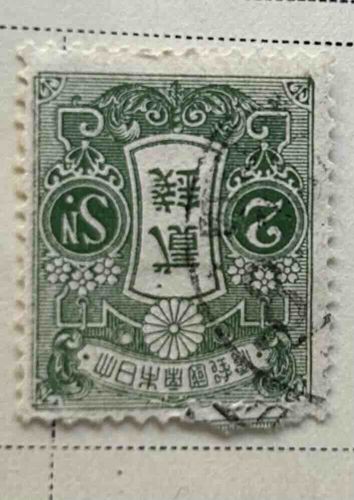
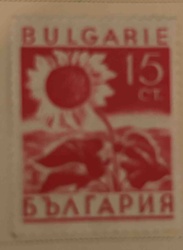
This item is a Japanese postage stamp, specifically a 2 Sen denomination stamp from the Meiji Period, likely part of the Chrysanthemum issue (Kiku series). The stamp features a central vertical panel with Japanese characters, flanked by ornate scrollwork and circular motifs. The color is predominantly a dark forest green ink on off-white paper. On the left circular motif, the letters 'N.S' are visible, while the right motif displays the numeral '2', indicating its 2 Sen denomination. Below the central panel, a stylized chrysanthemum emblem, a prominent imperial symbol of Japan, is clearly depicted. Further below, a banner contains more Japanese script, reading right to left. The overall design is intricate, characterized by detailed line engraving and Victorian-era aesthetics common in early stamps. The stamp exhibits perforation along all four edges, indicating it was separated from a sheet. Visible condition issues include some creasing or a fold mark running vertically through the right side of the central Japanese characters and the numeral '2'. There is also a cancellation mark, appearing as a partial circular or oval ink mark, predominantly in black, obscuring the lower right corner of the stamp and extending slightly onto the lower right margin. The paper appears slightly toned with age, and there are minor imperfections typical of a used stamp, such as slight corner wear and possibly a faint hinge mark on the reverse (though not visible in this image). The craftsmanship suggests a high level of detail for its time, typical of official government printing. While the user provided context of 'Chinese stamp', the markings, particularly the chrysanthemum symbol and script, are indicative of Japanese origin.
AI Appraisal Report
I have examined the provided image of what appears to be a Japanese 2 Sen Chrysanthemum stamp from the Meiji Period. Despite the owner's note suggesting it's a 'Chinese stamp,' the distinct chrysanthemum emblem and Japanese script confirm its Japanese origin. The stamp is predominantly dark forest green, with detailed line engraving typical of the era. The numeral '2' clearly denotes its 2 Sen denomination, and 'N.S.' on the left circular motif might relate to its series or printer.
In terms of condition, I observe a noticeable vertical crease or fold mark running through the right side of the central Japanese characters and the numeral '2.' There is also a partial circular cancellation mark in black ink, obscuring the lower right corner, which is common for used stamps. The paper shows age-toning, and minor imperfections like slight corner wear are present. These factors significantly impact its value, as collectors generally prefer uncreased, well-centered, and lightly canceled examples. The perforations appear intact on all four edges.
From the image, authenticity seems consistent with known examples of this issue. However, without a physical examination, I cannot definitively confirm authenticity, rule out potential repairs, or assess paper quality, gum condition (if applicable), or watermarks that might exist. A physical inspection would also allow for verification of the type of cancellation and potential hinge marks on the reverse.
Market demand for early Japanese stamps is fair, but this common denomination, coupled with the visible creasing and heavy cancellation, places it in a lower value tier. Comparables in similar condition typically fetch between $30 and $70. Rarity for this specific issue in this condition is not high. Were it in fine-used or unused condition, the value would be considerably higher. Further authentication would require in-person examination by a philatelic expert, focusing on paper, print details under magnification, and cancellation specifics. While the image provides a good indication, a definitive appraisal would necessitate physical review.