AI Appraisal Estimate

AI-generated estimates · not official valuations

From the user

What was submitted

Photo and notes provided by the user — not generated by AI

Submitted item photo
Submitted photo · May 25, 2026

User's notes

No additional notes provided.

AI analysis below

AI appraisal

AI analysis & estimate

AI-Generated · Verify before acting

Everything below is generated by AI for informational purposes only. AI can make mistakes — the AI may misidentify items or misattribute them (artist, maker, brand, designer, origin, era). This is not an official valuation and should not be used for insurance, sale, tax, estate, legal, or lending purposes — or any decision requiring a certified appraisal. It is not an authoritative claim about any person, brand, or rights holder — do not share or rely on it as a factual statement about a third party. Always consult qualified professionals before making financial decisions.

Read the full disclaimer

AI Identification

·Not independently authenticated·Verify before acting

Brown Glazed Stoneware Covered Casserole Dish

Kitchenware

AI Estimated Value

·Not an official valuation·Verify before acting

$25-50

As of May 25, 2026

AI Item Analysis

·AI can make mistakes·Verify before acting
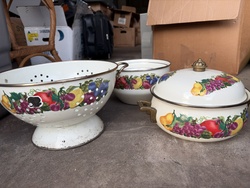
This is a brown glazed stoneware covered casserole dish, characterized by its rich, dark brown color and glossy finish. The dish features a round body with a slightly flaring rim and a matching domed lid, which has a small, circular knob handle at its center for easy lifting. Both the lid and the main body of the casserole dish are adorned with decorative relief patterns. The lid exhibits a repeating wave or scallop-like motif around its perimeter, while the body has multiple horizontal incised lines or bands, interspersed with a raised floral or star-burst design, particularly noticeable near the small, ear-like handles on either side of the dish. These handles are integrated into the body of the pot, providing a sturdy grip. The material appears to be a robust stoneware or ceramic, likely vitrified for durability and ease of cleaning, common in oven-to-table bakeware. There are no obvious chips, cracks, or significant damage visible in the provided image; the glaze appears to be intact with a consistent sheen, suggesting good overall condition for its presumed age. The style suggests a mid-20th century to possibly early 21st-century manufacturing period, often associated with utilitarian kitchenware designed to be both functional and aesthetically pleasing. The craftsmanship appears to be a combination of molded production with hand-finished detailing, particularly for the relief patterns. This type of dish is typically used for baking, serving, and storing food, demonstrating its versatile nature.
AI Appraisal Report

·AI can make mistakes·Verify before acting
I have visually examined this brown glazed stoneware covered casserole dish. Based on its appearance in the image, the condition is excellent; I observe no chips, cracks, or significant damage. The glaze appears intact and uniform, indicating good care or minimal use. Authenticity is presumed based on its utilitarian design and common manufacturing techniques of stoneware bakeware. Without physical inspection, I cannot confirm the exact material composition beyond what appears to be glazed stoneware, nor can I verify any maker's marks or stamps that might be present on the base. Market conditions for similar vintage-style stoneware casserole dishes are generally stable but not highly lucrative. These items are commonly found in antique shops, second-hand stores, and online marketplaces. Comparables include mass-produced stoneware from brands like Pfaltzgraff, Hall, or unmarked pieces from the mid to late 20th century. Demand is moderate, typically driven by collectors of vintage kitchenware or individuals seeking functional, durable bakeware with a classic aesthetic. Rarity is low; this style and form were widely produced. Factors impacting value include its excellent condition and functional utility. However, the lack of a known maker, provenance, or particularly unique design limits its higher-end valuation. For full authentication and a more precise valuation, a physical examination would be necessary to identify any maker's marks, assess the exact weight and feel of the stoneware, and further confirm the absence of imperfections not visible in images. Provenance documentation, if available, could also enhance value, but it is unlikely for such a common item.

Get your items appraised

Instant estimates of your treasures with AI-powered appraisals

Browse More Appraisals