AI estimate as of November 10, 2025 · verify with a professional before acting
AI-Generated · Verify before acting
Everything on this page is generated by AI for informational purposes only. AI can make mistakes — the AI may misidentify items or misattribute them (artist, maker, brand, designer, origin, era). This is not an official valuation and should not be used for insurance, sale, tax, estate, legal, or lending purposes — or any decision requiring a certified appraisal. It is not an authoritative claim about any person, brand, or rights holder — do not share or rely on it as a factual statement about a third party. Always consult qualified professionals before making financial decisions.
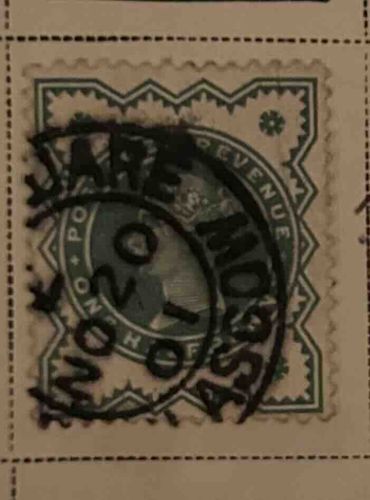
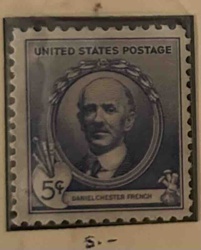
This item is a postage and revenue stamp from British India, likely dating to the late 19th or early 20th century, given the 'REVENUE' inscription and the style. The stamp itself is square with a serrated outer border, printed on light cream-colored paper. The primary color of the design is a deep teal or dark green, although some discoloration is evident. The central motif features what appears to be a bust of a monarch or important figure, surrounded by a circular inscription that reads 'POSTAGE + REVENUE' along the top curve, and below it, within the circle, details that are heavily obscured but seem to include 'HALF ANNA'. The background of the central circular design is a lighter shade of green or teal. The outer border features a repeating zigzag or chevron pattern. A distinctive feature is the heavy, circular black cancellation mark overprinting the stamp. This cancellation mark reads 'MOMBASA' and appears to have a date 'NO 20' (presumably November 20th) and '90' (likely indicating a year such as 1890 or 1990, with the former being more probable given the stamp's style). The cancellation is quite heavy, obscuring significant portions of the central design and the value. The stamp shows signs of age, including some yellowing of the paper and minor wear along the edges. The perforations are visible on the top and bottom, suggesting it was torn from a sheet or booklet. The craftsmanship appears to be standard for postal stamps of the era, showcasing fine line work in the engraving.
AI Appraisal Report
Based on my visual examination of the provided image, I assess this British India Revenue Stamp, Half Anna, to be in Good to Very Good condition, considering its age. The design details, while obscured in parts by the cancellation, are largely intact, and the perforations appear relatively clean. The deep teal color is present, though typical age-related yellowing of the paper is evident. The 'MOMBASA NO 20 90' cancellation is a significant feature, indicating its use in East Africa, which can add philatelic interest.
Authenticity, based solely on this image, appears strong for a period revenue stamp. The style, printing method indications (fine line work), and cancellation type are consistent with British India issues of the late 19th century. However, definitive authentication would require in-hand inspection to verify paper type, watermark (if any), printing method specifics, and gum condition. Provenance documentation, if available, would further solidify its history.
Market conditions for common British India revenue stamps are generally stable. While this specific 'Half Anna' is not exceptionally rare in unused form, the 'Mombasa' cancellation adds a layer of collectibility, often appealing to collectors of British East Africa or postal history. The heavy nature of the cancellation, however, does detract somewhat from the stamp's aesthetic appeal, as it significantly obscures the central design and denomination. Demand is moderate, primarily from specialized collectors of British Commonwealth or Indian philately.
Factors impacting value include the clear, identifiable cancellation, its condition despite the heavy strike, and the relative scarcity of genuine revenue stamps with East African postmarks. Without physical inspection to confirm authenticity, examine the gum, and assess any hidden faults not visible in the image, this appraisal rests on the assumption of genuine, untampered status. My valuation reflects its current visual presentation and market comparables for similar cancelled British India revenue and postage revenue issues with interesting cancellations.