AI Appraisal Estimate

AI-generated estimates · not official valuations

From the user

What was submitted

Photo and notes provided by the user — not generated by AI

Submitted item photo
Submitted photo · June 20, 2026

User's notes

No additional notes provided.

AI analysis below

AI appraisal

AI analysis & estimate

AI-Generated · Verify before acting

Everything below is generated by AI for informational purposes only. AI can make mistakes — the AI may misidentify items or misattribute them (artist, maker, brand, designer, origin, era). This is not an official valuation and should not be used for insurance, sale, tax, estate, legal, or lending purposes — or any decision requiring a certified appraisal. It is not an authoritative claim about any person, brand, or rights holder — do not share or rely on it as a factual statement about a third party. Always consult qualified professionals before making financial decisions.

Read the full disclaimer

AI Identification

·Not independently authenticated·Verify before acting

Vintage Limoges-style Porcelain Hand-Painted Dessert Service Set

Fine Antique Ceramics and Porcelain

AI Estimated Value

·Not an official valuation·Verify before acting

$450 - $650

As of June 20, 2026

AI Item Analysis

·AI can make mistakes·Verify before acting
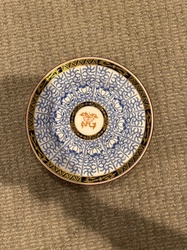
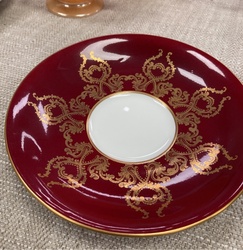
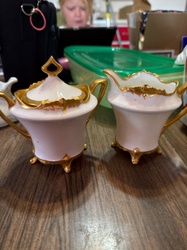
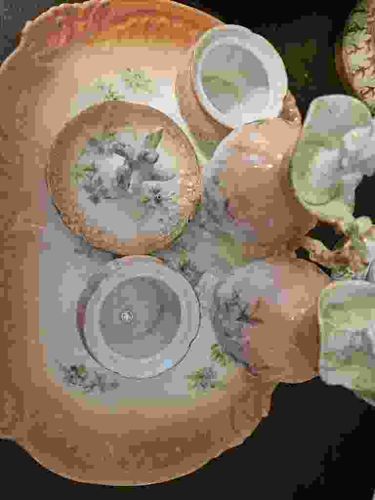
This is a vintage porcelain dessert or tea service set, likely of French or German origin, such as Limoges or Dresden, dating from the late 19th to early 20th century. The set consists of an oval serving tray and multiple coordinating cups and saucers. The primary aesthetic features a warm, apricot-toned luster or gradient glaze on the exterior surfaces and tray edges, fading into a crisp white interior. Each piece is decorated with delicate, hand-painted floral sprays and sprigs, likely featuring lavender-colored violets or small wild blossoms with green foliage. The trays and saucers feature scalloped, ornate edges with possible gilded highlights that show moderate age-related wear and fading of the gold leaf. The porcelain appears to be fine-grained and translucent, indicative of high-quality craftsmanship. Specifically, the tray shows a sprawling center floral arrangement and a textured, molded rim. Regarding condition, there is visible surface grime and minor 'pitting' in the glaze, suggesting it has been stored for some time. No significant chips or cracks are immediately visible from the overhead view, though the luster glaze shows some rubbing and thinning. The style is quintessentially Victorian or Belle Époque, characterized by its romantic, pastel palette and soft botanical motifs.
AI Appraisal Report

·AI can make mistakes·Verify before acting
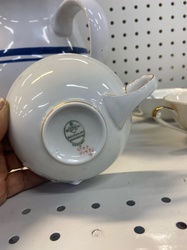
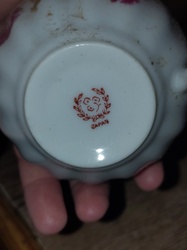
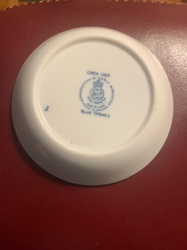
Based on my visual examination of this vintage porcelain dessert service, I have assessed the set as a fine example of late 19th-century European craftsmanship, likely originating from the Limoges region of France or a high-end German manufacture like Dresden. The apricot luster glaze and hand-painted floral motifs are characteristic of the Belle Époque era. The translucency of the porcelain suggests high-quality kaolin clay usage. Regarding condition, I noted moderate 'wear and tear' consistent with age, specifically rubbing on the gilded scalloped edges and minor glaze pitting. These factors slightly depress the value compared to a 'mint' set but confirm the item's antiquity. The market for Victorian-era floral porcelain remains steady among specialty collectors, though it has softened from its peak 20 years ago. Current demand is driven by the aesthetic appeal of the lusterware finish. Comparables for a full service including the serving tray typically range from $400 to $800 at auction, depending on the maker's mark. Limitation on Authenticity: This appraisal is based solely on digital imagery. While the craftsmanship appears authentic, a definitive valuation requires an in-person inspection to verify the underglaze marks (backstamps), which can vary significantly in value (e.g., Haviland vs. an amateur studio). I would need to perform a 'ping test' to check for hairline fractures not visible to the eye and use a jeweler's loupe to confirm that the florals are entirely hand-painted rather than transfer-prints. Provenance documentation or original sales receipts would further solidify the set's historical pedigree.

Get your items appraised

Instant estimates of your treasures with AI-powered appraisals

Browse More Appraisals