AI estimate as of December 11, 2025 · verify with a professional before acting
AI-Generated · Verify before acting
Everything on this page is generated by AI for informational purposes only. AI can make mistakes — the AI may misidentify items or misattribute them (artist, maker, brand, designer, origin, era). This is not an official valuation and should not be used for insurance, sale, tax, estate, legal, or lending purposes — or any decision requiring a certified appraisal. It is not an authoritative claim about any person, brand, or rights holder — do not share or rely on it as a factual statement about a third party. Always consult qualified professionals before making financial decisions.
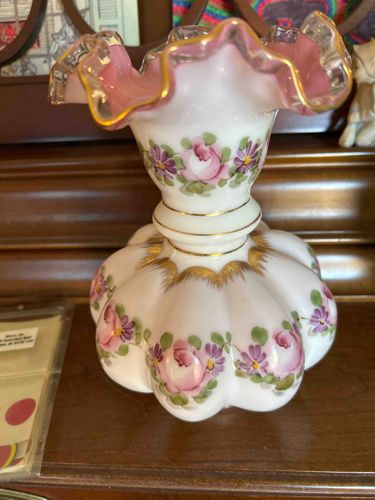
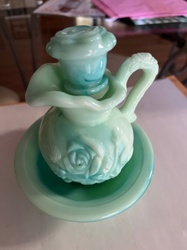
This exquisite item is an opaque glass vase, featuring a primarily white body with hand-painted floral decorations. The vase stands on a bulbous, fluted base, characterized by a pumpkin-like or melon-ribbed shape, which transitions into a slender, columnar neck. The neck flares out gracefully at the top, forming a ruffled or crimped rim that is distinctly pink in color, contrasting beautifully with the white body. A delicate gold gilt trim outlines the ruffled edge, adding a touch of elegance. Further gold accents are visible; thin gold bands encircle the base of the neck and the transition point between the neck and the fluted body. More intricate gold detailing, featuring a feathery or scalloped pattern, is applied around the shoulder where the neck meets the broader base, enhancing its decorative appeal. The floral motifs consist of soft pink roses with green leaves, interspersed with smaller purple flowers, possibly violets or pansies, also accompanied by green foliage. These painted designs are carefully scattered across both the neck and the fluted sections of the vase, showcasing hand-painted craftsmanship. The overall condition appears excellent, with no visible chips, cracks, or significant wear to the paint or gilding. This style of decorated opaque glass, often referred to as 'Milk Glass' with enameling and gilt work, suggests an aesthetic from the late 19th to early 20th century, possibly Victorian or Edwardian eras. The piece demonstrates good quality craftsmanship, making it a decorative and collectible item.
AI Appraisal Report
I have carefully examined the provided image of this Decorated Opaque Glass Vase with Ruffled Edge. My assessment indicates a piece of good quality, consistent with late 19th to early 20th-century decorative glass, often categorized as 'Milk Glass' with hand-painted enameling and gilt accents, aligning with Victorian or Edwardian aesthetics.
Visually, the condition appears excellent. I observe no obvious chips, cracks, or significant wear to the paint or gilding, which is a significant factor in maintaining its value. The hand-painted floral motifs—pink roses, purple flowers, and green leaves—are delicately executed, and the gold gilt trim on the ruffled edge, along with the bands and feathery detailing, remains largely intact. The distinctive fluted base and the contrasting pink ruffled rim, typical of this style, are well-preserved.
In terms of market conditions, decorative opaque glass of this era generally sees steady but not exceptionally high demand. Pieces with well-preserved painting and gilding, like this one appears to be, command better prices. Comparables in the current market, particularly online platforms and antique shops, suggest a range for similar hand-decorated milk glass vases. Rarity is moderate; while many such items were produced, pieces in excellent condition are less common. The hand-painted nature and good condition are primary value drivers.
It is important to state the limitations inherent in appraising from an image alone. While the visual evidence suggests excellent condition and authenticity, a definitive verification would require an in-person examination. This would allow for tactile inspection for hairline cracks, subtle paint loss not visible in photographs, and a more thorough assessment of the glass's composition. Examination under UV light could reveal repairs or overpainting. Provenance documentation, such as original purchase receipts or family history, would further solidify its history and authenticity.