AI estimate as of October 23, 2025 · verify with a professional before acting
AI-Generated · Verify before acting
Everything on this page is generated by AI for informational purposes only. AI can make mistakes — the AI may misidentify items or misattribute them (artist, maker, brand, designer, origin, era). This is not an official valuation and should not be used for insurance, sale, tax, estate, legal, or lending purposes — or any decision requiring a certified appraisal. It is not an authoritative claim about any person, brand, or rights holder — do not share or rely on it as a factual statement about a third party. Always consult qualified professionals before making financial decisions.
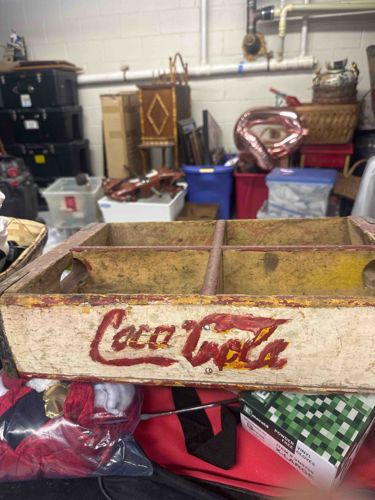
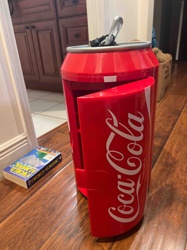
This item is a vintage wooden six-pack carrier, likely designed for Coca-Cola bottles. It is constructed from aged wood, visible via its light brown, almost yellowed interior, and a weathered white exterior paint. The carrier features a classic Coca-Cola logo prominently painted in red on at least one side, with some yellow-orange color visible around and within the red lettering, possibly indicating a multi-layered painting or significant wear revealing underlying paint. The logo appears hand-painted or stenciled, showing signs of significant wear and chipping, particularly on the 'C' and 'a' in 'Coca' and throughout 'Cola'. The wood itself shows considerable age, with visible grain, some splintering, and what appears to be dirt and grime accumulation, particularly on the interior surfaces and along the edges, suggesting prolonged use and storage in various environments. The carrier is divided into six compartments by vertical wooden slats, with a central wooden handle piece for carrying. There appears to be a circular cutout handle on each end of the carrier, indicating a dual function for picking up and carrying the box. The overall construction appears sturdy for its age, utilizing simple joinery commonly found in such utility items. This type of carrier typically dates from the mid-20th century, likely between the 1940s and 1960s, a period when such wooden crates were a common way to transport bottled beverages before the widespread adoption of cardboard or plastic carriers. The rustic, distressed finish, and chipped paint contribute to a desirable vintage aesthetic. No specific maker's marks or signatures are discernible from the image, but the iconic Coca-Cola branding itself serves as the primary identifier. The craftsmanship is utilitarian but robust, designed for practicality rather than ornate display, though its aged appearance now lends it decorative value.
AI Appraisal Report
Based on my examination of the provided image, this vintage Coca-Cola wooden six-pack carrier presents as an authentic piece of mid-20th-century advertising memorabilia, likely dating from the 1940s to 1960s. The construction—aged wood with visible grain, splintering, and utilitarian joinery—is consistent with carriers from that era. The prominent, albeit worn, red Coca-Cola logo with yellow-orange undertones further supports its authenticity as a branded item. The significant wear, chipping paint, and accumulation of dirt and grime corroborate its age and history of practical use. I assess the condition as fair to good vintage condition, considering its age and intended purpose. The rustic, distressed aesthetic, often referred to as 'patina,' is generally desirable among collectors of advertising and country store merchandise, enhancing its decorative appeal.
Market demand for vintage Coca-Cola items remains consistently strong, driven by the brand's iconic status. Wooden carriers, while not exceedingly rare, are sought after, particularly those retaining their original branding. Factors contributing to its value include the clear branding, the intact structure with all six compartments and a handle, and the desirable aged appearance. While not a high-value collectible, its nostalgic appeal ensures a steady market. Comparables for similar carriers in this condition typically range from $60 to $100.
It is important to note the limitations of authenticity verification from images alone. Without physical inspection, I cannot definitively rule out modern reproduction or restoration, although the visible wear patterns seem consistent with genuine aging. An in-person examination would allow for closer inspection of the wood's age, paint layering, and overall material integrity to confirm authenticity. Furthermore, provenance documentation, such as original sales receipts or family history, would provide definitive proof of authenticity and potentially increase its value. Scientific testing, such as wood dating or paint analysis, could offer the most conclusive authentication, but is typically reserved for items of significantly higher value.