Solitaire Diamond Bypass Ring
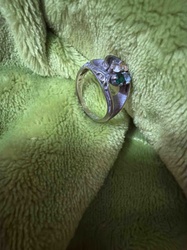
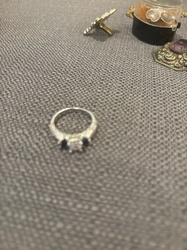
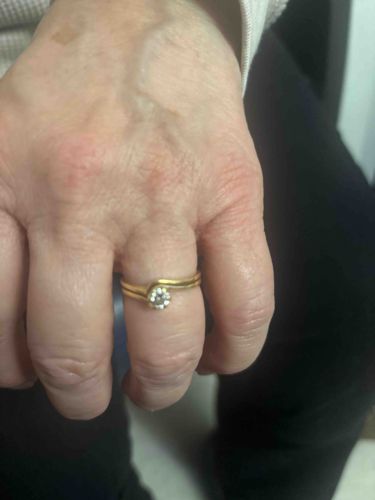
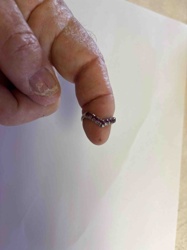
This is a solitaire diamond bypass style ring, likely crafted from 14k or 18k yellow gold based on the deep yellow hue and luster of the metal. The ring features a single, round brilliant-cut diamond estimated to be approximately 0.25 to 0.40 carats, though an exact measurement would require a loose stone analysis. The stone is held securely in a traditional multi-prong setting, likely white gold prongs to enhance the diamond's brilliance, integrated into a bypass-style shank where the metal ends wrap partially around the center stone. The band appears to have a split-shank or double-band visual effect near the head, tapering down to a solid flat-edge band at the base. The style is classic and suggests a manufacturing period between the late 1960s and the early 1990s. The metal shows a soft patina and fine surface micro-scratches consistent with long-term daily wear. There is no visible sign of thinning at the shank or repaired solder points from this angle. The craftsmanship appears to be of commercial high quality, typical of fine jewelry retail establishments of the mid-to-late 20th century.
AI-Generated Appraisal Disclaimer
Estimated Value
$850 - $1,150
Basic Information
Category
Fine Jewelry
Appraised On
March 17, 2026
Estimated Value
$850 - $1,150
Item Description
This is a solitaire diamond bypass style ring, likely crafted from 14k or 18k yellow gold based on the deep yellow hue and luster of the metal. The ring features a single, round brilliant-cut diamond estimated to be approximately 0.25 to 0.40 carats, though an exact measurement would require a loose stone analysis. The stone is held securely in a traditional multi-prong setting, likely white gold prongs to enhance the diamond's brilliance, integrated into a bypass-style shank where the metal ends wrap partially around the center stone. The band appears to have a split-shank or double-band visual effect near the head, tapering down to a solid flat-edge band at the base. The style is classic and suggests a manufacturing period between the late 1960s and the early 1990s. The metal shows a soft patina and fine surface micro-scratches consistent with long-term daily wear. There is no visible sign of thinning at the shank or repaired solder points from this angle. The craftsmanship appears to be of commercial high quality, typical of fine jewelry retail establishments of the mid-to-late 20th century.
Get Your Items Appraised
Instant estimates of your treasures with AI-powered instant appraisals