Paleolithic Chert Scraper or Projectile Point
Archaeological Artifacts / Prehistoric Stone Tools

Paleolithic Chert Scraper or Projectile Point

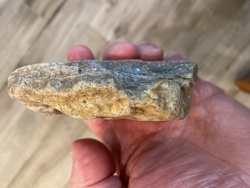
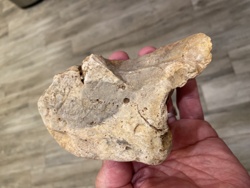
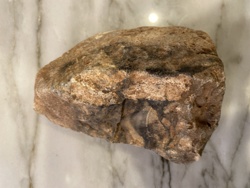
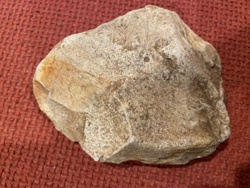
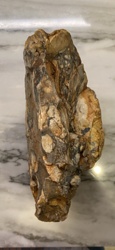
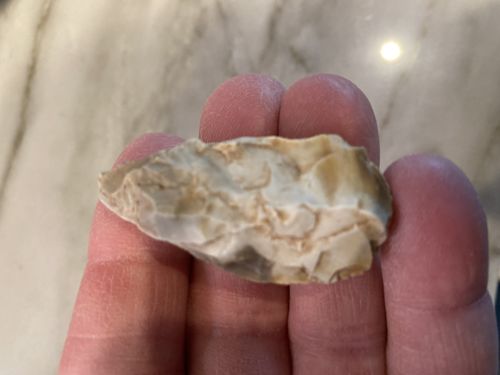
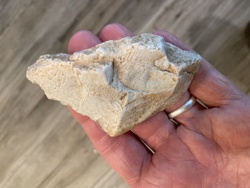
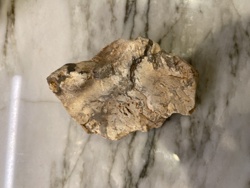
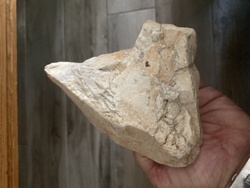
This is a small, hand-held lithic artifact measuring approximately 2 inches in length and 1 inch in width, crafted from a high-quality, variegated chert. The material exhibits a range of earthy tones, including cream, tan, and taupe with subtle translucent qualities. Construction involves bifacial reduction, where material has been flaked from both sides to create a functional edge. The piece displays characteristic percussion and pressure flaking scars across its surface, indicative of prehistoric manufacturing techniques. The silhouette is roughly lanceolate or ovate, tapering to a somewhat dull point. Visible condition shows significant edge wear and smoothing, which could be a combination of ancient high-intensity use as a scraper and natural geological weathering (water-wear or polish) over millennia. While no formal maker's marks are present, the flintknapping style suggests a Middle Paleolithic influence, though the geographical find-spot of Guthrie, Oklahoma, would traditionally associate such a tool with Paleo-Indian or Archaic periods in North American archaeology. The craftsmanship demonstrates a high level of utility, with a thick, durable cross-section that suggests it was intended for heavy-duty tasks like hide scraping or woodworking rather than delicate piercing.
Estimated Value

$45 - $85

Basic Information

Category

Archaeological Artifacts / Prehistoric Stone Tools

Appraised On

February 25, 2026

Estimated Value

$45 - $85

Additional Details Provided By Owner

User Provided Information

Paleolithic Middle Mousterian chert point or scraper tool found in Guthrie OK measuring 2" x 1"

Item Description

This is a small, hand-held lithic artifact measuring approximately 2 inches in length and 1 inch in width, crafted from a high-quality, variegated chert. The material exhibits a range of earthy tones, including cream, tan, and taupe with subtle translucent qualities. Construction involves bifacial reduction, where material has been flaked from both sides to create a functional edge. The piece displays characteristic percussion and pressure flaking scars across its surface, indicative of prehistoric manufacturing techniques. The silhouette is roughly lanceolate or ovate, tapering to a somewhat dull point. Visible condition shows significant edge wear and smoothing, which could be a combination of ancient high-intensity use as a scraper and natural geological weathering (water-wear or polish) over millennia. While no formal maker's marks are present, the flintknapping style suggests a Middle Paleolithic influence, though the geographical find-spot of Guthrie, Oklahoma, would traditionally associate such a tool with Paleo-Indian or Archaic periods in North American archaeology. The craftsmanship demonstrates a high level of utility, with a thick, durable cross-section that suggests it was intended for heavy-duty tasks like hide scraping or woodworking rather than delicate piercing.
Get Your Items Appraised

Instant estimates of your treasures with AI-powered instant appraisals

Browse More Appraisals