Chert Bifacial Core or Possible Scraper
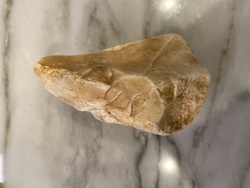
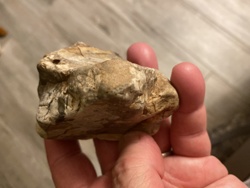
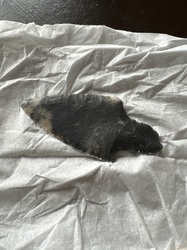
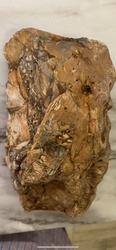
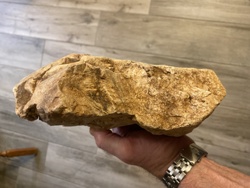
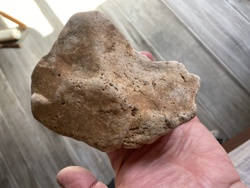
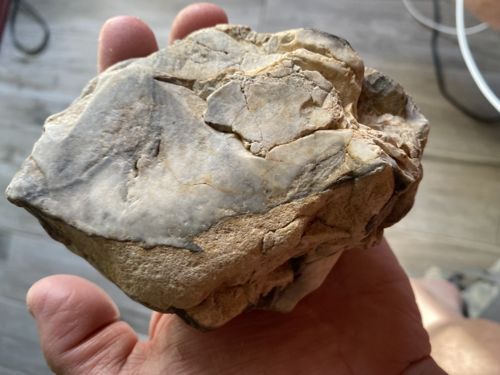
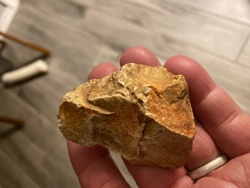
This item is a relatively large lithic specimen, roughly the size of a human palm, characterized by its irregular sub-triangular or ovate shape. The material appears to be a variety of chert or flint common to the Oklahoma region, displaying a range of colors from creamy whites and ochre tans to cool grays. The surface exhibits several distinct conchoidal fractures, indicative of intentional striking or knapping, though the scars are broad and somewhat weathered. Some areas retain a cortex—a rough, unworked limestone or weathered exterior layer—suggesting it may be a quarry-sourced core rather than a finished tool. The edges show various levels of refinement; while some parts are thick and blunt, other sections show evidence of flake removal that could have served as a crude scraping edge. The presence of deep patination and rounded edges on the flake scars suggest substantial age or exposure to fluvial environments (water action). There are no visible maker's marks, as this is a prehistoric lithic object. While the user identifies it as Acheulean, it is important to note that the Acheulean tradition is generally associated with Lower Paleolithic Africa and Europe (Homo erectus); New World specimens of this appearance are typically classified as early Archaic lithic cores or bifacial blanks used by Indigenous North American populations, estimated to be several thousand years old.
AI-Generated Appraisal Disclaimer
Estimated Value
$40–$75
Basic Information
Category
Archaeological Artifacts / Prehistoric Lithics
Appraised On
February 24, 2026
Estimated Value
$40–$75
Additional Details Provided By Owner
User Provided Information
Acheulean flint bi face axe hammer stone or scraper tool found in Guthrie OK
Item Description
This item is a relatively large lithic specimen, roughly the size of a human palm, characterized by its irregular sub-triangular or ovate shape. The material appears to be a variety of chert or flint common to the Oklahoma region, displaying a range of colors from creamy whites and ochre tans to cool grays. The surface exhibits several distinct conchoidal fractures, indicative of intentional striking or knapping, though the scars are broad and somewhat weathered. Some areas retain a cortex—a rough, unworked limestone or weathered exterior layer—suggesting it may be a quarry-sourced core rather than a finished tool. The edges show various levels of refinement; while some parts are thick and blunt, other sections show evidence of flake removal that could have served as a crude scraping edge. The presence of deep patination and rounded edges on the flake scars suggest substantial age or exposure to fluvial environments (water action). There are no visible maker's marks, as this is a prehistoric lithic object. While the user identifies it as Acheulean, it is important to note that the Acheulean tradition is generally associated with Lower Paleolithic Africa and Europe (Homo erectus); New World specimens of this appearance are typically classified as early Archaic lithic cores or bifacial blanks used by Indigenous North American populations, estimated to be several thousand years old.
Get Your Items Appraised
Instant estimates of your treasures with AI-powered instant appraisals