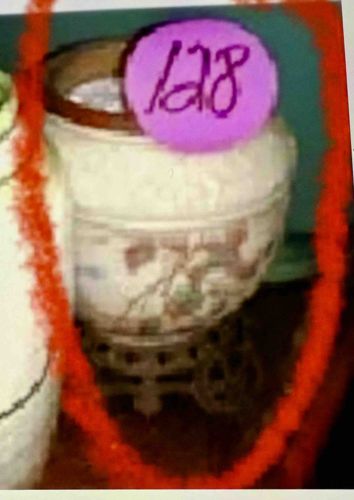
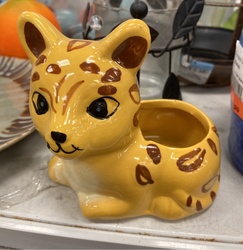
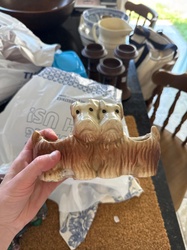
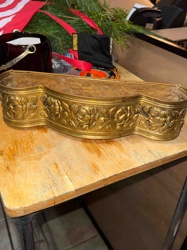
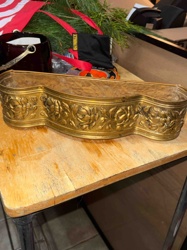
Vintage hand painted glass planter on a metal base
These notes were written by the person who submitted this item. Appraiser.AI has not verified them, and the AI's identification and estimate may rely on them.
AI Estimated Value
Not an official valuation
$250-400
AI estimate as of August 2, 2025 · verify with a professional before acting
AI-Generated · Verify before acting
Everything on this page is generated by AI for informational purposes only. AI can make mistakes — the AI may misidentify items or misattribute them (artist, maker, brand, designer, origin, era). This is not an official valuation and should not be used for insurance, sale, tax, estate, legal, or lending purposes — or any decision requiring a certified appraisal. It is not an authoritative claim about any person, brand, or rights holder — do not share or rely on it as a factual statement about a third party. Always consult qualified professionals before making financial decisions.
This analysis also relies on unverified notes provided by the user, which may be incomplete or inaccurate and could affect the result.
This item appears to be a vintage hand-painted glass planter, or possibly ceramic with a glazed finish, of a squat, rounded form, resting on a decorative cast metal base. The main body of the planter is a light, possibly cream or off-white, opaque material, adorned with intricate hand-painted designs. While image quality limits precise identification of the scene, it appears to depict a pastoral or romantic landscape with figures, possibly in an Rococo or Chinoiserie style, suggested by the muted color palette of browns, greens, and reds visible in the pattern. The upper rim of the planter has a darker, possibly reddish-brown band, which could be part of the glass/ceramic or a separate applied trim. The overall construction implies a multi-part assembly. The most notable feature is the elaborate metal base, which has an ornate, possibly cast iron or bronze, scrollwork design, suggesting a Victorian or Edwardian aesthetic. This base elevates the planter and provides stability. Visible condition issues are difficult to assess definitively due to the low resolution and partial view, but no obvious chips, cracks, or significant paint loss are immediately apparent on the planter body. The metal base exhibits what appears to be a natural patina consistent with age, the specific finish (e.g., rust, dark patination) is not clearly discernible. There are no visible maker's marks or signatures in the provided image. The quality of craftsmanship, particularly the detailed painting and the casting of the metal base, suggests this was an item of some value in its time, likely from the late 19th to early 20th century. The combination of glass/ceramic and metal indicates a piece designed for display or as a functional yet decorative planter.
AI Appraisal Report
Upon examining this vintage hand-painted planter supported by an ornate metal base virtually, I assess it to be a charming piece of Decorative Arts, likely from the late 19th to early 20th century. The main body, which appears to be hand-painted glass or glazed ceramic with a Rococo or Chinoiserie-style scene, presents well. The muted palette, featuring browns, greens, and reds, is typical of the era. The most striking element is the highly detailed, possibly cast iron or bronze, scrollwork base, indicative of Victorian or Edwardian design.
From the image, its condition appears good with a natural patina on the metal base, consistent with its age. I see no immediate evidence of chips, cracks, or significant paint loss on the planter itself. However, without a physical inspection, definitive assessment of surface abrasions, minor cracks, or unseen repairs is impossible. Similarly, the exact material of the planter (glass vs. ceramic) cannot be confirmed without hands-on examination; this detail could impact value.
Market demand exists for well-preserved decorative items from this period, particularly those combining quality craftsmanship in both painting and metalwork. Pieces with unique hand-painted scenes or intricate bases tend to fare better. Rarity is difficult to ascertain from a single image, but the specific combination of the painting style and elaborate base suggests it's not a mass-produced item. Comparables would include other antique decorative planters or vases of similar age and elaboration. Factors significantly impacting value include confirmed material (e.g., higher value for art glass), the artist's identity if a signature is found, and overall pristine condition.
My primary limitation in this appraisal is the lack of physical examination. An in-person inspection would allow for tactile assessment of materials, thorough condition reporting of both painted surface and metal, and a diligent search for hidden maker's marks or signatures. Provenance documentation, if available, would also add to its historical and monetary value. Scientific testing could verify material composition and paint age, but is generally unnecessary for an item of this type unless significant discrepancies are suspected. Without these, the authentication of 'genuine vintage' relies heavily on visual cues and stylistic consistency.